Golden State Salmon Executive Director Vance Staplin recently made the trip up to Clear Creek to check in on one of the most promising salmon restoration projects, which is using a tool not often used in California: hatch boxes. He hooked up with experts from the California Department of Fish and Wildlife on a trip to plant some very special salmon eggs, and what he found was equal parts science, grit, and quiet optimism. This kind only comes from standing knee-deep in cold water, watching the next generation of salmon begin their lives.
A Special Hen and a Rare Opportunity
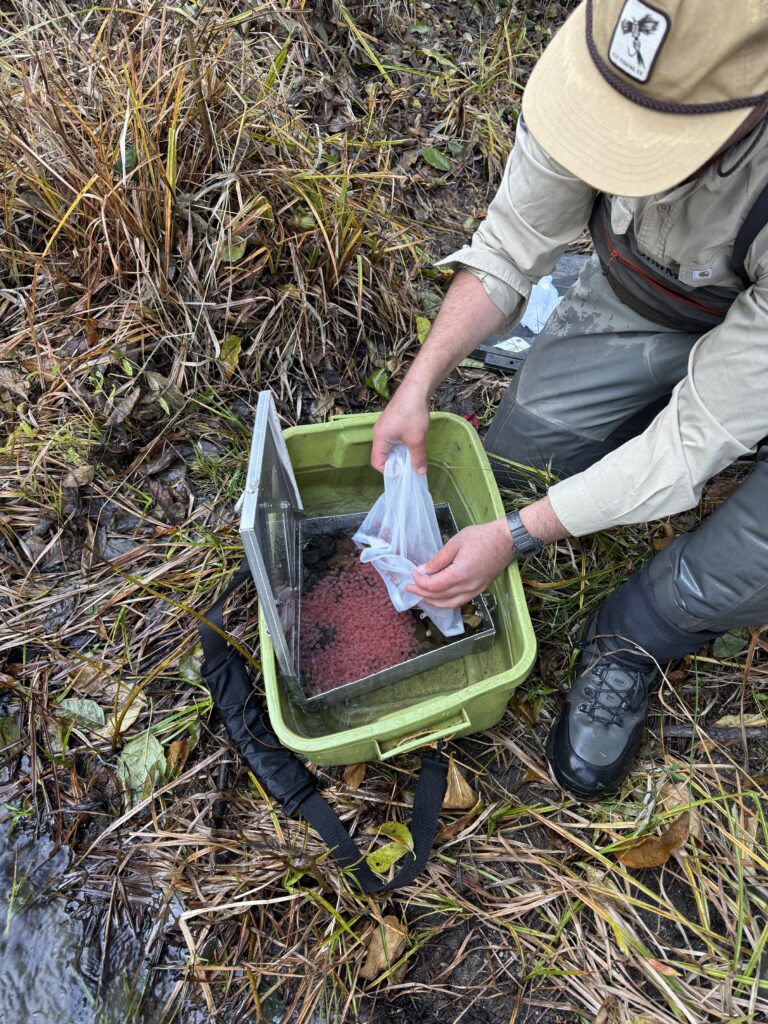
This year’s hatch box eggs come from a truly unique source. The female, referred to by everyone on site as the “Big Hen,” was genetically identified as a Feather River spring-run Chinook that had strayed into Upper Sacramento River.
Thanks to quick work by hatchery staff, her eggs were salvaged, fertilized, and preserved for restoration work.
The hen carried more than 7,200 eggs, so large that the team needed two hatch boxes to accommodate the entire brood.
Building a Better Start in Clear Creek
Clear Creek, a major tributary of the upper Sacramento River, offers cold water, gravel, and excellent flow, nearly perfect natural conditions for young Chinook. But to ensure the eggs are safely carried from fertilization to emergence, the setup needs to be dialed in with precision.
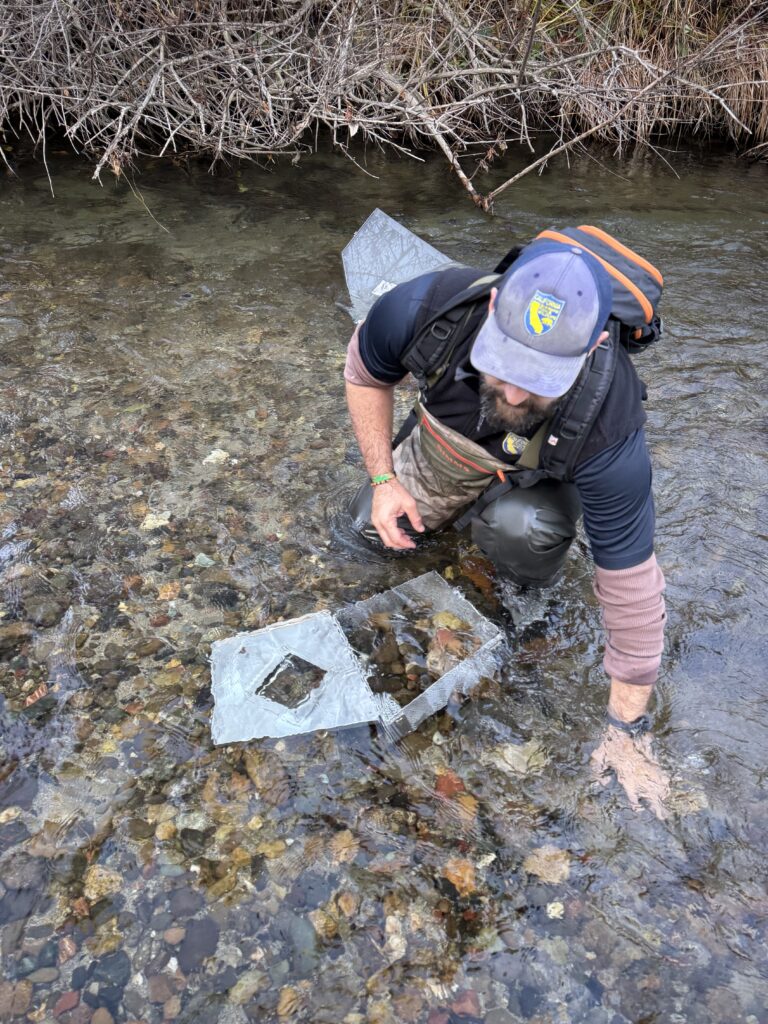
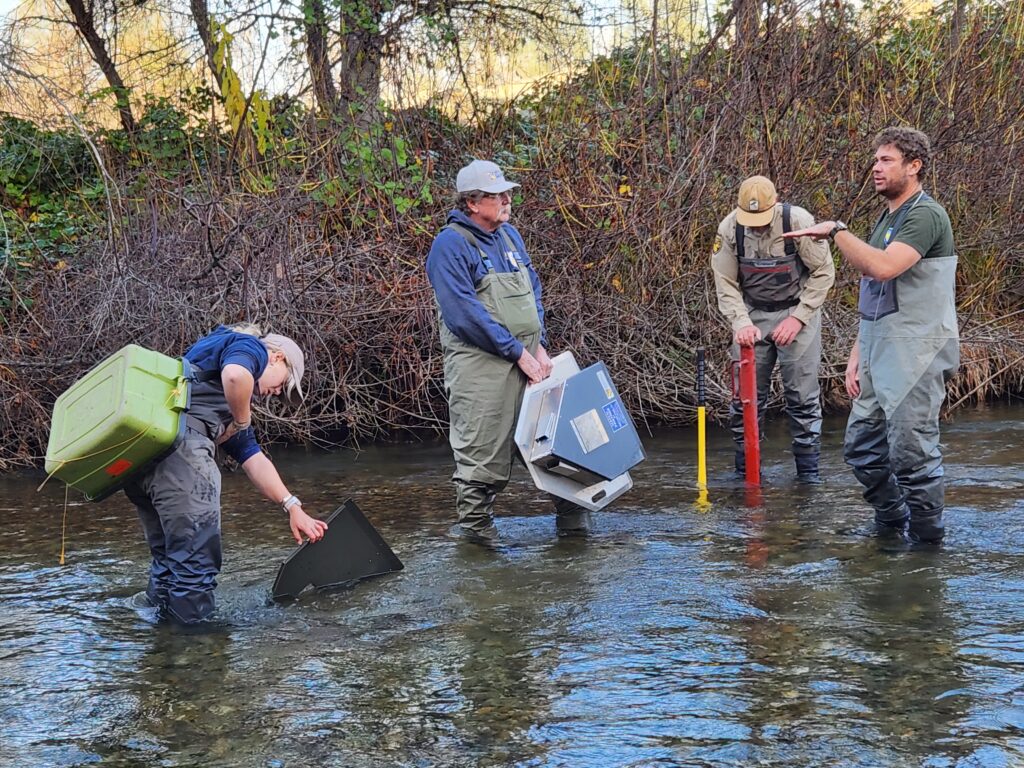
One of the most essential details after temperature: flow rate. After testing with the flow tracker, Mike Memeo, an on-the-ground expert with the CA Dept. of Fish and Wildlife, found the ideal velocity to be 1.5 feet per second, ensuring consistent oxygenation without pushing sediment into the eggs.
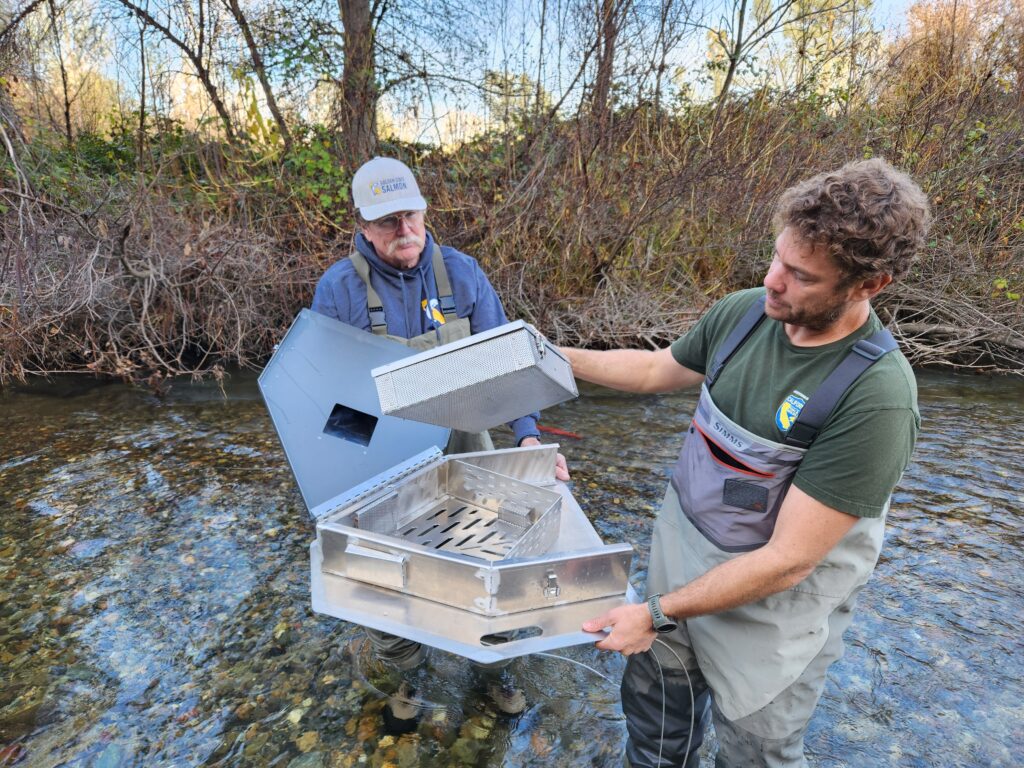
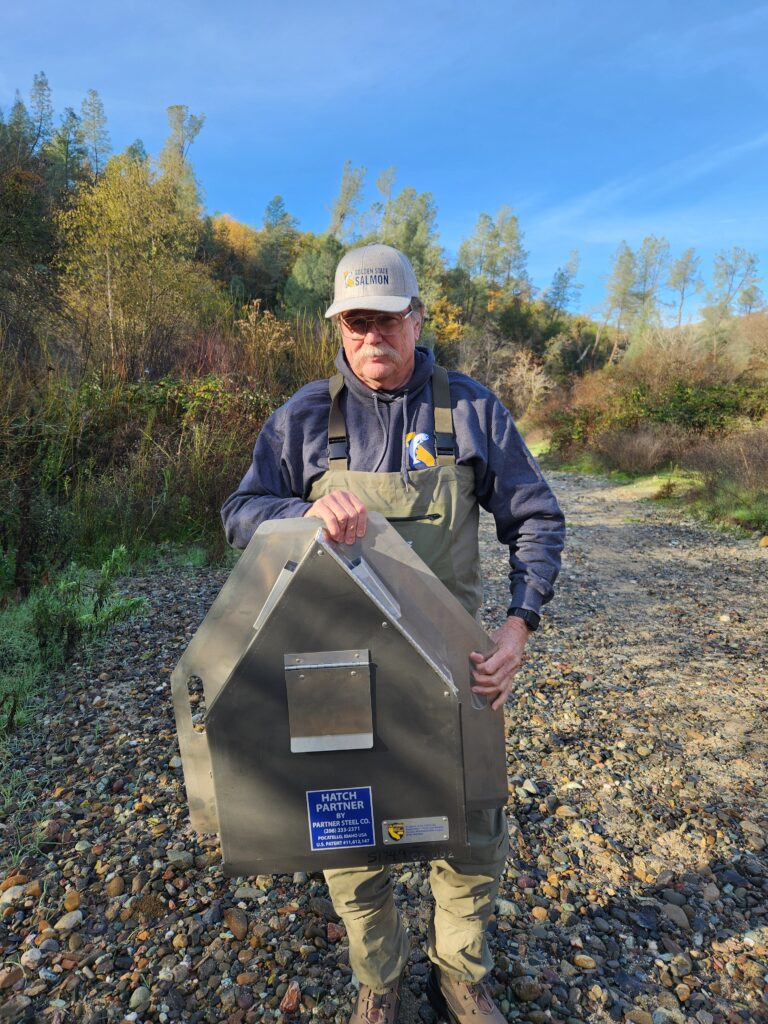
Each hatch box is placed directly on the streambed and anchored with cable, a wide steel flange, and stacked rocks to hold it in place. Inside, an inner tray lined with gravel mimics natural salmon nests called redds, allowing water to flow freely around the developing eggs.
Weekly Monitoring and Maintenance
Hatch boxes aren’t a “set it and forget it” tool; they require weekly attention. During winter checks, the team:
- Removes any dead eggs to prevent fungus spread
- Clears out sediment buildup
- Confirms that the flow remains stable
- Ensures the box is sitting level and secure
These steps mimic what a female Chinook would do herself, fanning fine material away and maintaining clean, oxygen-rich gravel.
A Fast-Moving Timeline
Because water temperatures in Clear Creek are currently ideal, the developing fish, currently in the eyed stage, and soon to be in the alevin stage (the early developmental stage right after the eggs hatch), are expected to move quickly. If conditions hold, the first emergence, where they hatch into fish and leave the box, could begin before the end of December.
That means a real, measurable contribution to Clear Creek’s salmon population in a matter of weeks.
High Success Rates — and Hope for the Future
One of the strongest arguments for hatch boxes is their performance: survival rates can exceed 90%, matching or even surpassing those of complete hatchery systems.
For a state losing wild and hatchery spring run salmon at alarming rates, that number matters. Spring run salmon are currently protected, and fishing seasons can be shortened because of spring run protections. Every percentage point of survival of these eggs means the spring run has a better chance, and hopefully, fishing seasons will be less restricted. It’s a future where California is still a salmon state.
Why This Work Matters
Clear Creek is a reminder of what happens when we combine science, partnership, and the simple act of showing up. Hatch boxes aren’t a silver bullet, but in places like this, with cold water and the right genetics, they may be part of the solution that gets us back on track. Vance’s partnership with CDFW staff out working in the field means he’s getting a better view by the day of what’s working to keep salmon in California’s future.
Vance returned from the trip with muddy boots, cold hands, and renewed confidence. Said Vance, “If we keep investing in places like Clear Creek and in the people willing to do the work, California’s salmon have a fighting chance. And with folks like CDFW’s Mike Memeo and the Region One crew, going the extra mile to save these salmon, the future is definitely in good hands.”
Help Us Keep This Work Going
We’re more than excited to celebrate projects like the Clear Creek hatch boxes and the people without whom projects like this don’t happen. If you want to protect California’s salmon — and the communities, cultures, and fisheries that depend on them — please consider supporting GSSA by becoming a member or making a donation.
Every contribution, at any level, helps us fight for water and put more salmon back in our rivers.
The Golden State Salmon Association (www.goldenstatesalmon.org) is a coalition of salmon advocates, including commercial and recreational salmon fishermen and women, businesses, restaurants, native tribes, environmentalists, elected officials, families, and communities that rely on salmon. GSSA’s mission is to restore California salmon for their economic, recreational, commercial, environmental, cultural, and health values.