FOR IMMEDIATE RELEASE
February 19, 2026
Contact:
John McManus, GSSA Senior Policy Director, 650-218-8650
Return numbers have much improved after better river flows
San Francisco – Information from the Pacific Fisheries Management Council shows that salmon returns to California’s Central Valley in 2025 were much improved over recent years, leading fishery watchers to conclude California will likely see a 2026 salmon fishing season.
Central Valley returns rebound sharply in 2025
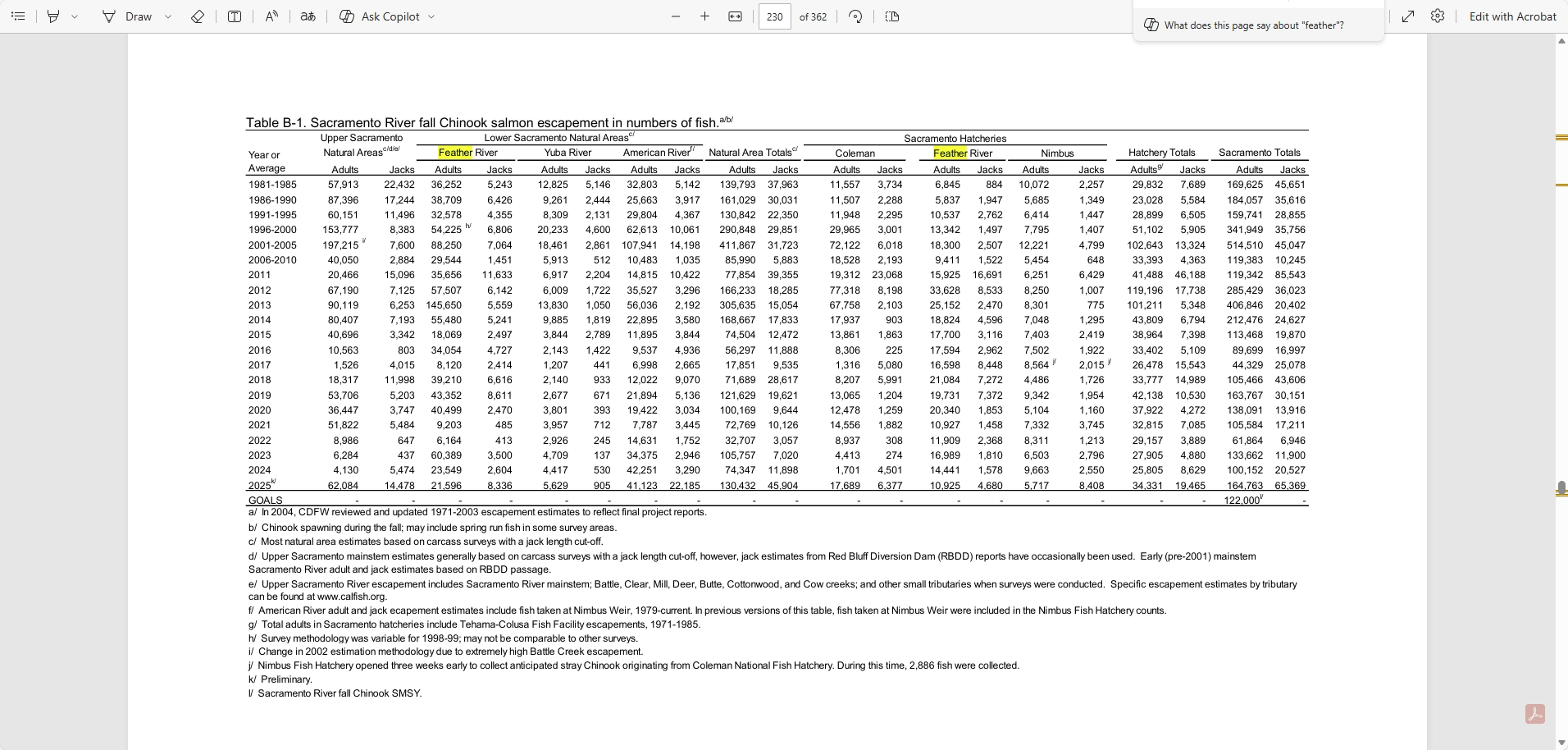
For comparison, the upper Sacramento River saw a return of over 62,000 adult salmon to natural spawning areas in 2025 compared to just over 4,100 in 2024, a 15-fold increase. In the same area, the number of jacks, or two-year-old sub-adult salmon, jumped almost threefold from around 5,500 in 2024 to about 14,500 in 2025. The number of returning jacks is key to forecasting the adult salmon population in the ocean now, which informs how many salmon fishery managers will allow to be caught this year.
This forecast should be out by February 25, when CDFW will hold a one-day salmon information meeting to update the public.
Winter-run returns reduce early-season fishing constraints
Another bright spot: the return of protected winter-run salmon was relatively strong in 2025, making it less likely that constraints on early-season fishing in Monterey Bay and other areas south of Pigeon Point will occur.
Wet years show clear survival benefits for juvenile salmon
These brighter returns coincide with fish that out-migrated as juveniles from the Sacramento Valley in the very wet spring seasons of 2023 and 2024, underscoring the survival benefit salmon enjoy when there’s enough water in Central Valley rivers.
Adult and jack returns increase across much of the Sacramento system
Throughout the Sacramento Valley, adult salmon returns jumped from just over 100,000 in 2024 to just under 165,000 in 2025. Jack returns jumped from 20,200 to just under 65,500, a 300% increase. Returns to the Klamath River system are also up this year, reducing concerns for fishing coastal waters off the northern part of the state.
Hatchery trucking and early releases likely contributed to gains
Some of the salmon returning to the upper Sacramento are likely fish that were released in January of 2023 as fry in a program GSSA worked on with the US Fish and Wildlife Service and others. These fish originated at the Coleman National Fish Hatchery and were trucked to sites on the upper Sacramento River, where they were released before agricultural diversions began.
San Joaquin Basin returns decline amid low fall flows
Rivers draining into the San Joaquin River saw a drop in returning salmon in 2025, which some believe is partly tied to low flows being released to the Mokelumne River in the fall of 2025. As a result, fish from the Mokelumne hatchery likely strayed to the American River and other parts of the Sacramento Valley, where flows were better.
“All fishermen and women in California will be heartened to see salmon numbers bouncing back, indicating we could have a more normal fishing season this year,” said GSSA Executive Director Vance Staplin. “You can’t miss the correlation between improved salmon numbers and the fact that these fish swam out of the Central Valley a few years ago in very wet conditions. We hear over and over from all of the experts tagging juvenile salmon in the Central Valley that survival depends on flow conditions in the rivers.”
About GSSA:
The Golden State Salmon Association (www.goldenstatesalmon.org) is a coalition of salmon advocates that includes commercial and recreational salmon fishermen and women, businesses, restaurants, a native tribe, environmentalists, elected officials, families, and communities that rely on salmon. GSSA’s mission is to restore California salmon for their economic, recreational, commercial, environmental, cultural, and health values.
Currently, California’s salmon industry is valued at $1.4 billion in economic activity and 23,000 jobs annually in a normal season, and about half that much in economic activity and jobs again in Oregon. Industry workers benefiting from Central Valley salmon stretch from Santa Barbara to northern Oregon. This includes commercial fishermen and women, recreational fishermen and women (fresh- and saltwater), fish processors, marinas, coastal communities, equipment manufacturers, the hotel and food industry, tribes, and others.
# # # #
Media contact: John McManus, GSSA Senior Policy Director, 650-218-8650