- Objection to 2023 Interim Operation Plan for Central Valley Project
- New Educational Signage Installed Along Salvador Creek to Help Protect Migrating Salmon in Napa
FOR IMMEDIATE RELEASE
May 26, 2026
Contacts:
Chris Malan, Executive Director, Institute for Conservation Advocacy Research and Education/ICARE, 707.322.8677
William O’Neal, Marketing Manager, Golden State Salmon Association, 510.282.7830
Community collaboration brings salmon awareness and habitat education to Vintage High School and the public trail system
Santa Rosa, CA – A coalition of conservation groups, educators, students, and community volunteers has completed a new educational signage project along Salvador Creek in Napa to increase public awareness of salmon, urban stream habitat, and the importance of protecting spawning fish from human disturbance.
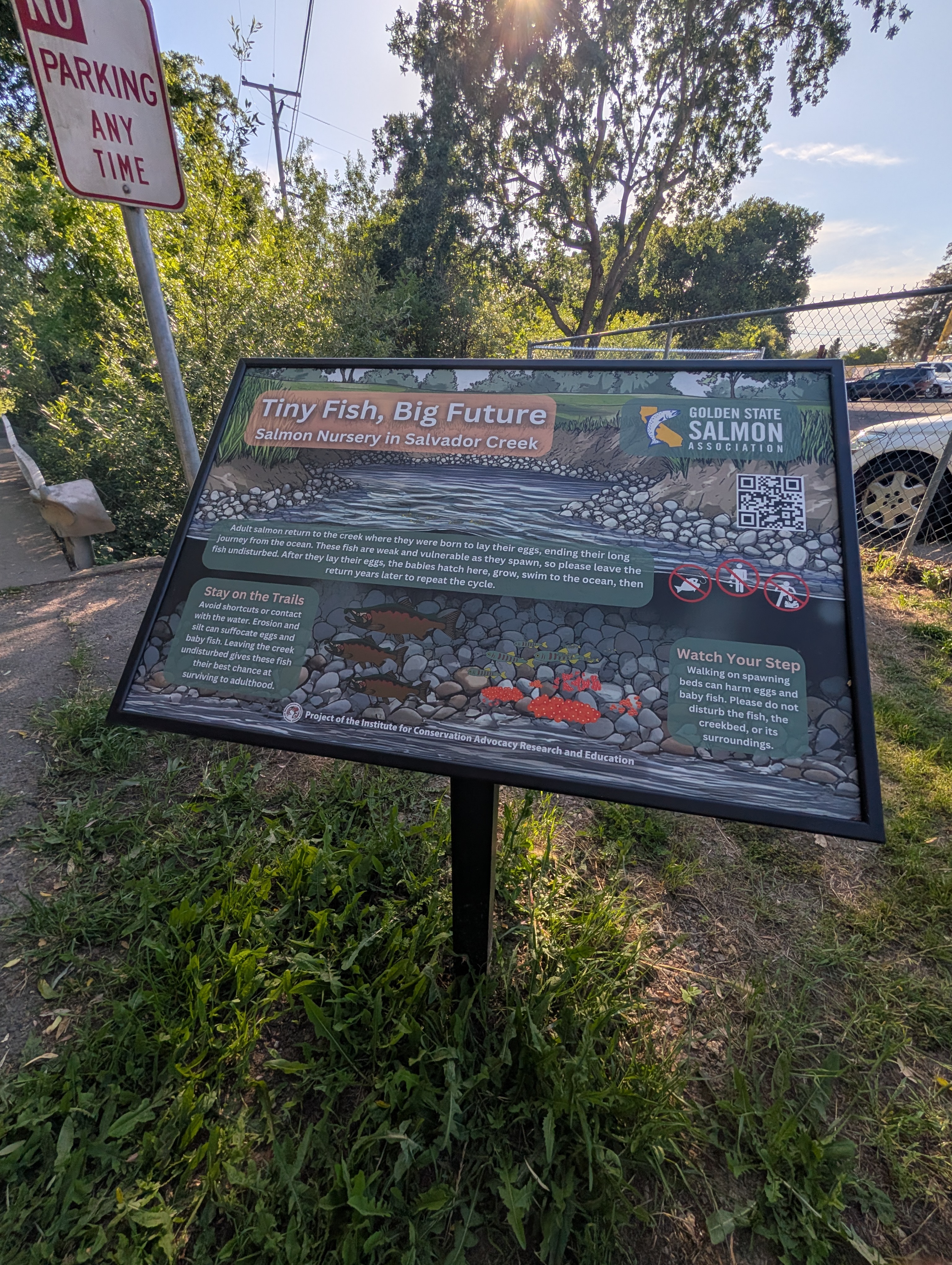
A new educational sign along Salvador Creek in Napa helps students and the public learn about the salmon life cycle and the importance of protecting vulnerable urban stream habitat for spawning and juvenile fish. The Salvador Creek Signage Project was led by the Institute for Conservation Advocacy Research and Education (ICARE) in collaboration with the Napa Valley Wildlife Habitat Conservation Coalition, the Junior Sierra Club of Vintage High School, Napa City Parks and Recreation, and the Golden State Salmon Association (GSSA).
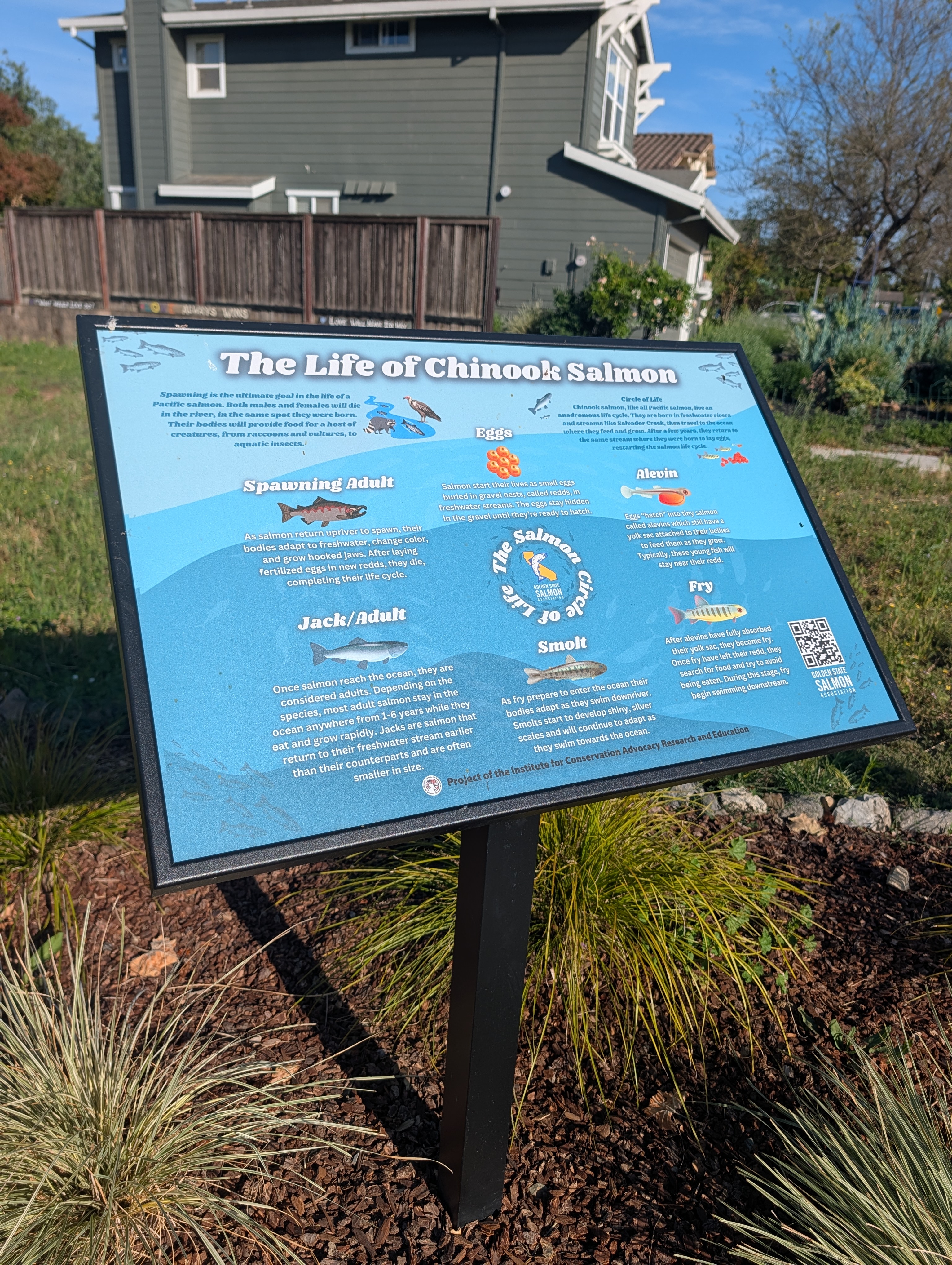
An educational sign along Salvador Creek illustrates the full Chinook salmon life cycle — from eggs and fry to ocean-going adults returning home to spawn — helping connect the local community to the remarkable journey of California salmon. The project includes two large public educational signs installed along the Salvador Creek walking trail and eight smaller signs placed throughout the Vintage High School campus, where a segment of the creek runs directly through school grounds.
The signs focus on salmon life cycles, habitat challenges facing juvenile fish, and the ecological importance of urban waterways that continue to support native fish and wildlife.
“We needed an educational project about Salvador Creek because people regularly fish for, harass, and unintentionally harm migrating salmon in this highly vulnerable urban stream,” said Yvonne Baginski, Founder of the Napa County Habitat Conservation Project. “Most people simply don’t realize these fish are still using creeks like this.”
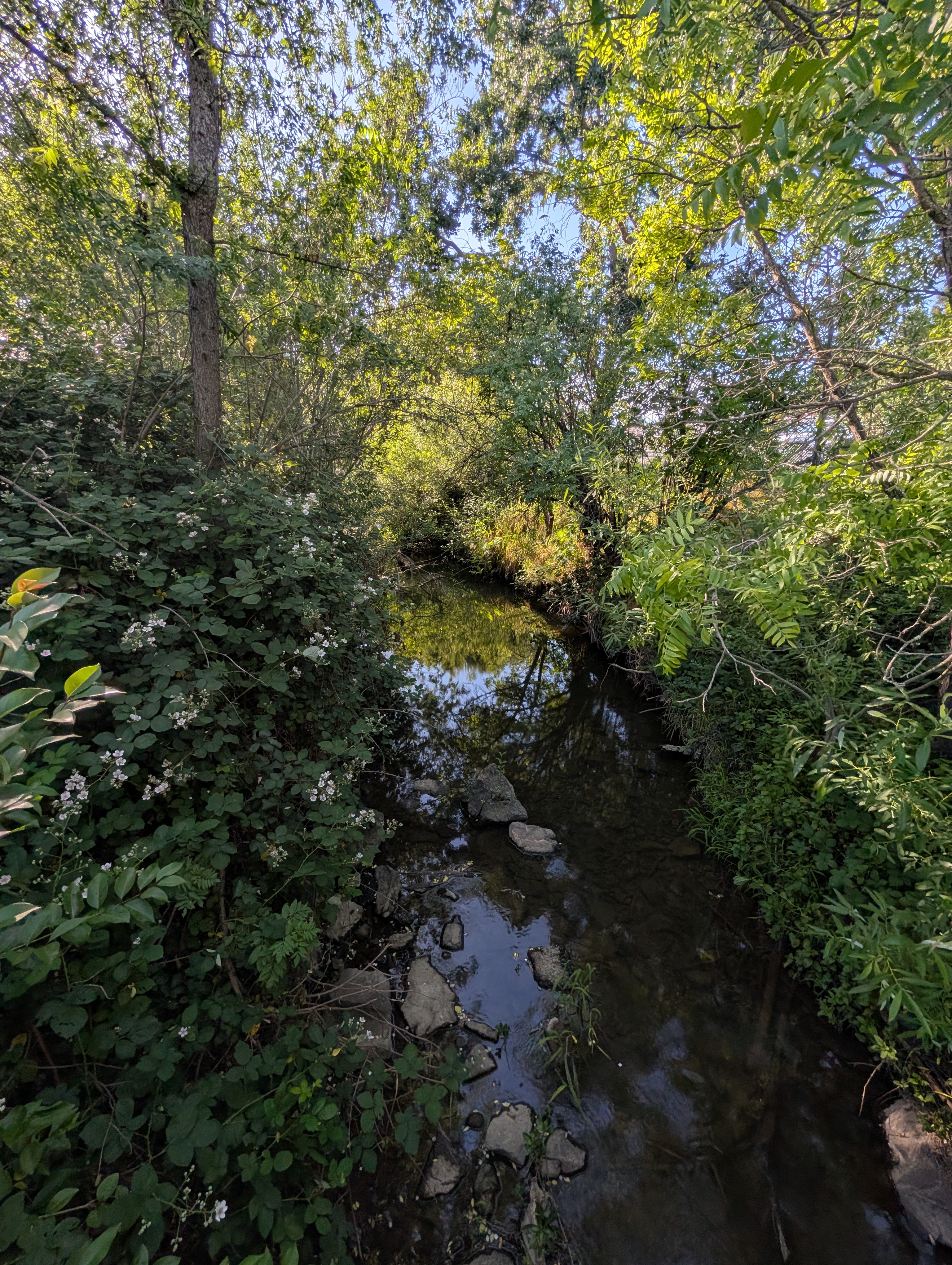
Salvador Creek winds quietly through Napa, providing a rare urban habitat that still supports migrating salmon and other native wildlife — a reminder that even small creeks can play an important role in California’s ecosystem. Salmon continue to migrate through portions of the Napa River watershed each year despite decades of habitat alteration, urbanization, and changing river conditions. Organizers say the project is intended to help students and the public better understand the fragility of spawning habitat and the role local creeks still play in the salmon life cycle.
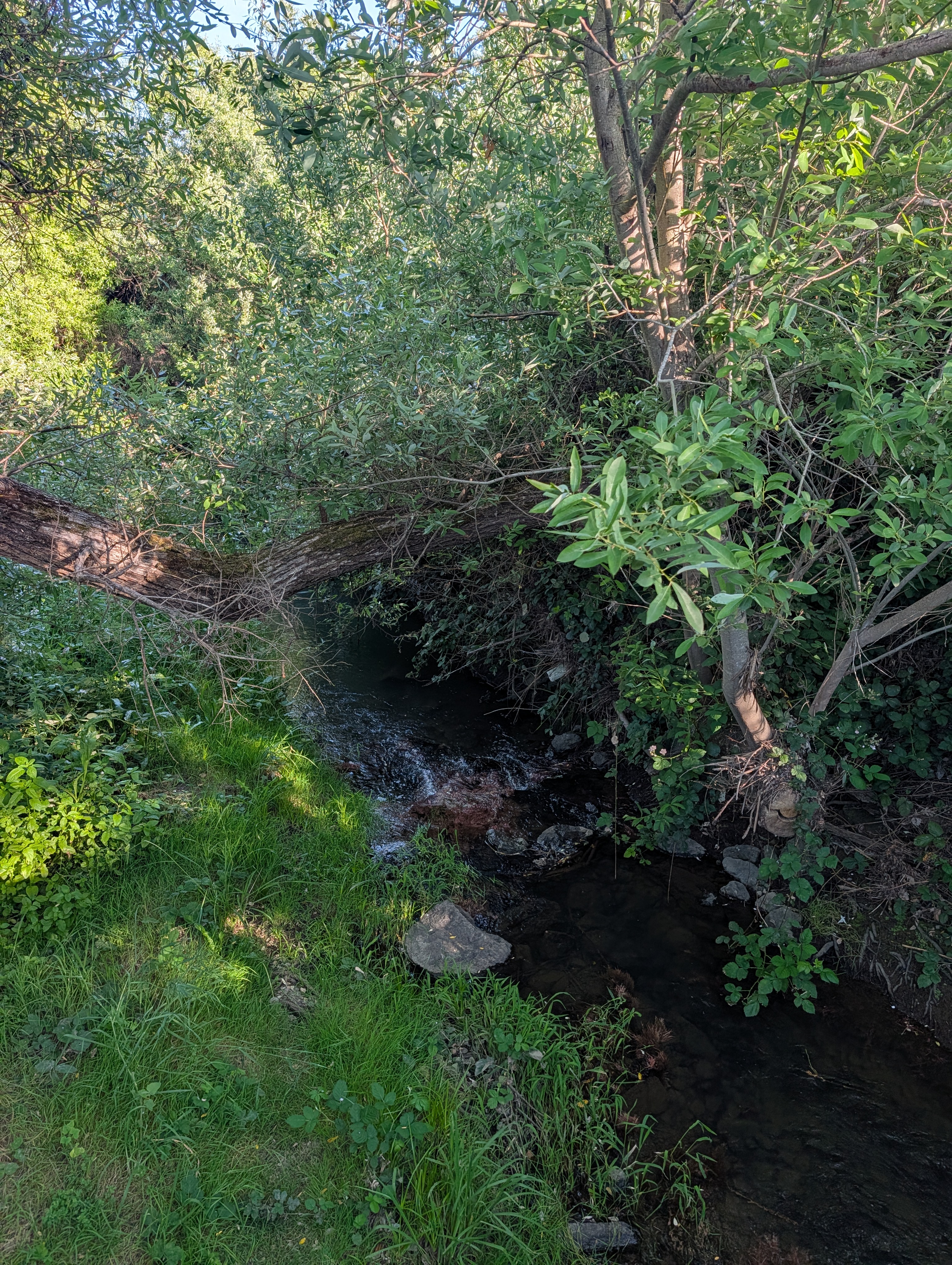
A shaded stretch of Salvador Creek flows through the heart of Napa’s urban landscape, offering important refuge and migration habitat for salmon and other native species despite decades of development and habitat change. “Projects like this are important because salmon recovery doesn’t just happen in remote wilderness areas — it also depends on whether people understand and protect the streams flowing through their own communities,” said William O’Neal, Marketing and Digital Media Manager for Golden State Salmon Association. “Education and awareness are critical if we want future generations to still experience salmon returning to California rivers.”
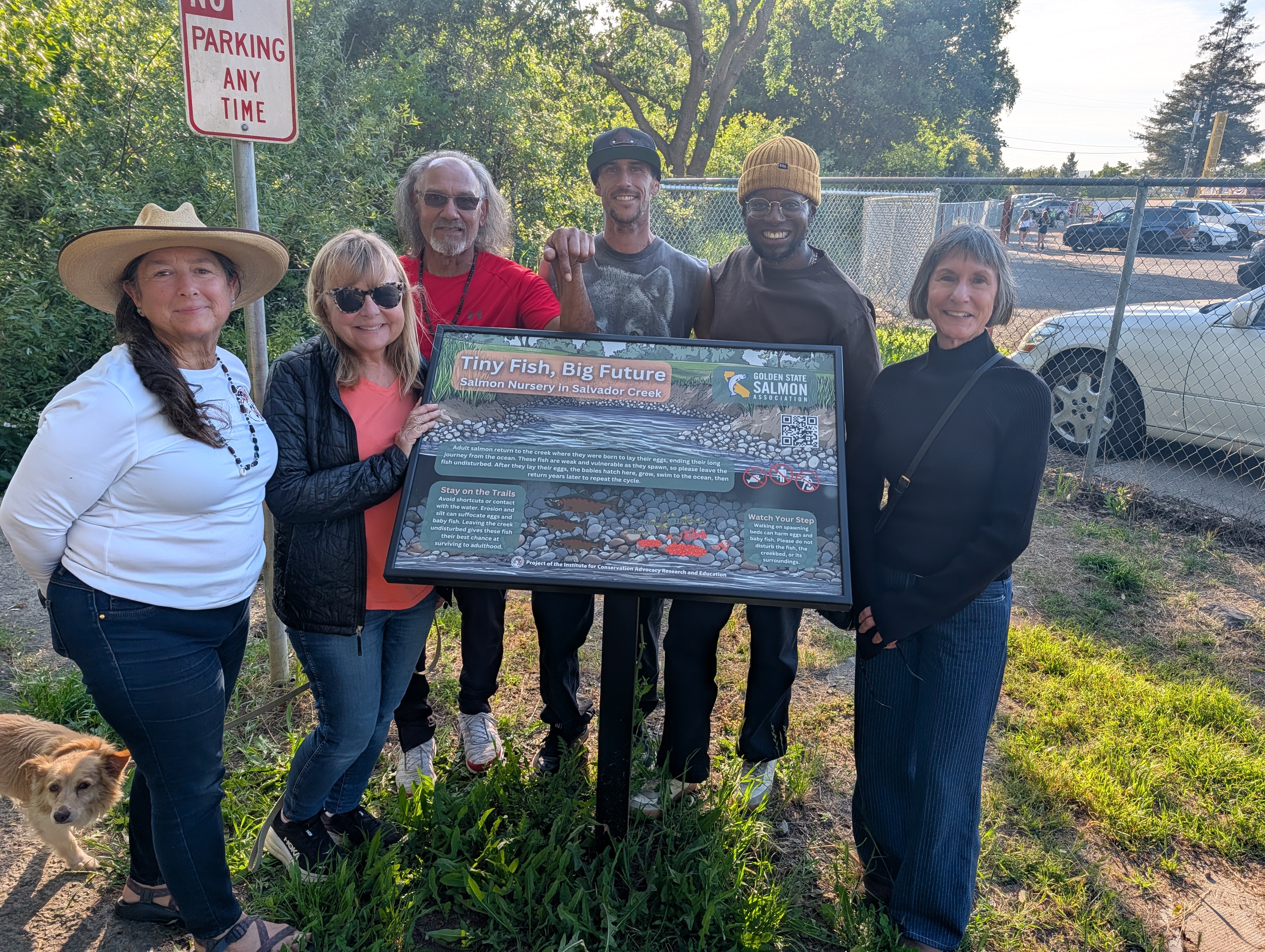
Chris Malan, Executive Director, ICARE; Yvonne Baginski, Founder of the Napa County Habitat Conservation Project; Adam Pina, Board Member of ICARE, and on the Cultural Committee of the Mishewal Wappo of Alexander Valley; Alyx Howell, Vice President, ICARE; William O’Neal, Marketing and Digital Media Manager, Golden State Salmon Association; and Christina Aranguren, President of the Institute for Conservation Advocacy Research and Education. According to organizers, the signage project was completed entirely through volunteer collaboration and community support. Funding for the large signs was provided through a grant from the Napa County Wildlife Conservation Commission to ICARE, while additional support for smaller campus signs came from the Napa-Solano Audubon Society and an anonymous donor.
“There are still streams in urban California that support wildlife and fish migration, but these systems are extremely limited and fragile,” said Chris Malan, Executive Director of ICARE. “Our hope is these signs help people better understand the value of protecting these habitats before they disappear entirely.”
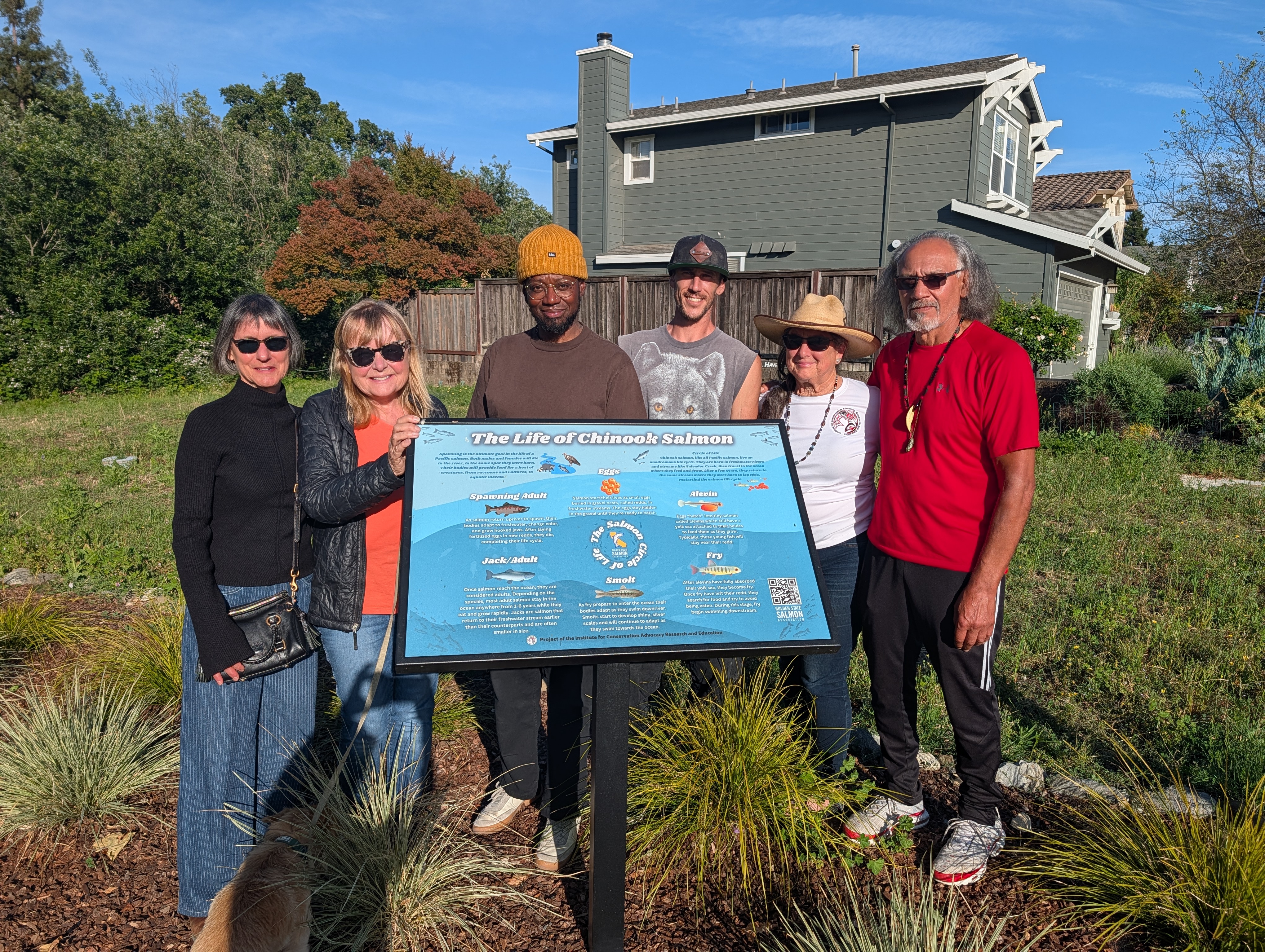
Christina Aranguren, President of the Institute for Conservation Advocacy Research and Education; Yvonne Baginski, Founder of the Napa County Habitat Conservation Project; William O’Neal, Marketing and Digital Media Manager, Golden State Salmon Association; Alyx Howell, Vice President, ICARE; Chris Malan, Executive Director, ICARE; and Adam Pina, Board Member of ICARE, and on the Cultural Committee of the Mishewal Wappo of Alexander Valley. The signs feature three educational themes:
- The Salmon Life Cycle
- Big Trouble for Little Fish
- Tiny Fish, Big Future
Project organizers say the effort is intended not only to educate the public about salmon, but also to encourage broader stewardship of rivers, creeks, wetlands, and groundwater-dependent ecosystems throughout the Napa watershed.
About Golden State Salmon Association: The Golden State Salmon Association is a coalition of salmon advocates that includes commercial and recreational fishermen and women, businesses, restaurants, environmentalists, elected officials, families, tribes, and communities that rely on salmon. GSSA works to restore California salmon for their economic, recreational, commercial, environmental, cultural, and health values.
- Action Alert: Rare Opportunity to Stop Salmon-Killing Delta Tunnel
A call to your Assemblymember will make a big difference now
Powerful San Joaquin Valley and Southern California water interests are pushing the state legislature to hand them a blank check to grab more Northern California salmon river water to eventually divert through the Delta tunnel they hope to build. Their effort is focused on passing Assembly Bill 2215, which would bypass normal procedures and grant the Delta tunnel new “water rights” for massive volumes of northern water. This would prove deadly to salmon and many other species that live in and along the Sacramento River and its tributaries, including the American, Yuba, and Feather rivers.
Here’s why this is important:
In plain English: this bill is designed to bypass the normal water rights process and clear the way for the Delta tunnel without fully evaluating whether there is enough water in the Bay-Delta to support both increased exports and healthy salmon runs.
That’s dangerous.
Excessive water diversions are already one of the biggest killers of Central Valley salmon. They were the major driver behind the catastrophic collapse that led to a three-year shutdown of California’s commercial salmon season and severely restricted recreational fishing opportunities.
AB 2215 could make those problems permanent. But there’s something you can do to help.
The bill, authored by Assemblymember Lisa Calderon, could come up for a vote on the Assembly floor at any time. It can be stopped there if enough of us call our Assemblymember and urge them to vote NO on AB 2215.
Take Action!
We urge all GSSA members and salmon supporters to call your Assemblymember today and urge them to vote NO on AB 2215.
You can find your Assemblymember here.
Suggested Call Script
“Assemblymember (Last Name), I’m calling to urge you to oppose AB 2215 when it comes up on the Assembly floor.
This bill is designed to advance the proposed Delta tunnel, which represents a major threat to California salmon, fishing jobs, and fishing communities across the state.
We are just beginning to recover from a devastating three-year shutdown of commercial salmon fishing and years of extremely limited recreational opportunity. The economic damage to fishing families, businesses, and coastal communities has been enormous.
Excessive water diversions helped create this crisis. AB 2215 could make it worse by bypassing the normal water rights review process and opening the door to even greater pressure on the Bay-Delta ecosystem.
Salmon matter to Californians like me. Please vote NO on AB 2215.”
Thank you for standing up for California salmon, fishing jobs, and healthy rivers.
- How Early Fry Releases Could Change Salmon Recovery Efforts
A Renewed Approach to an Old Problem
The US Fish and Wildlife Service has released findings from a project GSSA partnered with them on that released Coleman hatchery fry into the upper Sacramento River. The fry were from brood years 2021 and 2022. Almost two million unfed fry were released in early 2022. About 2.8 million were released a year later. Fry salmon are the tiny fish that develop shortly after hatching.
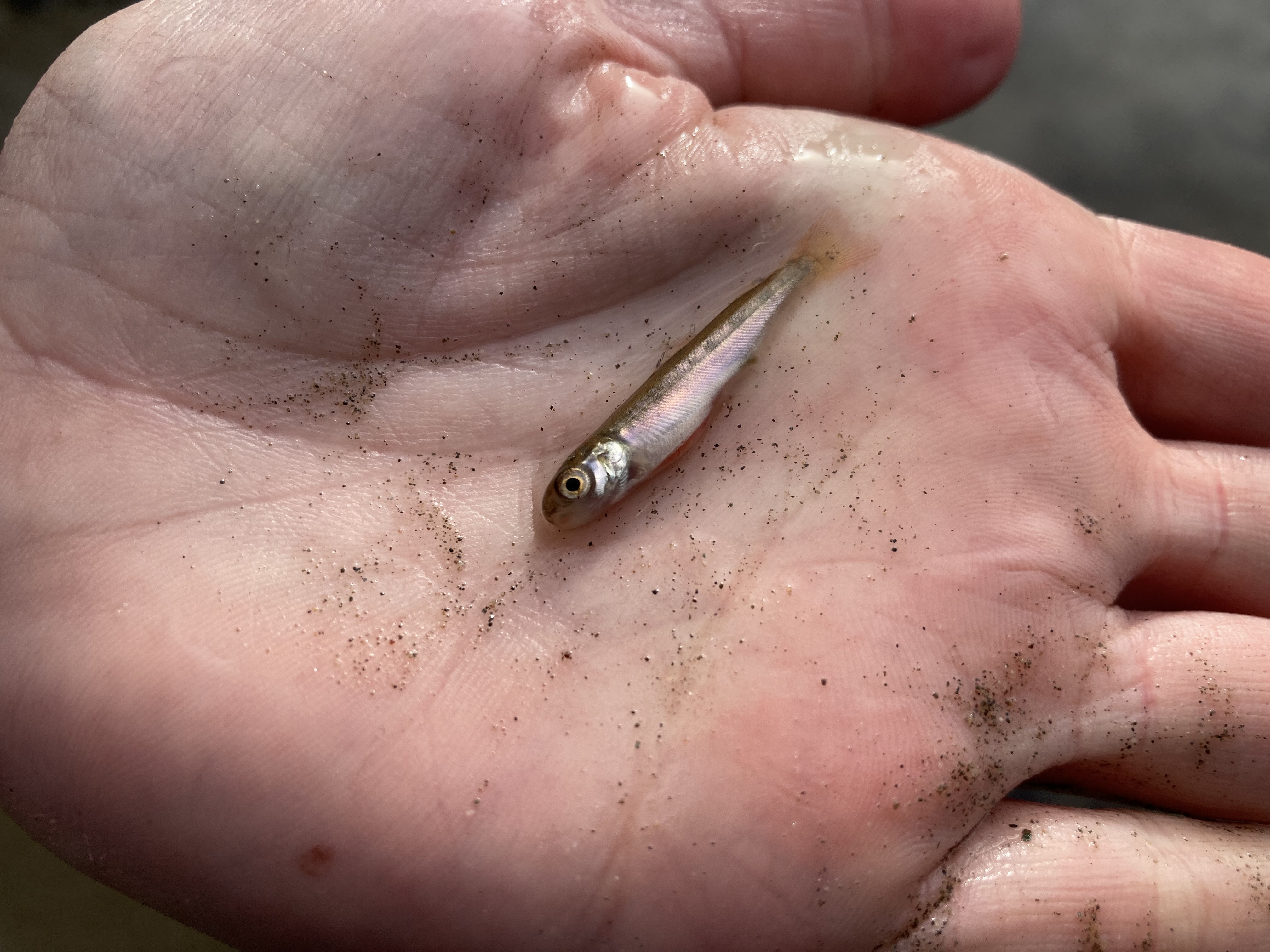
Tiny and fragile, salmon fry begin their journey at just a few inches long—highlighting how critical early river conditions are to their survival. Testing When Timing Might Matter More Than Size
The project was conducted to determine whether the survival of these hatchery-born fish can be improved by releasing them earlier in the year, when winter storms and runoff create higher-flow conditions in the Sacramento River and its tributaries.
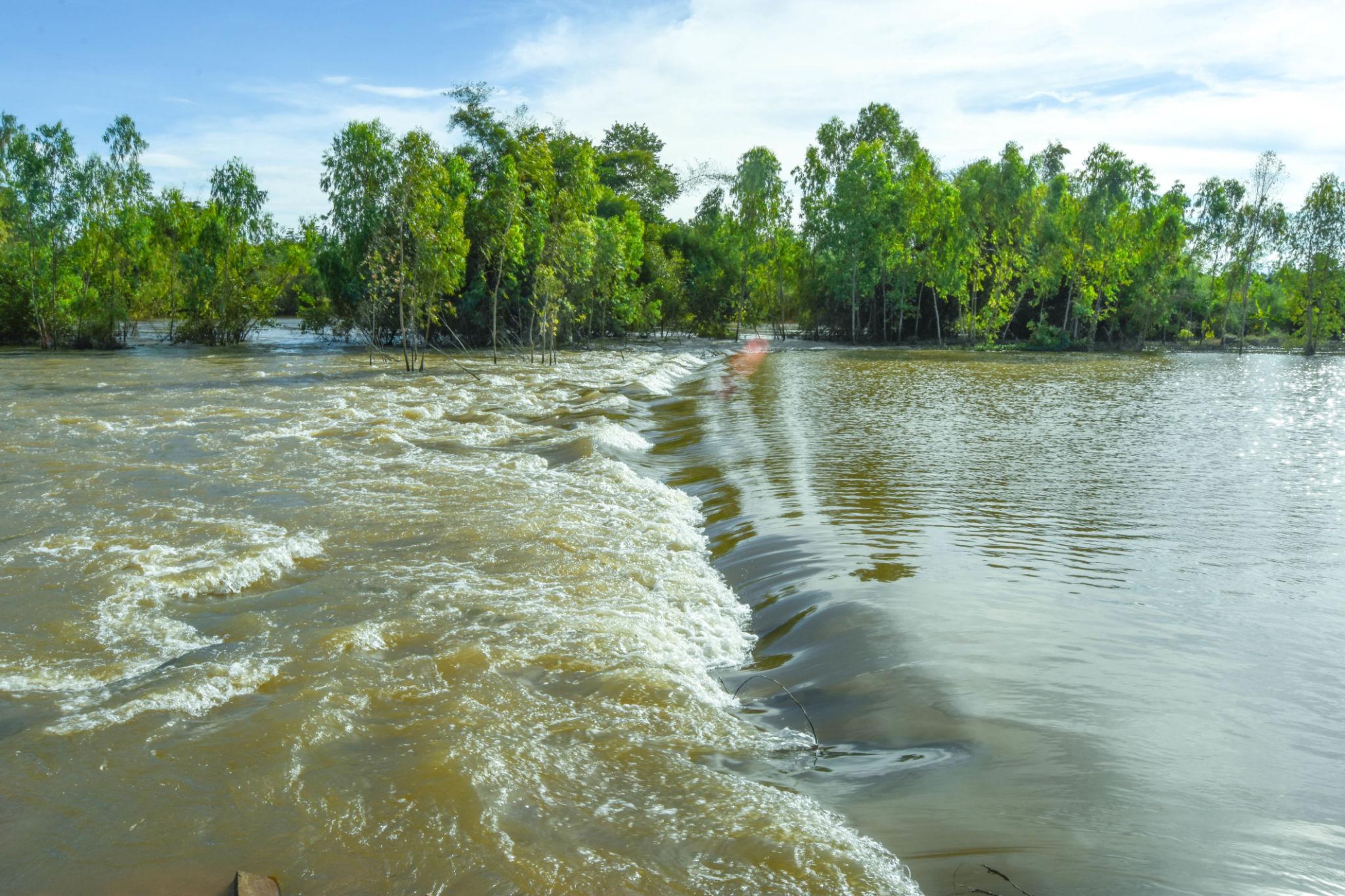
A swollen river spills over a low barrier, creating fast, turbulent water—exactly the kind of high-flow conditions that can help young salmon survive their journey downstream. The Tradeoff: Bigger Fish vs. Better Conditions
Normally, the fry would be reared at the hatchery for months longer until they’re big enough to cut the adipose fin off and insert coded wire tags into their snouts. The bigger they are at release, the higher their survival, except for one major factor. After early April, farmers throughout the Sacramento Valley crank up irrigation pumps and lower the river, making it far more dangerous for our migrating juvenile salmon. Holding Coleman hatchery salmon to a size where they can be clipped and tagged commonly requires rearing them into April. Releasing them as fry can occur in January. Releasing fry from the Coleman Hatchery was once a regular tool but was discontinued in the early 1990’s.
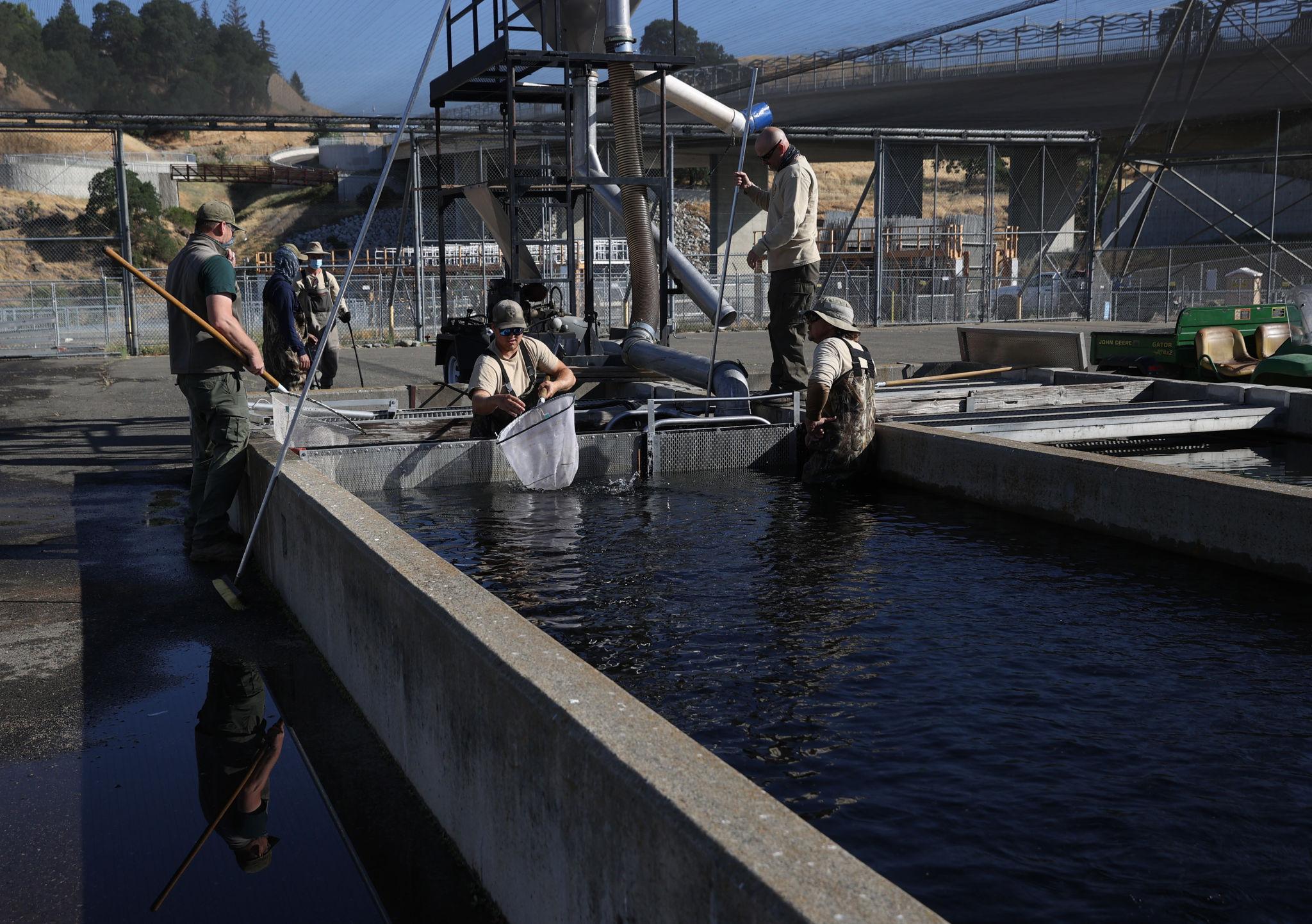
Biologists work in a hatchery raceway, collecting and monitoring salmon—part of the hands-on science helping improve survival and inform smarter release strategies. How Parent-Based Tagging Makes This Possible
To make the parent-based tagging system work, tissue samples were first collected from the parent fish in 2021 and 2022. The unique DNA in these samples was identified. Then, in 2023, returning adult fish with intact adipose fins had their tissue sampled, starting with jacks (two-year-olds). Tissues were again collected from two and three-year-olds in 2024 and 2025. More samples will be collected this year to continue the study.
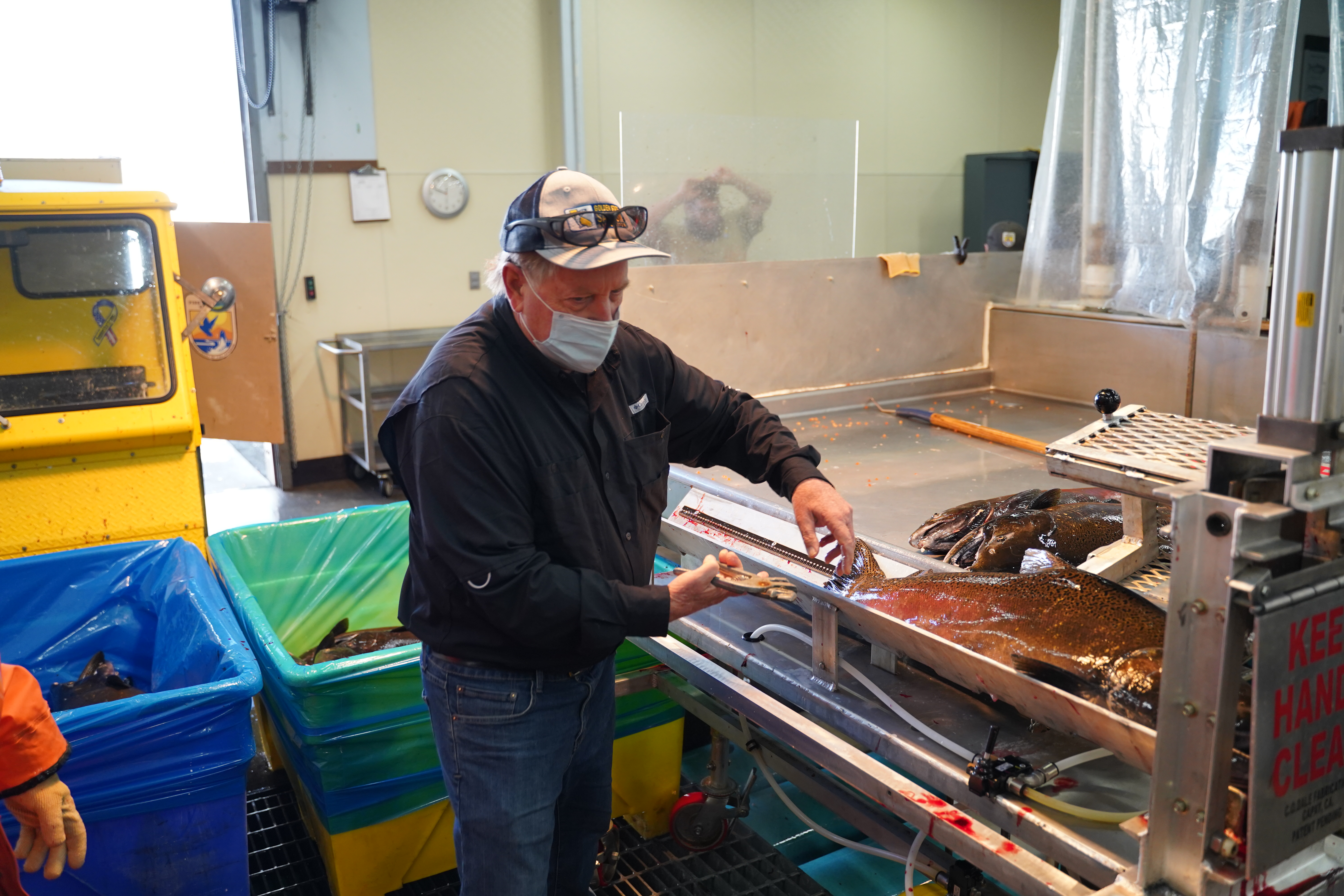
GSSA Policy Director John McManus collects genetic samples at Coleman National Fish Hatchery in 2021—work that helps track salmon survival and inform smarter recovery strategies. What the Early Data Shows
The Fish and Wildlife scientists were able to positively identify DNA that matched the parents from 2021 and 2022. The project also encountered some DNA samples that were too degraded to provide the info needed. Other samples passed some screens for the released fry but were inconclusive on others and were therefore not considered part of the group.
Promising Signals—But More Work Ahead
Of all the tissue samples collected, about 2.55% were fish released as unfed fry. Much more study will be needed to understand the overall contribution of such releases to the production of adult salmon. In addition, tissue samples will be needed from additional tributaries and collection sites throughout the basin to provide a more complete picture of how these fish are surviving and where they end up.
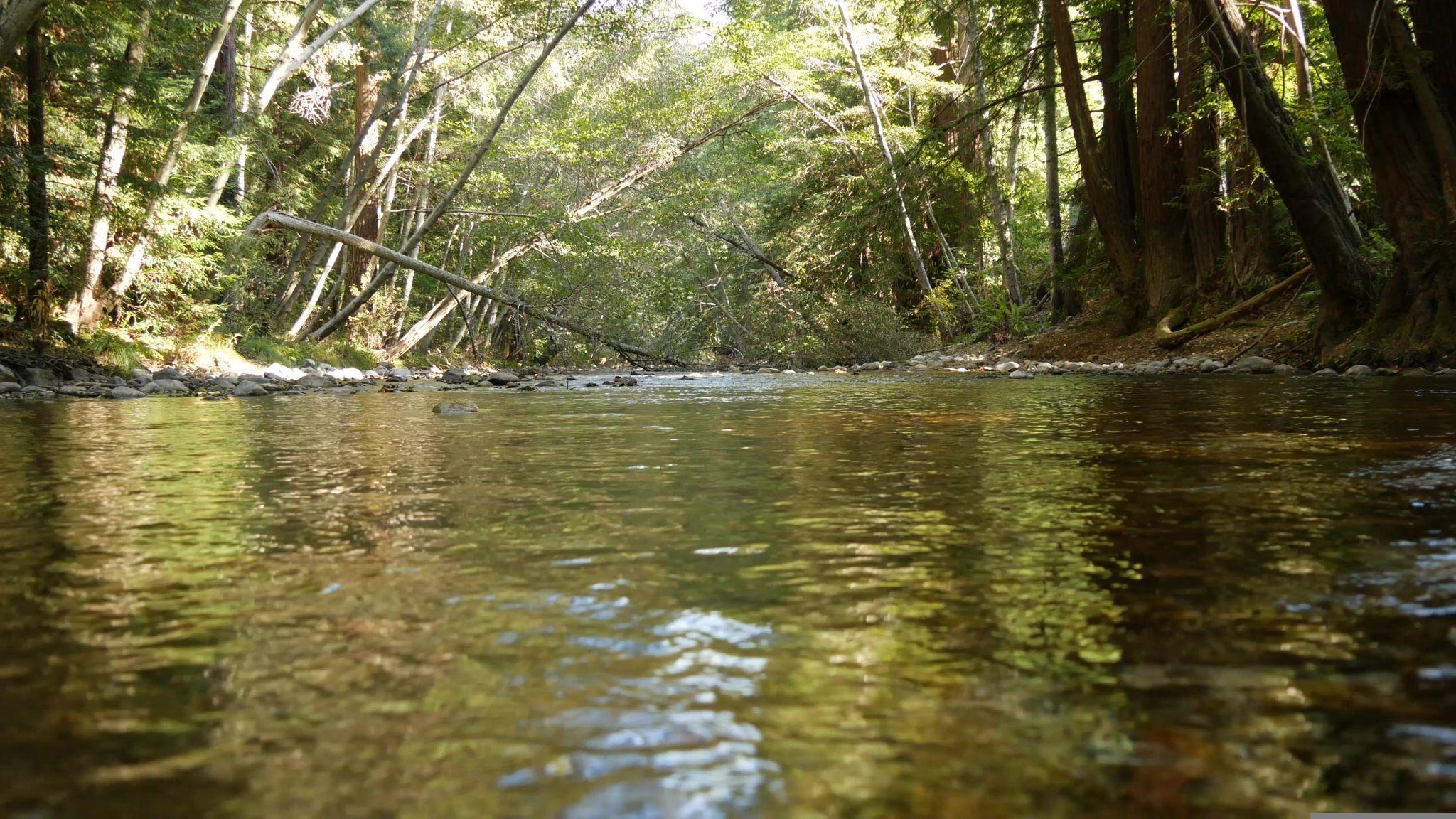
A clear, shaded stream winds through healthy riparian habitat—exactly the kind of conditions young salmon need to survive their journey to the ocean. Toward Smarter Release Strategies
Eventually, researchers should be able to determine what release locations and strategies provide the highest survival and tailor future releases accordingly.
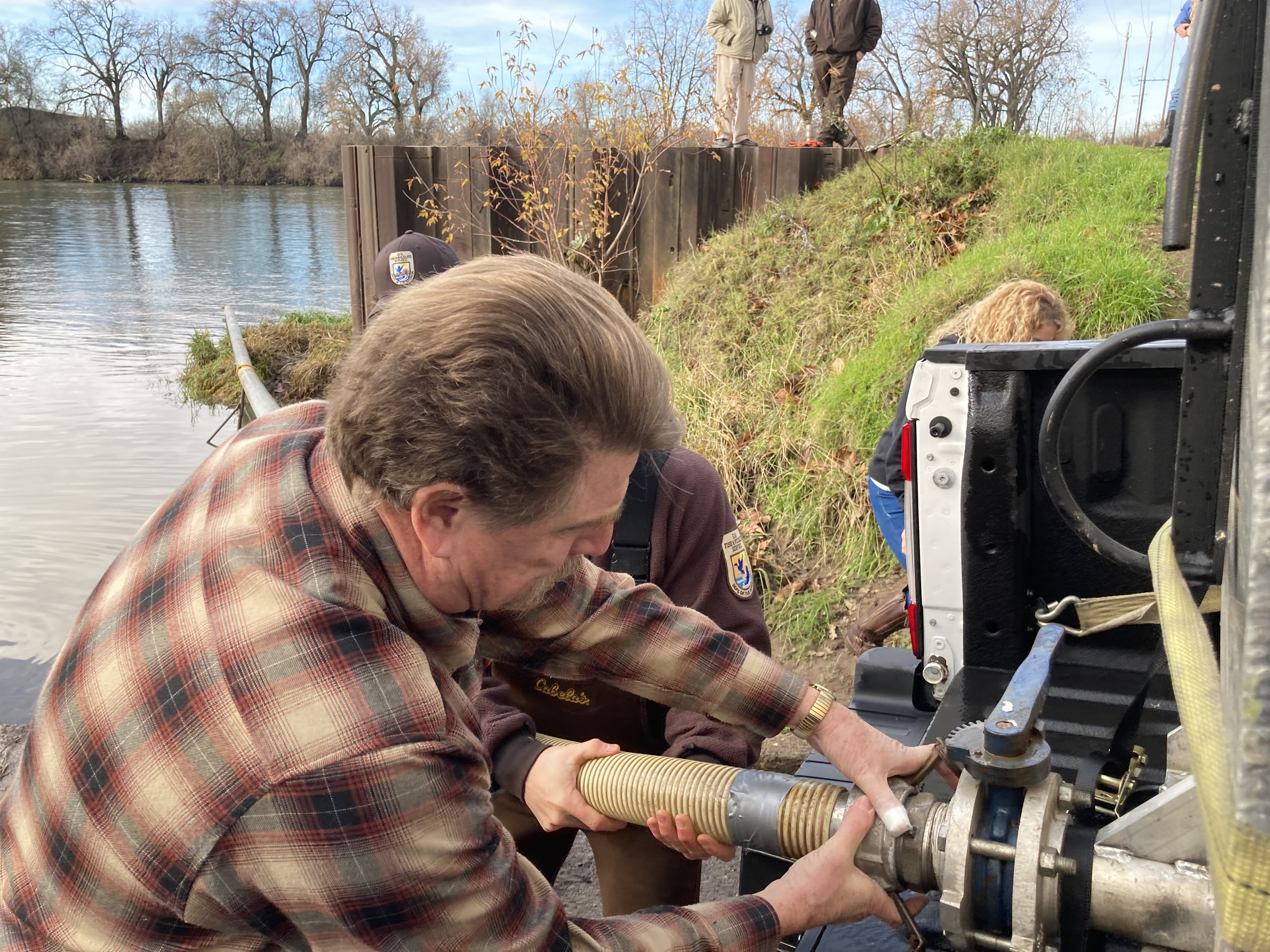
GSSA Executive Director Vance Staplin helps the U.S. Fish and Wildlife Service team connect a release pipe to the fry transport tank before young salmon are released into the Sacramento River. This is what progress looks like—but it doesn’t happen on its own.
Smarter strategies like early fry releases only work when science, funding, and advocacy come together.👉 Join GSSA, support the work, and help drive real solutions for salmon.
- Volunteer at the 2026 Santa Rosa Dinner
Be Part of the Night That Brings Everyone Together
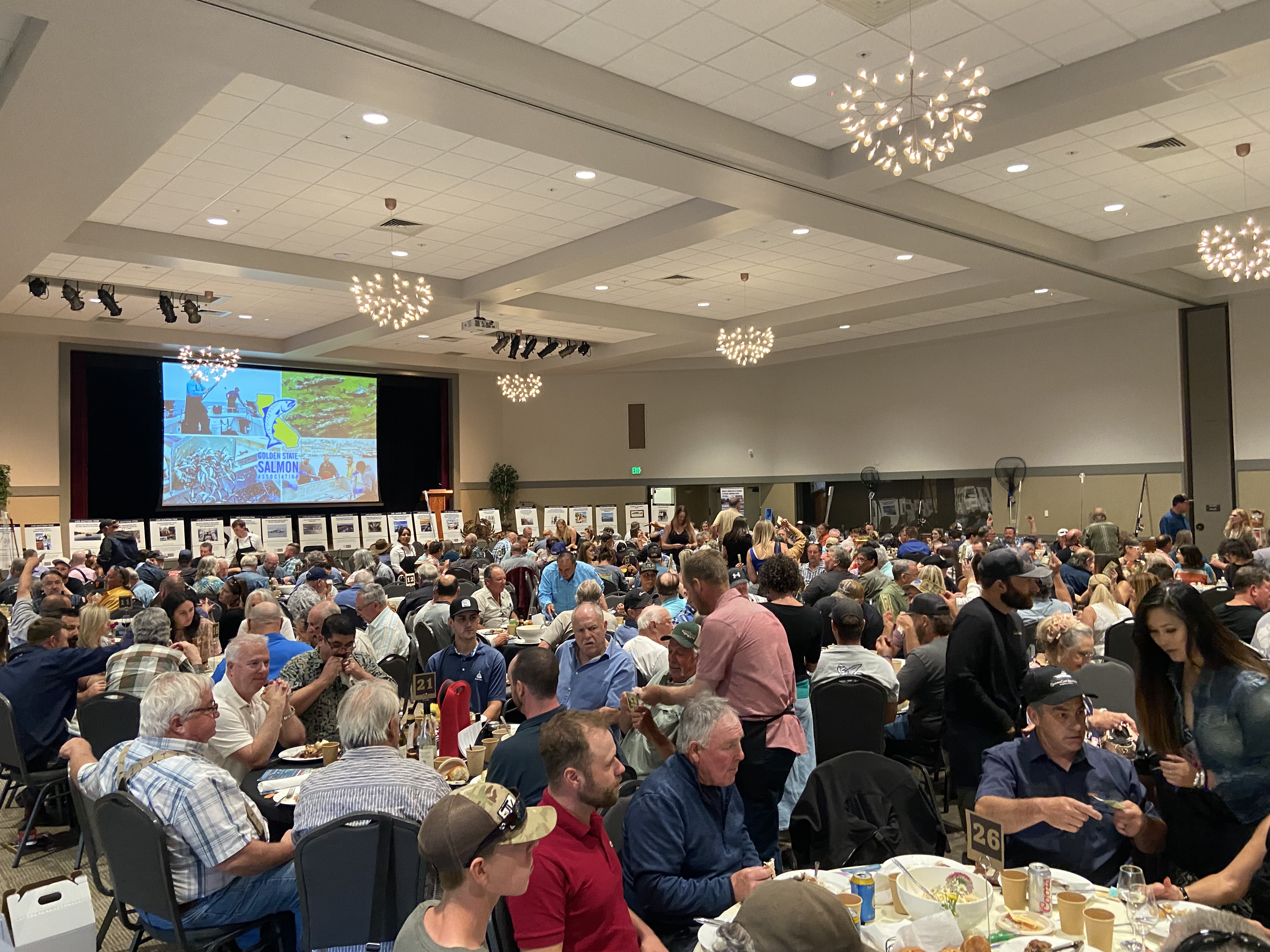
After a few tough seasons, we’re finally back on the water—and this year’s Santa Rosa Dinner is all about celebrating that.
Catch up on this year’s catch! Lend a hand, hype the fish, and help make this year’s dinner a success.
Good food. Cold drinks. A packed room full of people who care about salmon.
And it doesn’t happen without a great crew behind the scenes.
Why Volunteer?
Because this isn’t just another event—it’s one of our biggest nights of the year.
- Be part of a high-energy, community-driven event
- Meet other anglers, passionate advocates, and dedicated supporters
- Get a behind-the-scenes look at how it all comes together
- Help make sure the night runs smoothly (and stays fun)
Whether you’ve been part of GSSA for years or you’re just getting involved, volunteering is one of the best ways to plug in.
What You’ll Be Doing
We’ve got a range of roles depending on how you want to jump in:
Guest Experience
- Registration & check-in
- Raffle coordination
- Merch table
Event Support
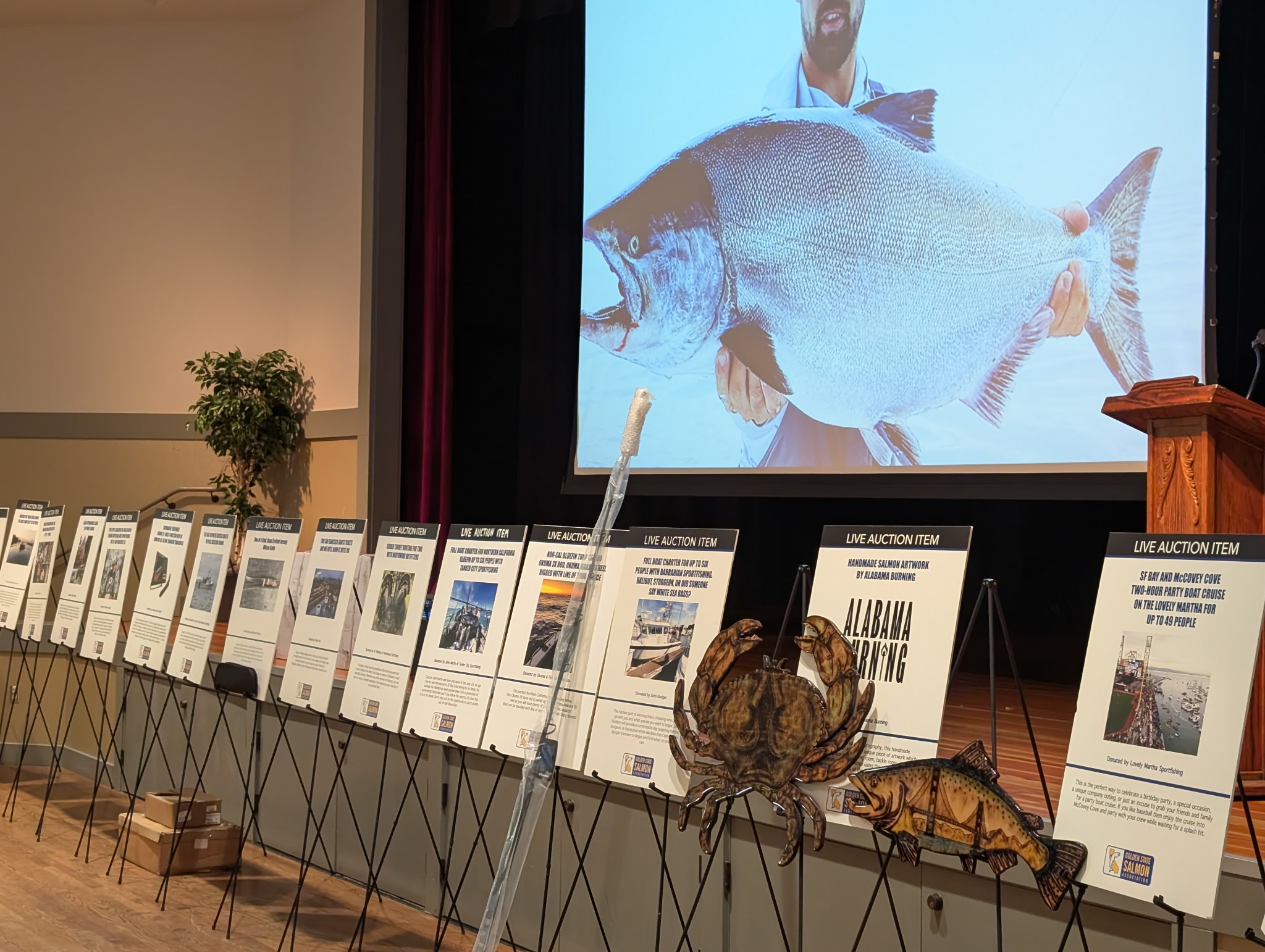
- Silent & live auction support
- Appetizer stations
- Bar service (21+)
Operations
- Event set up
- Break down & clean up
Some roles are fast-paced and social. Others are more behind-the-scenes.
All of them matter.
What to Expect
- Clear roles and guidance when you arrive
- A team environment—no one’s doing this alone
- A fun, busy night (it goes by fast)
- Plenty of time to still enjoy parts of the event
A Quick Note
We especially need help with:
- Set up
- Break down
- Auction support
If you’re open to jumping in where needed, that makes a huge difference.
Sign Up to Volunteer
Pick a shift (or two), grab a spot, and we’ll follow up with details.
Questions?
Reach out to info@goldenstatesalmon.org, and we’ll point you in the right direction.
- Celebrating Salmon Wins: Hope in a Tough Year
“We’re finally seeing the kind of conditions that give salmon a fighting chance—but none of this happened because of luck. It’s the result of years of advocacy, better science, and people refusing to give up on these fish.”
— Vance StaplinAfter years of uncertainty—closed seasons, low returns, and real concern about the future of salmon fishing in California—we’re finally seeing something we haven’t felt in a while:
Momentum.
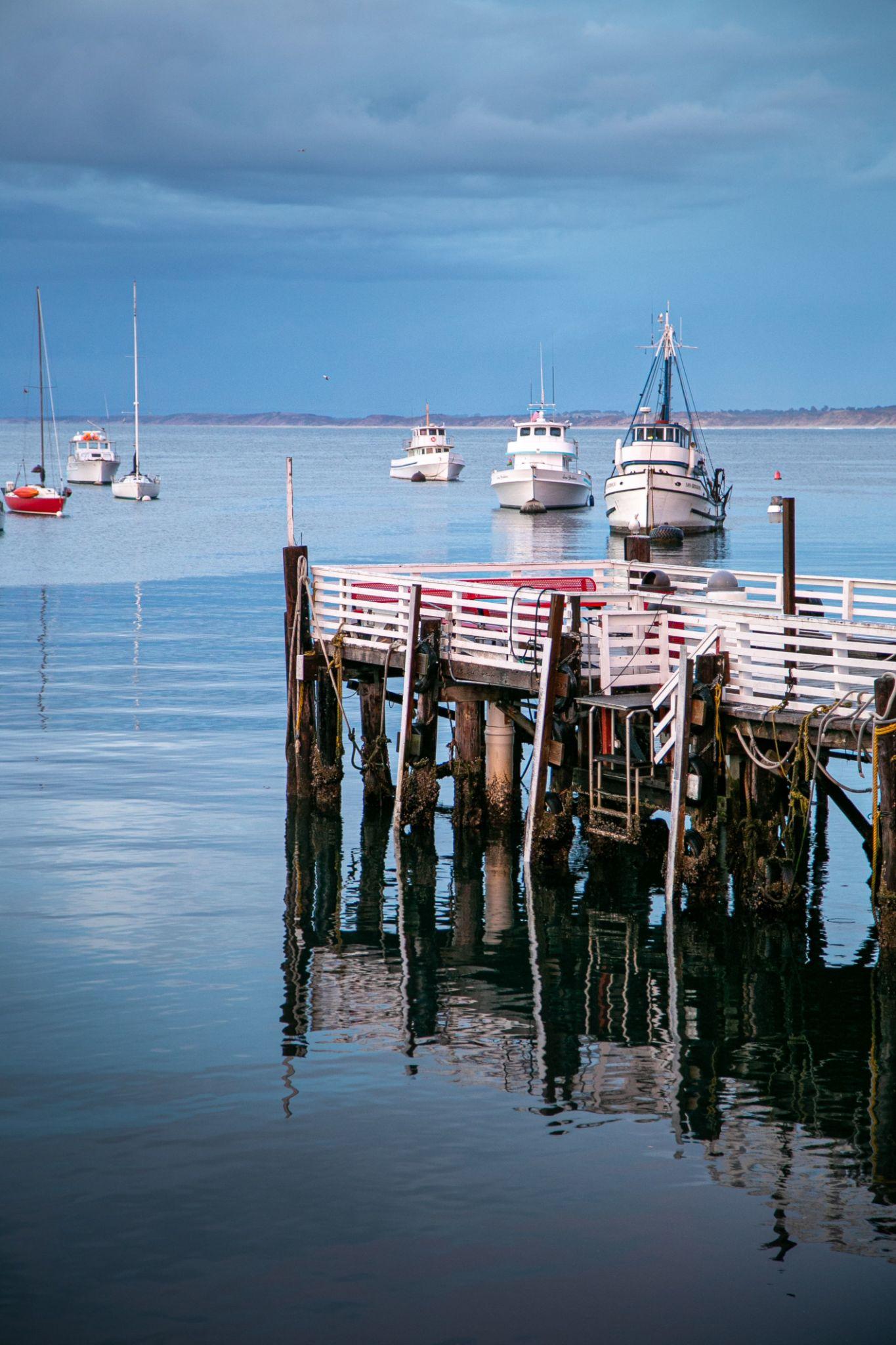
Calm water, boats at rest—but everything out here depends on what’s happening upstream. When rivers flow right, harbors like this come alive. Boats are back on the water. Fishermen are planning trips again. And for the first time in a few seasons, there’s a sense that things might actually be turning in the right direction.
That’s worth celebrating.
But it’s also worth understanding why this is happening—and what it took to get here.
A Comeback Years in the Making
The improved outlook for salmon this year didn’t just show up overnight.
Stronger-than-expected returns—driven in part by favorable river conditions in recent years—have helped set the stage for a more optimistic season. Wet winters in 2023 and 2024 brought higher flows, cooler water, and better conditions for salmon eggs to hatch and for young salmon heading out to the ocean.
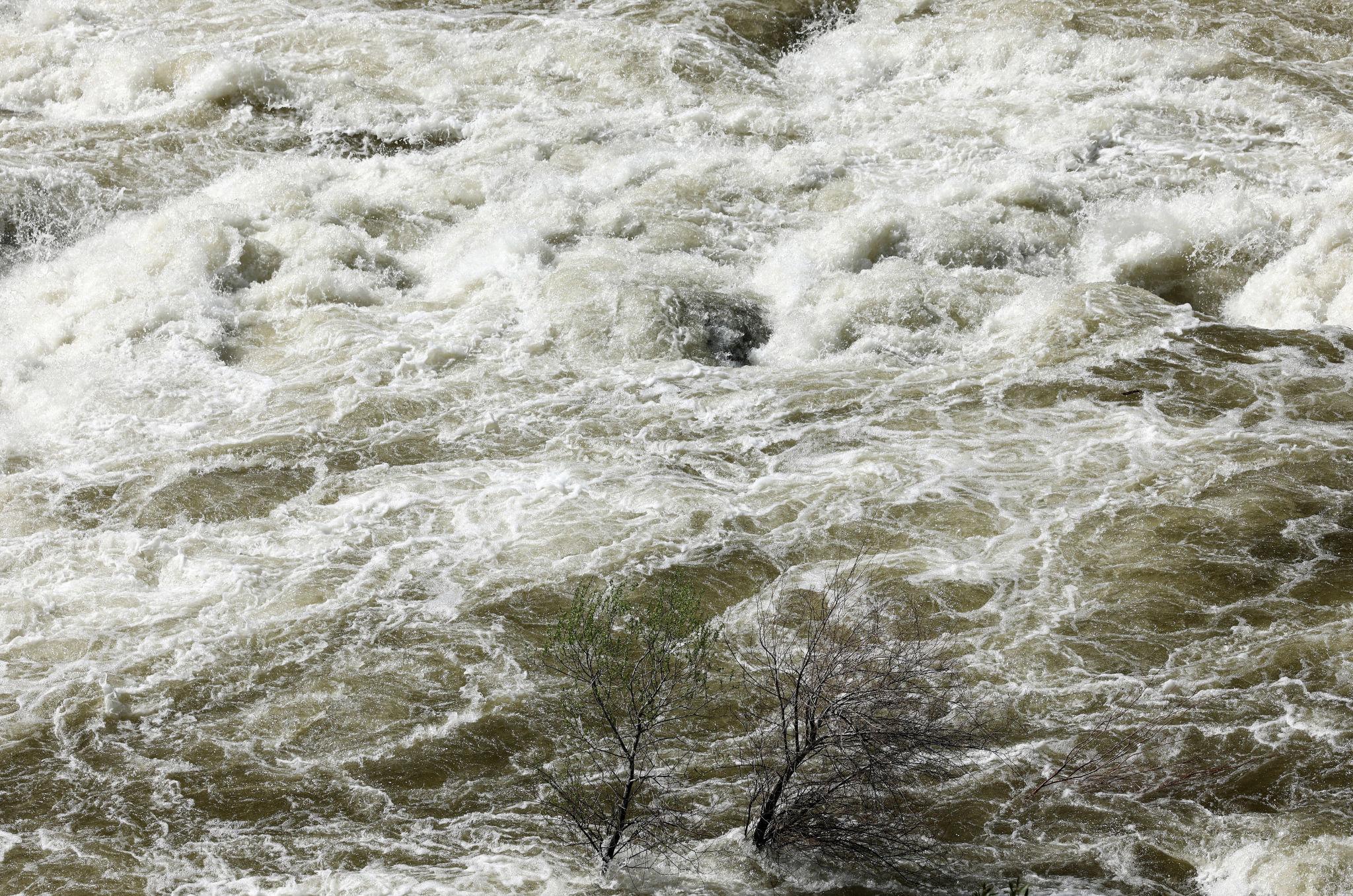
This is what opportunity looks like—cold, fast, moving water. When rivers run like this, young salmon have a fighting chance to make it to the ocean. Those conditions are super important.
When you break it down, it’s all sort of simple. First, when incubating salmon eggs are in cold enough water, they’ll hatch. Then, when juvenile salmon have the water they need to move safely downstream, more of them survive. And when more fish survive, we start to see the kind of returns that support fishing seasons, coastal economies, and the broader ecosystem.
Turning Science into Action
Good conditions are key—but there is another part of the story.
One of the biggest shifts in recent years has been the use of science to actively improve the survival of hatchery salmon.
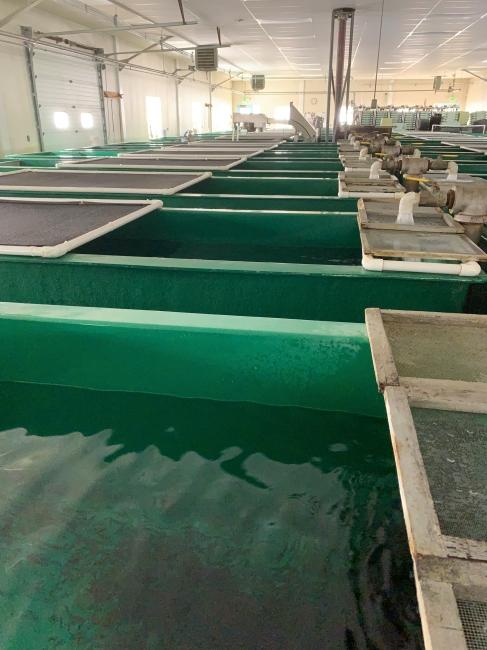
Behind the scenes, this is where the next generation starts. Smarter hatchery practices—and tools like genetic tracking—are helping more young salmon survive and return to the ocean. GSSA worked directly with the California legislature to secure $11.8 million in funding for Parentage-Based Tagging (PBT)—a game-changing tool that will eventually enable scientists to track salmon using genetic data rather than traditional wire tags.
People often ask why this is important.
Unlike traditional coded wire tags, PBT opens the door to earlier fry releases—sending young salmon into the system earlier in the year, when rivers are moving faster, water is more turbid, and predators are less of a threat.
Instead of waiting until baby salmon are large enough to be tagged the old way (which can mean holding them until May when agricultural water diversions are in full swing), we will eventually be able to release them during the winter or early spring, at a time when they’re more likely to survive.
It’s a smarter, more adaptive approach.
Fighting for the Water Salmon Need
At the end of the day, salmon need one thing above all else:
Water.
And getting enough of it—at the right time—has been one of the biggest challenges facing California salmon.
That’s where advocacy comes in.
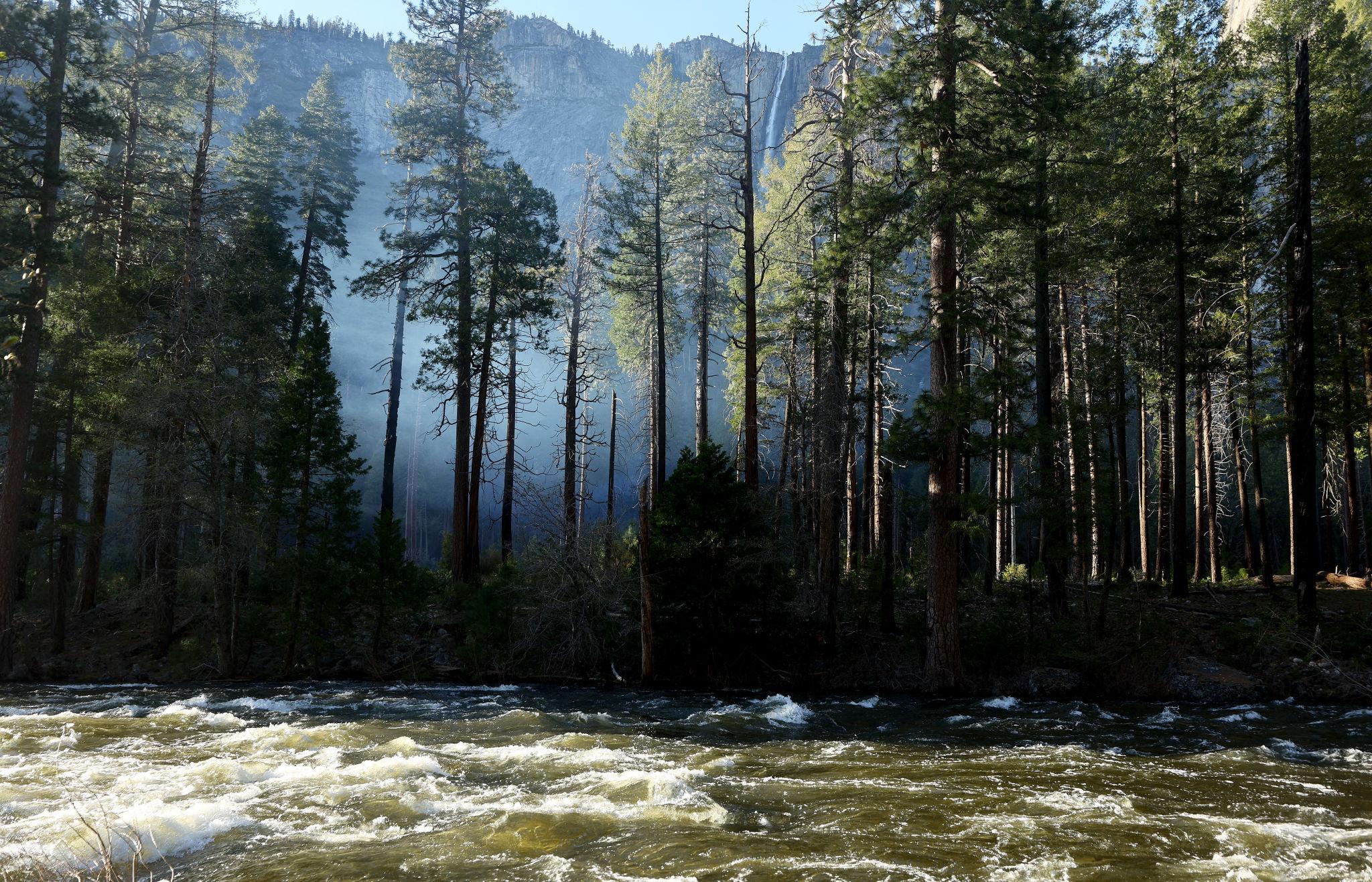
Cold, clean, moving water—this is where salmon begin. Protect the rivers, and everything downstream has a chance. GSSA has been pushing for pulse flows—targeted releases of water that help juvenile salmon move downstream more quickly and safely. These flows can improve river conditions by increasing turbidity, lowering water temperatures, and reducing exposure to predators and disease.
They’re not always easy to secure. In some cases, they’ve been denied even when reservoirs are full.
But the science is clear: when flows improve, survival improves.
And every step toward better water management is a step toward rebuilding salmon populations.
Real Wins, Real Impact
These efforts aren’t abstract. They show up in real ways:
- More fish are making it to the ocean
- Better returns in the following years
- Reopening fishing opportunities for communities that depend on them
In a “normal” year, California’s salmon industry supports $1.4 billion in economic activity and more than 20,000 jobs—from charter boat captains and tackle shops to restaurants and coastal hotels.
When salmon struggle, those communities feel it immediately.
When salmon recover, so do they.
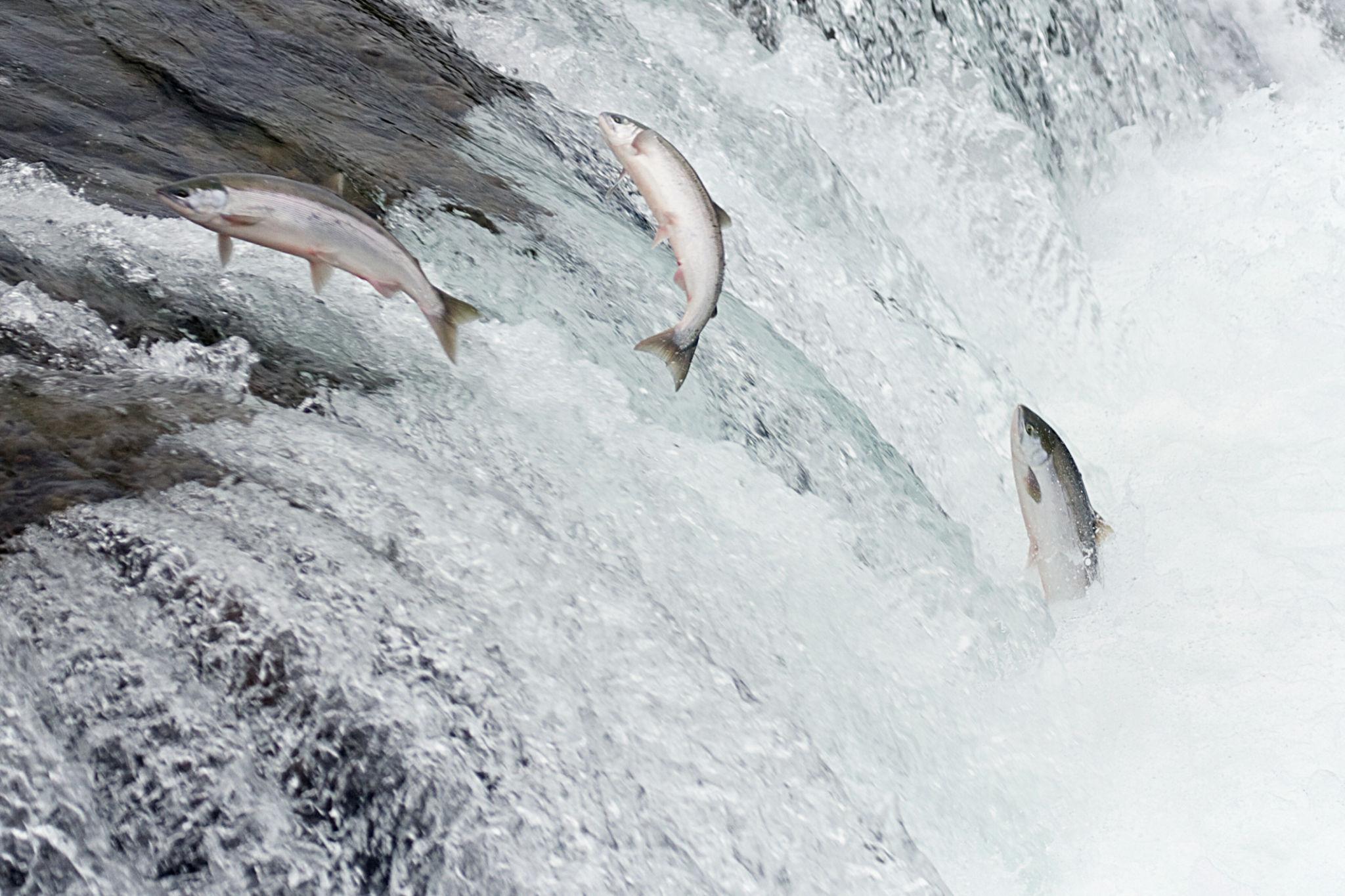
Against the current—that’s the fight. Give salmon the water they need, and they’ll do the rest. A Moment Worth Celebrating—And Protecting
It’s okay to feel good about where things are right now.
After everything the salmon—and the people who depend on them—have been through, this moment matters.
But it’s also fragile.
The same challenges that put salmon at risk in the first place haven’t gone away:
- Ongoing pressure to divert more water from rivers
- Infrastructure projects that threaten habitat
- Climate-driven extremes that make conditions less predictable
Progress isn’t permanent unless we protect it.
What Comes Next
This is the part where momentum matters most.
We have better tools. Better science. And proof that when conditions improve, salmon respond.
Now the goal is simple:
Do more of what works.
That means continuing to:
- Advocate for science-based water management
- Invest in innovative approaches like PBT
- Improve hatchery practices and support hatchery infrastructure upgrades
- Protect and restore critical habitat
And it means continuing to show up—together.
Be Part of What Comes Next
If you’ve been waiting for a sign that things are moving in the right direction, this is it.
But none of it continues without support.
Join the Golden State Salmon Association:
https://goldenstatesalmon.org/join/Support the work directly:
https://goldenstatesalmon.org/donate/These wins aren’t random. And they won’t continue without people who care enough to fight for them.
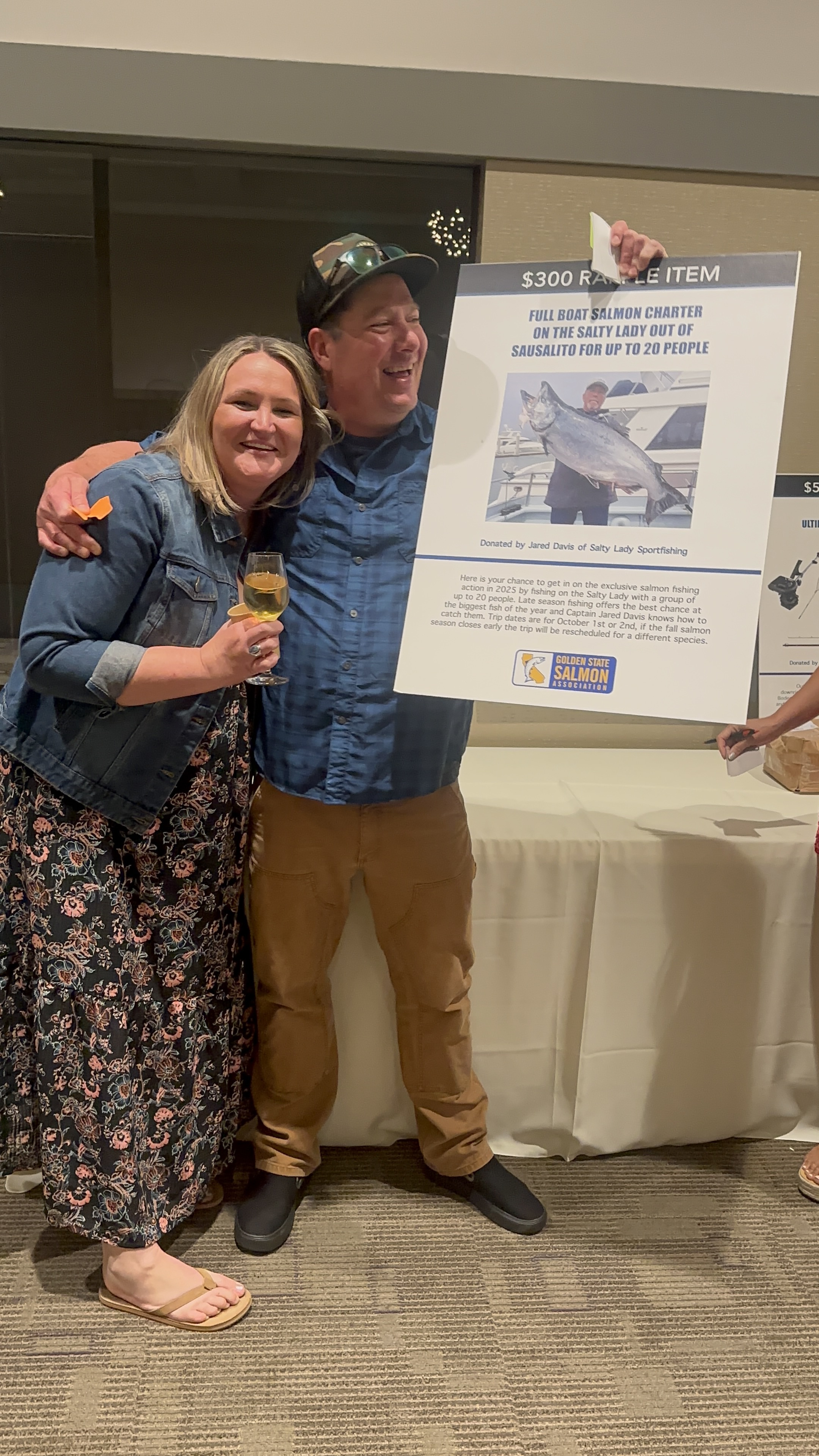
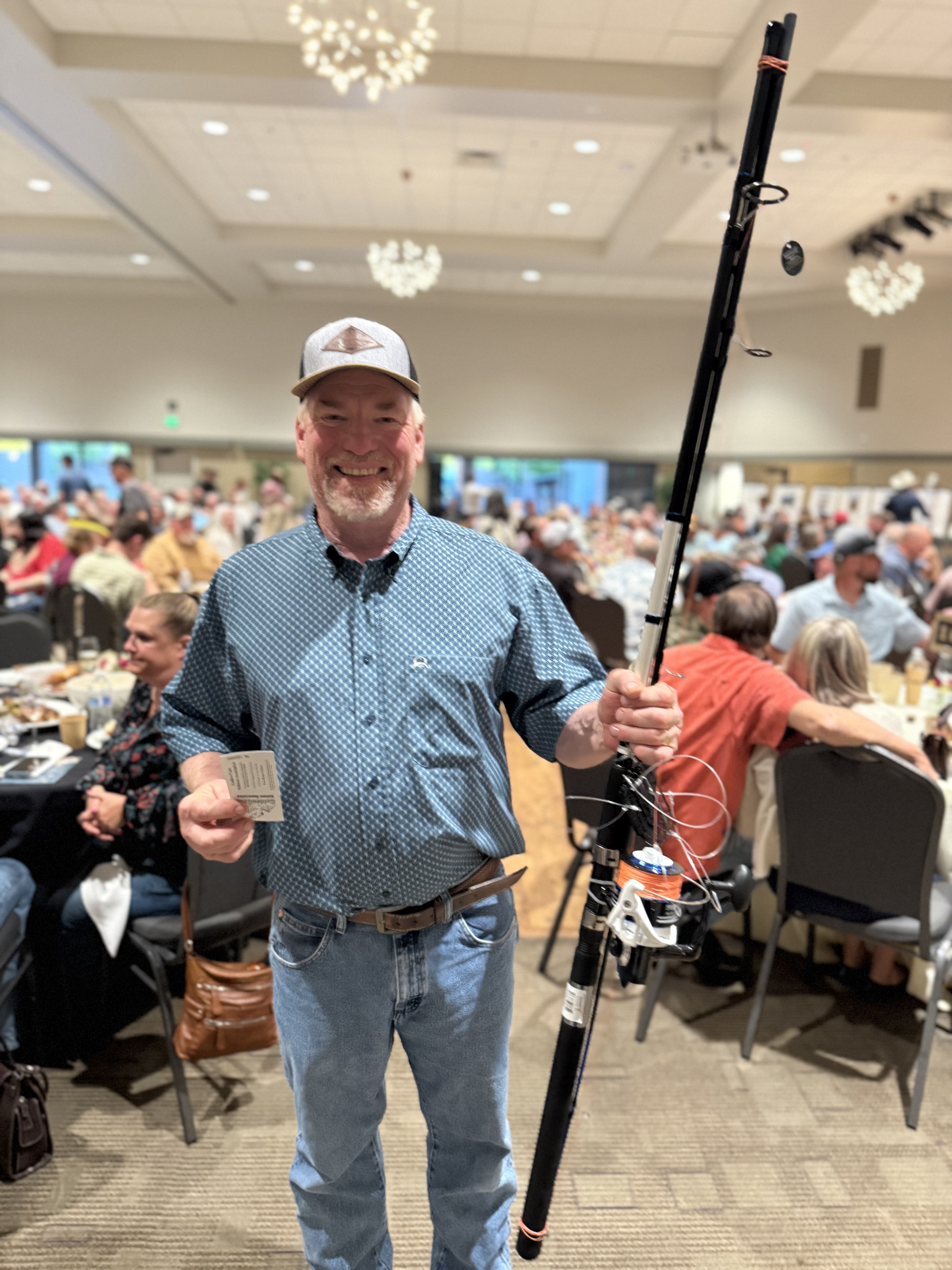
- Santa Rosa Dinner 2026
Good food. Cold drinks. Great people. A cause that matters.
After a few tough seasons where we weren’t sure what salmon fishing would look like, we’re finally back on the water chasing fish again. That alone is worth celebrating—and there’s no better place to do it than in a room full of your fishing buddies.
Join the Golden State Salmon Association in Santa Rosa for one of our favorite nights of the year.
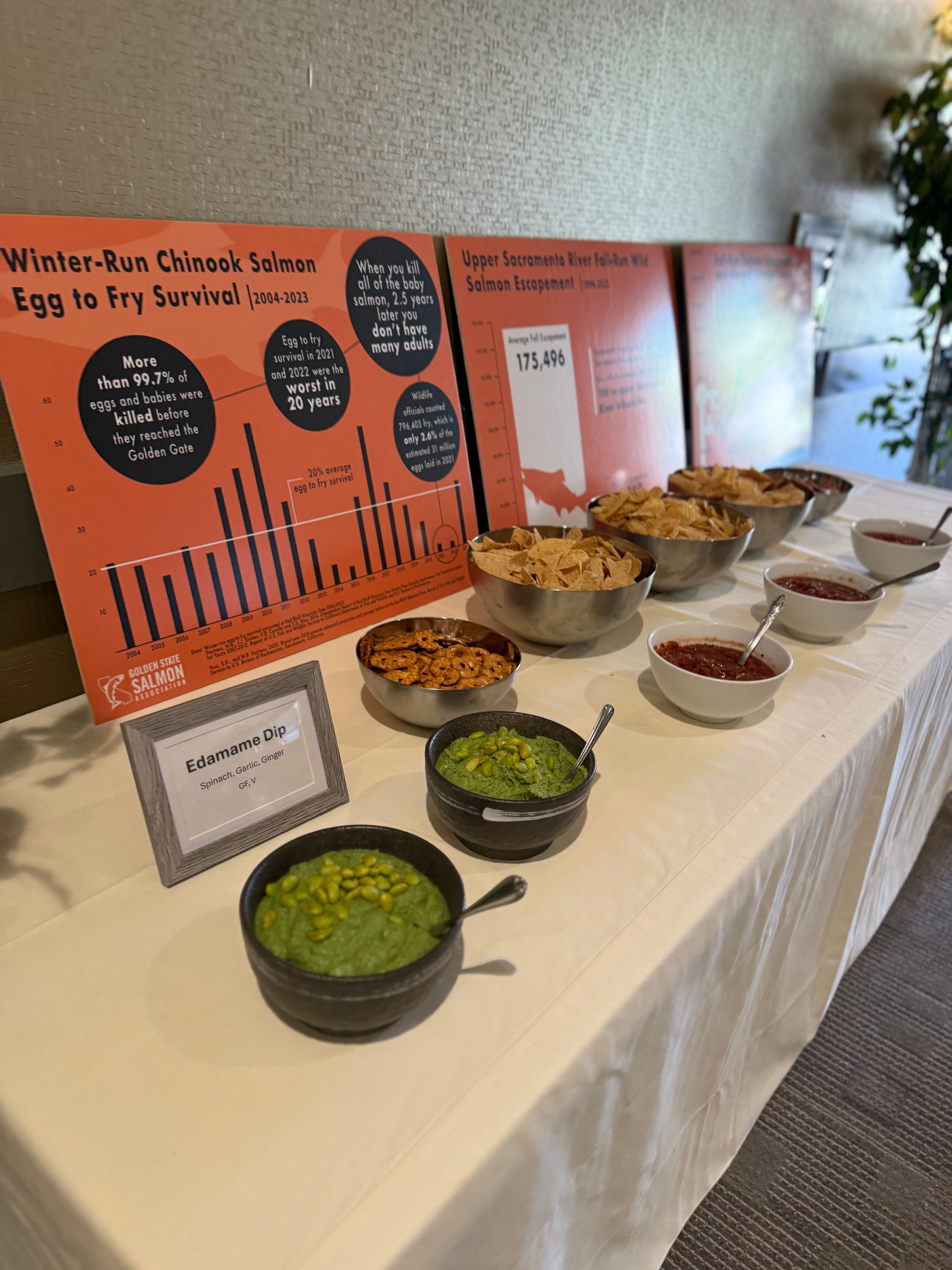
The annual Santa Rosa Dinner brings together anglers, families, and the broader salmon community for a fun night of BBQ, local drinks, raffles, and auction prizes. Tickets are limited, and the event is expected to sell out.
Event Details
Friday, June 5, 2026
Friedman Event Center, Santa Rosa
6:00 PM – 10:00 PMWhat to Expect
Your ticket includes:
- Full BBQ dinner
- Local beer and wine
- Raffle and auction prizes
- A lively crowd and a great night out
Enjoy a full BBQ dinner with ribs, chicken, and sides, along with local beer and wine. The night also features raffle and auction items, including fishing trips and gear. Tickets are $125, or reserve a table for 10 for $1,000.
Bring Your Crew
This is the kind of night that is even better with a table full of friends.
Bring your fishing buddies, your family, your clients—or anyone who enjoys a great night out.
Tables for 10 are available and are the best way to experience the event.Why This Night Matters
The Santa Rosa Dinner is a great night on its own. It also helps support GSSA’s work to protect and restore California salmon.
Ticket sales help fund GSSA’s work to restore California salmon—from improving river flows and hatchery practices to advancing science and advocating for better water management.
Get Tickets
Individual Ticket: $125
Table for 10: $1,000Tickets are limited, and the dinner is expected to sell out.
Questions?
For questions, please email info@goldenstatesalmon.org
- 2026 Salmon Seasons finalized
FOR IMMEDIATE RELEASE
April 12, 2026
Contact:
Vance Staplin, GSSA Executive Director, 916-225-2790
Salmon Fishing underway in Monterey Bay
San Francisco – The Pacific Fisheries Management Council has finalized when and where salmon fishing will occur in the ocean off California in 2026. Sport fishing for salmon began on Saturday, April 11, from Pigeon Point south to the Mexican border. Due to stormy weather, only a few boats fished, and a small number of salmon were caught.
Sport fishing for salmon will begin north of Pigeon Point on June 27. This will include waters off Half Moon Bay, San Francisco, Bodega Bay, and up to Point Arena. Waters from the Oregon border south to the “40/10” line offshore of southern Humboldt County will open June 13.
To implement the new quota system, each ocean regulatory “cell” will be assigned a number of catchable salmon. Salmon that are caught will be counted in as near to real time as possible. When the number of fish caught in a cell equals the quota for that cell, fishing will be shut down. The summer sport fishing quota for the Monterey cell is 21,800. The San Francisco cell quota is 34,900, and the Fort Bragg cell quota is 5,100.
Commercial salmon fishing will begin May 16, and the summer season, which runs until August 27, will include five openings above Pigeon Point and ten below Pigeon Point. The openings last three to seven days. Commercial boats will be limited to 160 salmon per opening and an overall quota of 83,000 salmon. Additional commercial fishing will be allowed in the fall season, starting September 4, until a quota of 20,000 salmon is caught.
This year’s restrictions on the ocean fishery are aimed at protecting what is believed to be a low number of chinook salmon born in coastal California rivers and streams between the Russian River in Sonoma County and Redwood Creek in Humboldt County. These fish are protected under the federal Endangered Species Act. Because of these protective measures, salmon fishermen in the Sacramento River and its tributaries could see an improved in-river fishery this year.
This year’s fishing comes after three years of a total fishery shutdown to commercial fishermen and the same to sport, with the exception of six days of fishing allowed in 2025.
According to official estimates, the current adult salmon population in California is 392,349, an improvement over recent years.
“We’re cautiously optimistic about what this year’s improved salmon seasons will bring,” said GSSA executive director Vance Staplin. “Businesses up and down the coast and inland are desperate for the economic boost this season will bring, especially after so many recent bad years of no business caused by the shutdown of salmon fishing. Coastal communities that have grown to rely on the annual salmon fishery are excited at the prospect of hopefully becoming profitable again. When you calculate the economic multipliers, the salmon fishery can bring over a billion dollars, spread across not only California, but also in Oregon, where many Central Valley salmon migrate to rear in the ocean.”
“We’re excited to have a fishing season, even though it will be greatly restricted this year,” said GSSA board chairman Mike Aughney. “At the same time, we’re also concerned about the juvenile salmon currently trying to get out of the Central Valley and to the sea. After the extremely warm March, we can use all the rain we can get as baby salmon transit from fresh to saltwater between now and June.”
About GSSA: The Golden State Salmon Association (www.goldenstatesalmon.org) is a coalition of salmon advocates that includes commercial and recreational salmon fishermen and women, businesses, restaurants, a native tribe, environmentalists, elected officials, families, and communities that rely on salmon. GSSA’s mission is to restore California salmon for their economic, recreational, commercial, environmental, cultural, and health values.
Currently, California’s salmon industry is valued at $1.4 billion in economic activity and 23,000 jobs annually in a normal season, and about half that much in economic activity and jobs again in Oregon. Industry workers benefiting from Central Valley salmon stretch from Santa Barbara to northern Oregon. This includes commercial fishermen and women, recreational fishermen and women (freshwater and saltwater), fish processors, marinas, coastal communities, equipment manufacturers, the hotel and food industry, tribes, and others.
# # # #
Media contact: Vance Staplin, GSSA Executive Director, 916-225-2790
- The Salmon Economy: Why a Healthy Fishery Means Healthy Communities
Salmon Are More Than Just a Fish
When most people hear the word salmon, they picture fishing boats, rivers, or maybe a fillet on a dinner plate or at a restaurant. But in California, salmon represent something much bigger.
They support entire coastal and river communities across the state.
From commercial fishermen and charter captains to marina operators, tackle shops, restaurants, and tourism businesses, salmon fuel a major economic engine along California’s coast and throughout the Central Valley.
Historically, California’s salmon fishery has supported approximately 23,000 jobs and more than $1.4 billion in annual economic activity.
That economic network stretches far beyond the water. It reaches into working waterfronts, small businesses, local restaurants and hotels, and family livelihoods.
Simply put, when salmon runs are healthy, a whole economy thrives. And conversely, when salmon disappear, the economic ripple spreads far beyond the rivers.
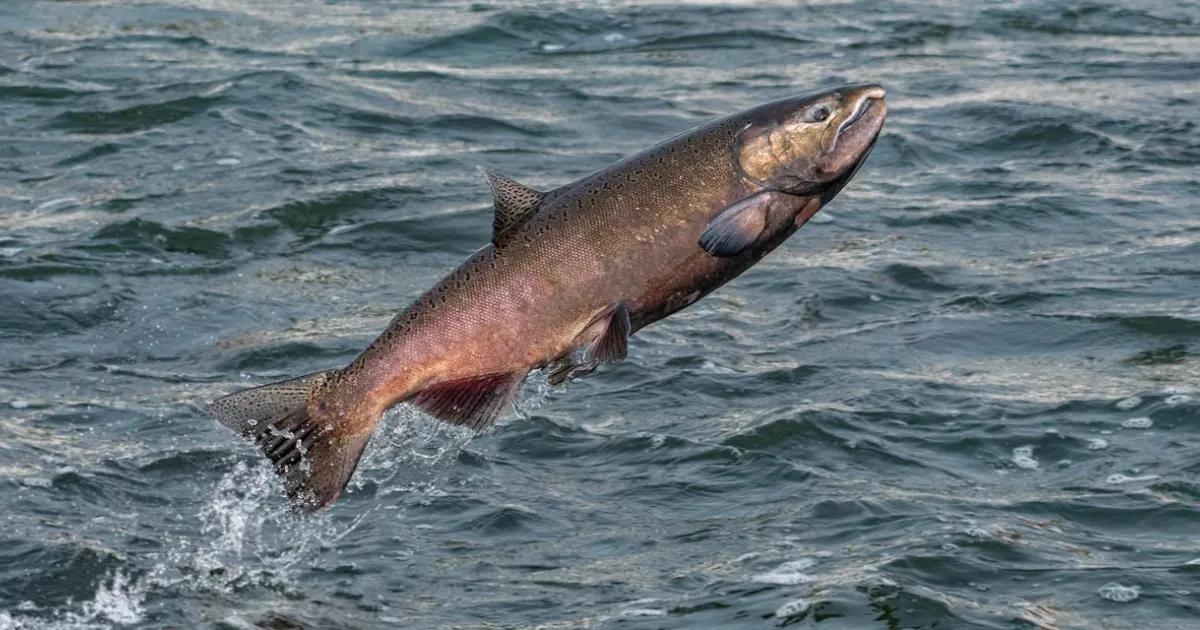
A California Chinook salmon surges upstream—fueling ecosystems, supporting communities, and driving a $1.4 billion coastal economy. A Glimpse of Hope: The 2026 Salmon Season Begins to Take Shape
There is some encouraging news for anglers and coastal communities this year.
California’s 2026 ocean salmon season is beginning to take shape.
The Pacific Fishery Management Council has released preliminary alternatives for the recreational and commercial salmon seasons, outlining potential fishing opportunities for the year ahead. But there is one important detail that may be less obvious in the Council’s materials.
The Monterey “Cell” fishery will open on April 11.
This area lies south of Pigeon Point in southern San Mateo County and includes the waters of Monterey Bay all the way south to the Mexican border. It will provide the first ocean salmon fishing opportunity in California in 2026.
Some anglers may notice that a May 15 date appears in the PFMC March meeting documents. That date is not the opening day—it is simply a continuation of the season that begins on April 11.
While the Council will finalize the full season structure by April 12, even limited openings like this matter.
Why this matters is that even before the salmon season opens, boats start moving. Anglers tow trailers down the coast. Charter captains book trips. Folks start renting guest slips and even hotel and Airbnb accommodations. Coastal towns begin to feel the return of fishing activity.
For communities that depend on salmon, the season isn’t just about fishing; it’s about economic survival.
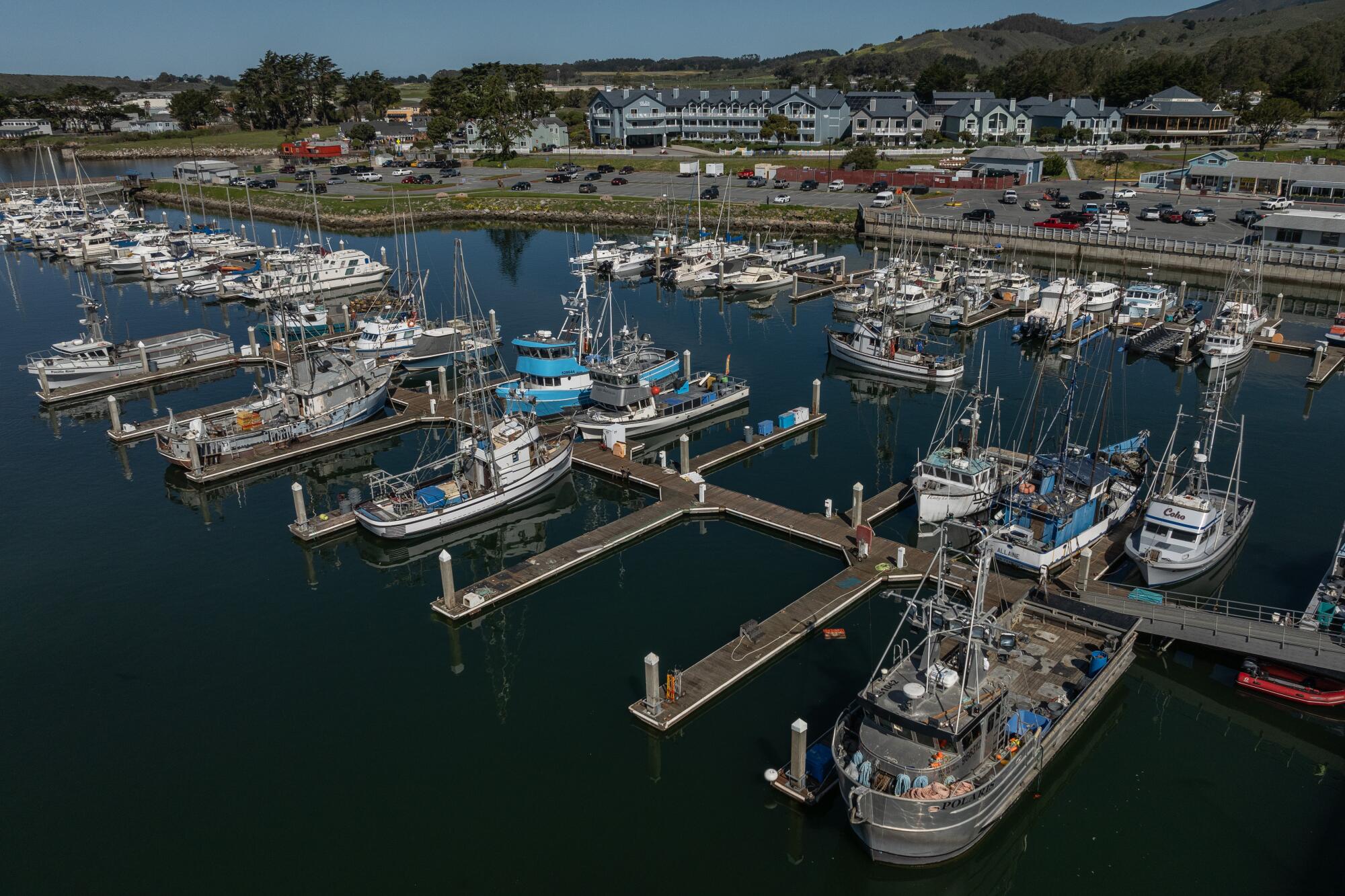
A California working waterfront at rest—commercial boats, marinas, and coastal businesses all tied to the rhythm of the salmon season. A Working Waterfront
Along California’s coast, salmon fishing has long been the backbone of working waterfronts.
Ports like Bodega Bay, Sausalito, Richmond, Berkeley, Emeryville, Half Moon Bay, Monterey, and Fort Bragg support fleets of commercial fishermen who harvest salmon during the short ocean season. Many of these fishermen come from multi-generation fishing families whose livelihoods have been tied to the ocean for decades.
Behind every fishing boat is a network of supporting businesses:
- Marine mechanics
- Fuel docks
- Ice houses
- Gear suppliers
- Fish processors and distributors
For many commercial fishermen, the salmon season helps determine whether their year is financially viable. When salmon fishing opportunities shrink or disappear, boats sit idle at the dock and incomes vanish.
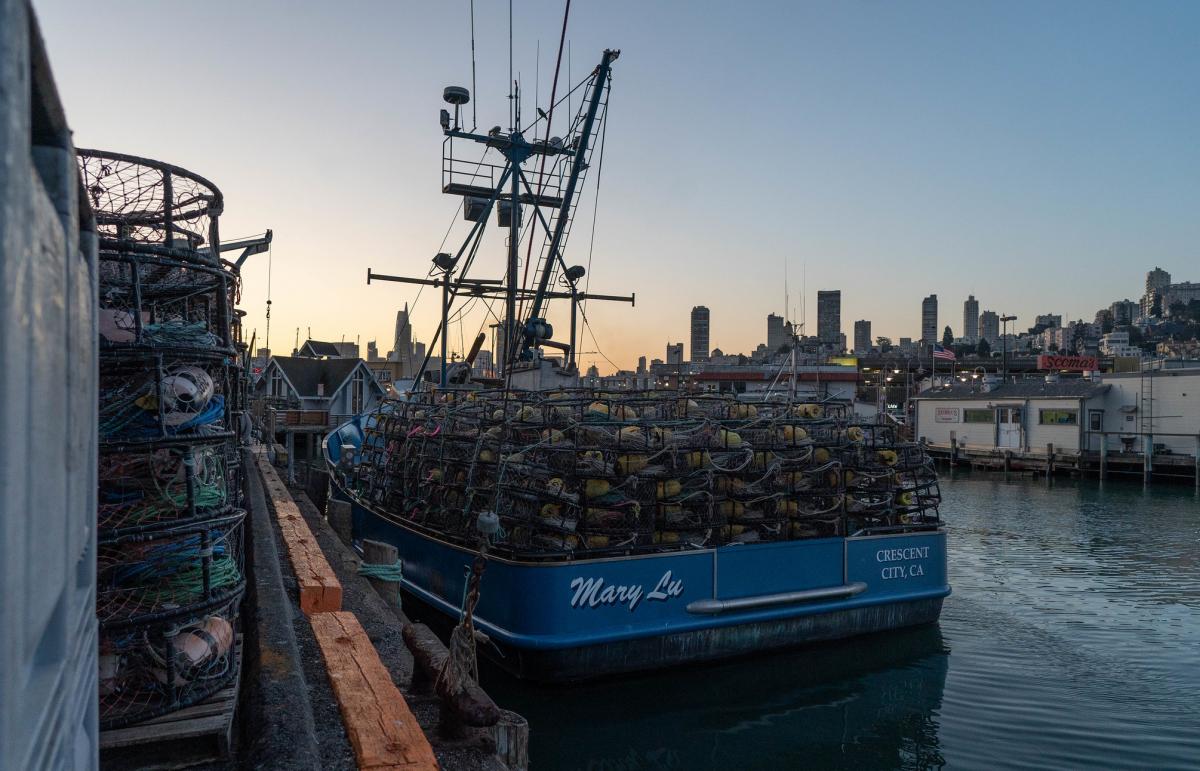
A commercial fishing vessel docked at daybreak—part of the coastal fleet that depends on healthy salmon runs to stay on the water and in business. “People tend to focus on the boats, but the truth is the entire waterfront depends on those fish moving through the system,” said Kenny Belov, owner of TwoXSea. “When salmon season is open, we’re buying fish, processing it, distributing it to restaurants and markets—it keeps everyone working. When the season shuts down, we turn to other species to keep our bills paid. The fishermen don’t always have that luxury. Permits, area restrictions, etc., can keep boats tied up, which means it’s hard for them to get a paycheck.”
The impact reaches beyond individual fishermen. It affects the entire infrastructure that supports coastal fisheries.
The Charter Fleet and Recreational Economy
Salmon also support a vibrant recreational fishing economy.
Charter boat captains and deckhands depend on the salmon season to fill their calendars with trips. Marinas depend on anglers launching boats and buying fuel. Bait shops and tackle stores depend on fishing activity to keep their doors open.
When salmon are biting, coastal communities feel the energy.
Anglers travel from across California—and often from out of state—to fish for salmon. They book hotels, eat in local restaurants, buy gear, and spend money in coastal towns.
“Salmon are the backbone of what we do,” said Captain Tyja Taube of Reel Obsession Sportfishing. “Rockfish, halibut, crab—they all help—but salmon is what really drives the season. It’s what fills the calendar, gets people excited, and brings life to the harbor. When salmon are healthy, the whole system works. Everything flows downstream from that.”
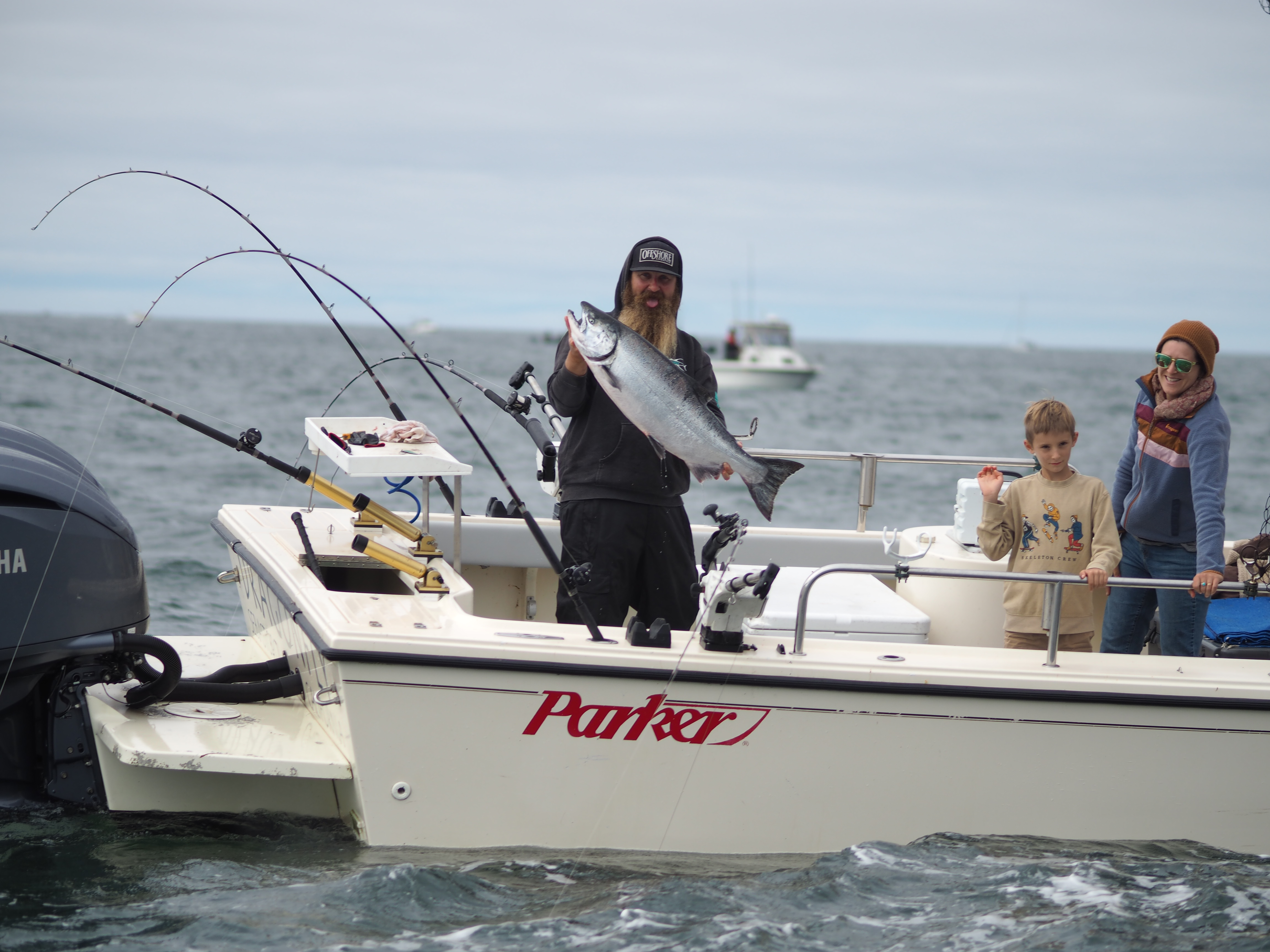
Nick Chatelain, deckhand for Reel Obsession Sportfishing, holds up a freshly caught salmon as a family of anglers celebrates a successful day on the water. Captain John Marfia of Tanker City Sportfishing adds, “To be successful with salmon, you have to treat it like a science. “Catch data, tides, moon phases—they all matter, and they all tell a story if you’re paying attention. I fish a lot of different species, but salmon is different. It rewards preparation, and that’s where we separate ourselves. But none of that matters if the fish aren’t there. We need everyone working together—from the people managing the water to the hatcheries—because if we don’t get it right, there’s no fishery left to enjoy.”
And each fish matters more than most people realize. Studies have shown that a single California salmon can generate significant economic value depending on where and how it’s caught. A sport-caught salmon in a river can generate more than $1,100 per fish in total economic impact, while ocean-caught salmon still contribute roughly $280 or more per fish through spending on travel, gear, fuel, and licenses.
Additionally, commercially caught salmon are essential to California’s working waterfronts and local food system, supporting fishermen, processors, and coastal businesses. Individual fish typically generate $138 to $214 in direct economic value, while retail prices for wild California king salmon can reach $20–$35 per pound or more.
In other words, every salmon caught isn’t just a moment on the water—it’s a meaningful contribution to local economies up and down the coast.
Even a short salmon opener can bring a surge of economic activity to communities that rely on seasonal tourism.
The early Monterey Cell opener on April 11 could trigger exactly that kind of movement. Trailer boats and anglers often travel to the first available fishing opportunity of the year, bringing business with them.
For coastal towns, the start of salmon season often signals the beginning of a busy and productive stretch of the year.
Salmon on the Plate
Salmon are also deeply woven into California’s food culture.
Wild California salmon is one of the state’s most iconic seafoods. Restaurants across the state feature fresh salmon on seasonal menus, and local seafood markets depend on salmon landings to supply customers seeking high-quality, locally caught fish.
“For chefs, wild California salmon isn’t just another ingredient—it’s the centerpiece of the season,” said Kevin Godes, GSSA board member and Bay Area chef. “We bring these fish in whole and honor every ounce of them, from a hard sear that crisps the skin to slow preparations that let the richness of the fish speak for itself. But none of that happens without our commercial fishermen. When those boats are on the water, the whole system comes back to life—from the deckhands and processors to the kitchens and dining rooms. Getting salmon back on the plate means getting our commercial brothers and sisters back to work, and that’s something every chef and every diner should care about.”
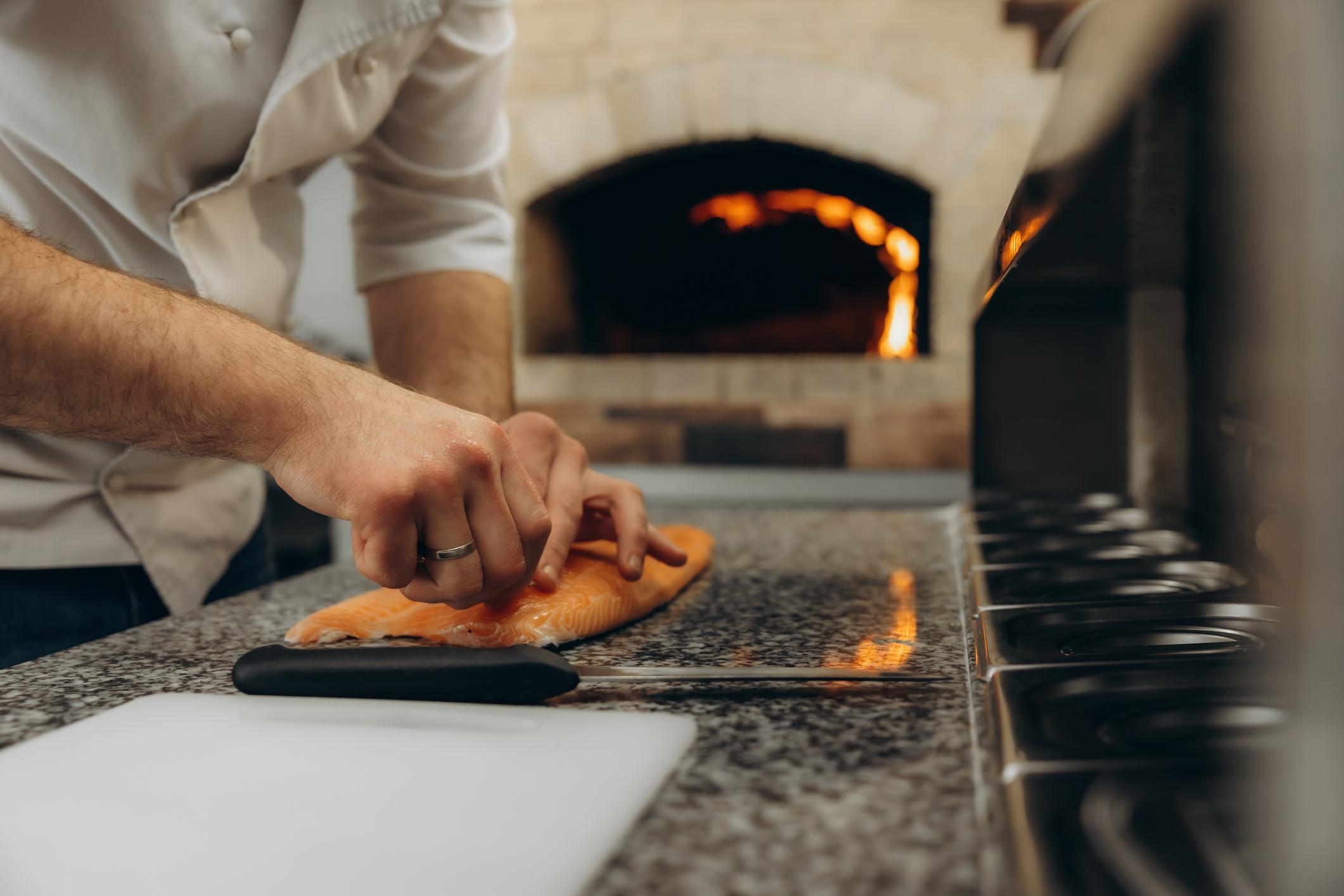
Fresh California salmon prepared in the kitchen—where local catch becomes the centerpiece of coastal cuisine. From dockside markets to farm-to-table restaurants, salmon connects fishermen directly to California’s culinary community.
Every salmon served in a restaurant represents a chain of livelihoods—from the fisherman who caught it to the chef who prepared it.
When salmon runs are strong, that entire chain benefits.
What Happens When Salmon Disappear
Over the past several years, California has experienced how devastating salmon declines can be.
Poor ocean conditions, drought, and harmful water management decisions contributed to extremely low salmon numbers. As a result, California’s salmon fishing seasons were severely restricted or, in the case of commercial fishing, closed entirely in recent years.
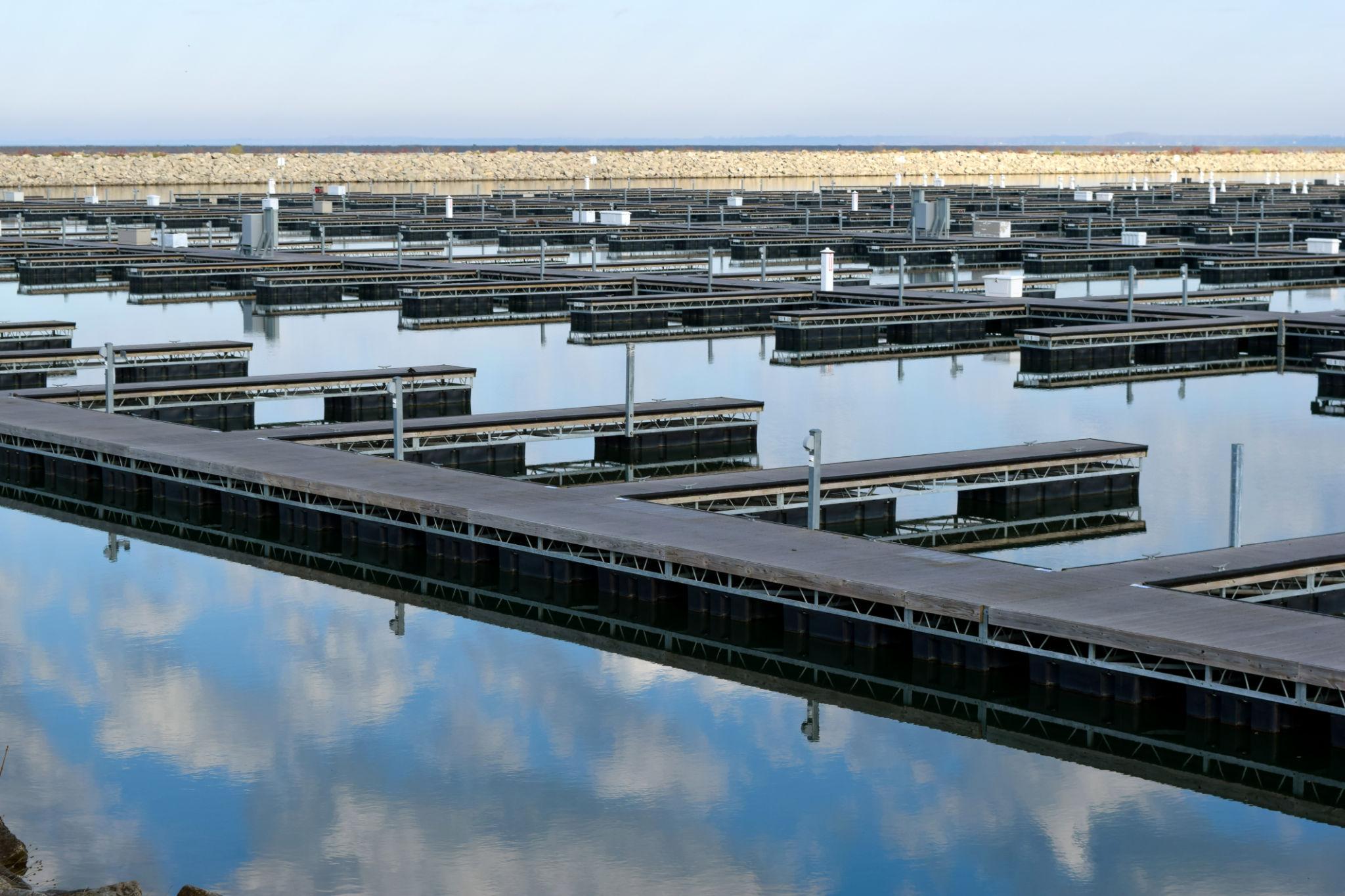
Rows of idle marina slips—an empty harbor that reflects what coastal communities face when salmon seasons are cut short or disappear. The consequences were immediate.
Charter boats canceled trips. Commercial fishermen lost a major source of income. Restaurants struggled to find local salmon. Coastal tourism slowed.
For some fishing families, the closures threatened generations of tradition and livelihood.
When salmon runs collapse, the impact spreads from the rivers to the ocean—and from the harbor to the entire coastal economy.
The Root of the Problem: Water Policy
While ocean conditions play a role in salmon survival, one of the biggest drivers of salmon declines in California is water management.
Salmon depend on healthy rivers to survive. Juvenile salmon must migrate downstream through the Sacramento–San Joaquin watershed and the Delta on their way to the ocean.
When excessive water diversions reduce river flows, salmon conditions deteriorate.
Lower flows can mean:
- Warmer water temperatures
- Reduced habitat
- Increased predation
- Slower migration to the ocean
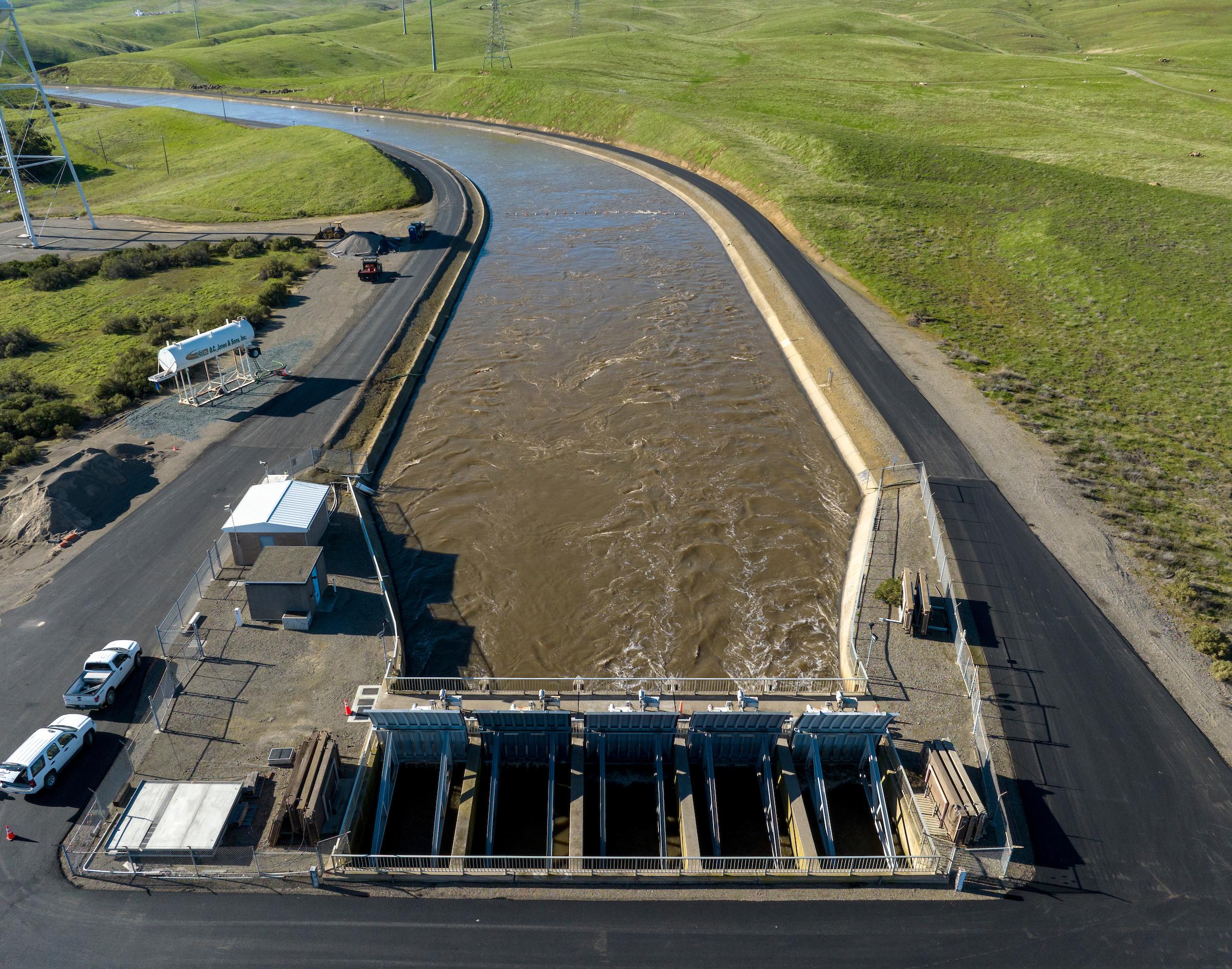
A major water diversion in California’s Delta, where decisions about river flows can determine whether salmon survive the journey to the ocean. These challenges significantly reduce the number of young salmon that survive to adulthood.
In other words, decisions about how California manages its water can determine whether salmon runs recover—or continue to decline.
Protecting salmon isn’t just about protecting fish; it’s about protecting the communities that depend on them.
The Path Forward
Despite the challenges, there are reasons for cautious optimism.
After the extremely wet winter of 2023 and the somewhat wet winter of 2024, improved river flows helped create better conditions for juvenile salmon migrating to the ocean. As a result, salmon returns began showing signs of improvement, including strong jack returns in 2025.
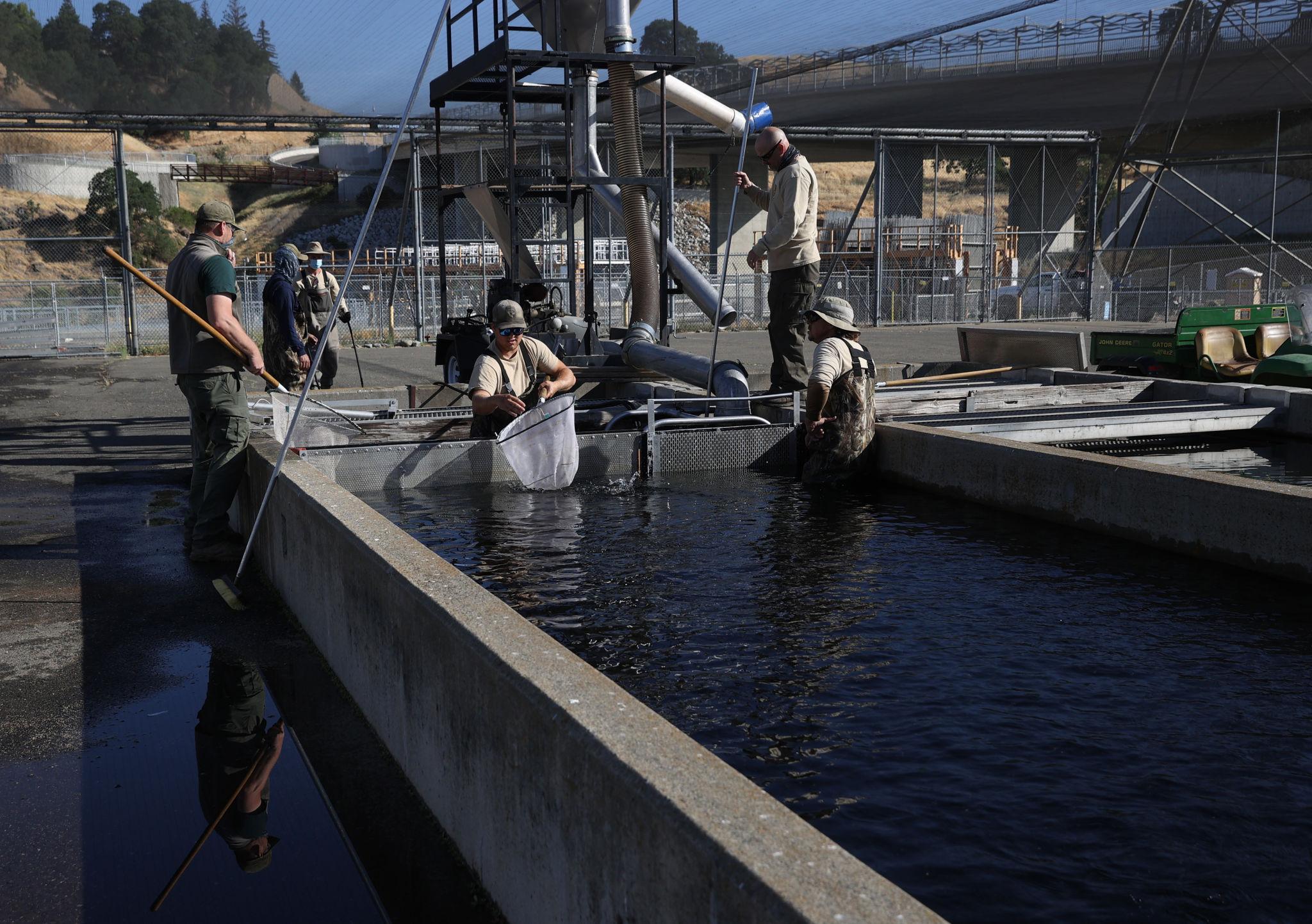
Biologists and hatchery staff carefully handle juvenile salmon—part of ongoing efforts to rebuild populations and support California’s fisheries. These results reinforce an important lesson:
When rivers work for salmon, salmon respond.
Efforts to rebuild salmon populations will require continued action, including:
- Improving river flows
- Restoring habitat
- Modernizing hatcheries
- Ensuring water management decisions consider fish survival
These steps can help rebuild salmon runs and restore the economic benefits that healthy fisheries bring to communities across California.
Healthy Rivers, Healthy Communities
Salmon are more than a species.
They are a keystone of California’s ecosystems, a cornerstone of coastal economies, and a cultural touchstone for fishing communities across the state.
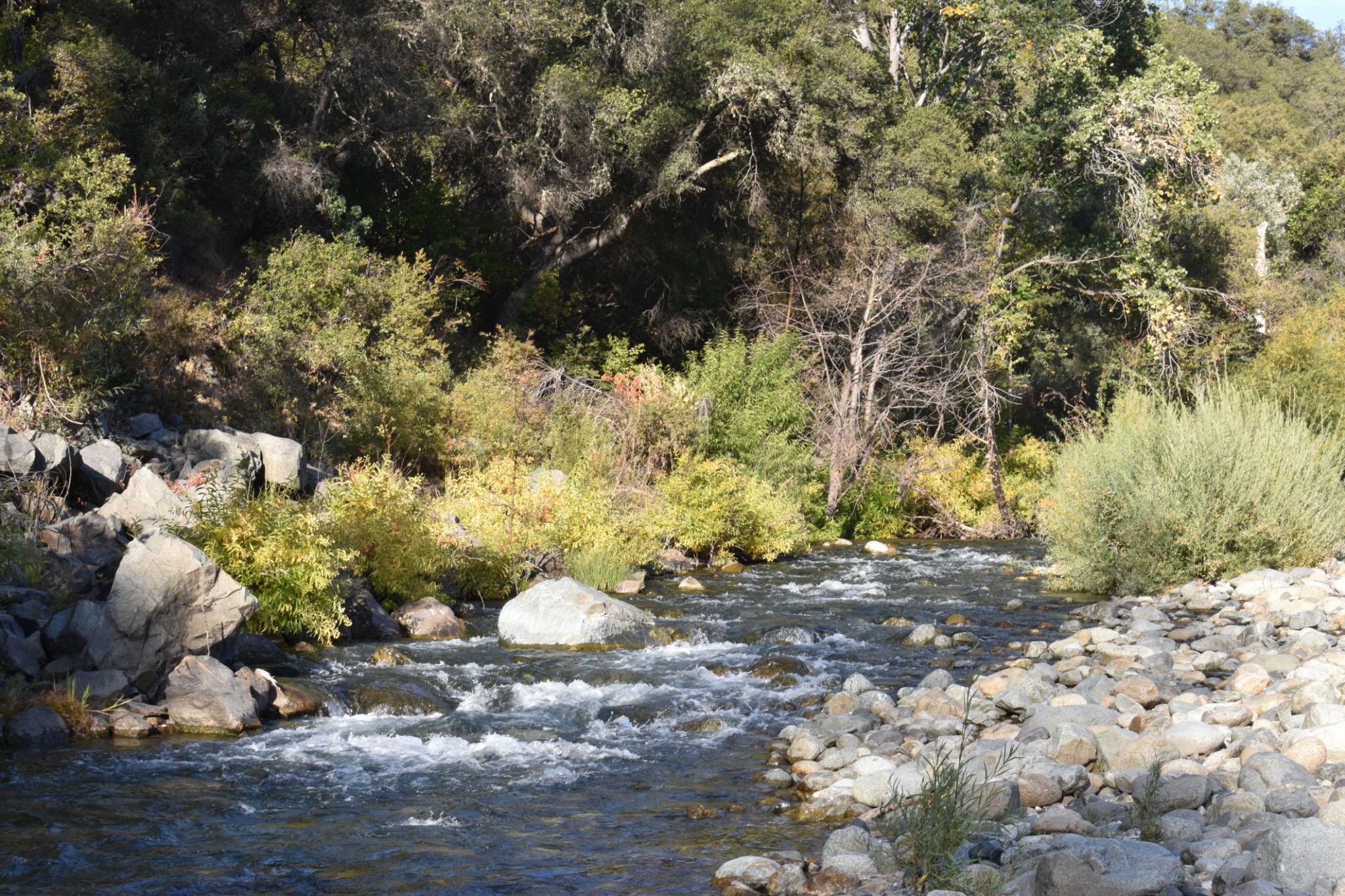
A healthy California river flowing through restored habitat—critical for young salmon making their journey to the ocean. When salmon runs are healthy, fishermen work, coastal businesses thrive, and local seafood reaches dinner tables across California.
The fight to restore salmon is about more than saving fish; it’s about protecting the rivers, jobs, communities, and traditions that depend on them.
Support the Work to Protect Salmon
The work to restore California’s salmon runs is far from over.
You can help support the efforts to rebuild salmon populations and protect the communities that depend on them.
Join the Golden State Salmon Association to stay informed, support science-based policy solutions, and help ensure that California’s salmon—and the economy they sustain—have a future.
- What Your Membership Makes Possible
Real wins for salmon—and how your support makes them happen
When people come together to support salmon, real change happens.
Over the past few years, California’s salmon have been under serious pressure. Fishing seasons were closed. Returns dropped. Coastal communities—from charter captains to tackle shops to working waterfronts—felt the impact in devastating and very real ways.
But there’s another side to the story.
Real wins are happening right now. Fish are coming back stronger than many expected. The 2025 jack return was the highest since 2011. The 2026 ocean population forecast is significantly improved. And for the first time in years, anglers are looking ahead to a season with cautious optimism, although serious challenges remain, especially for commercial salmon fishermen and women.
None of that happens by accident. Unfortunately, protecting water for salmon is a constant battle.
Behind every improvement is a combination of better environmental conditions (i.e., getting rain and snow)—and people doing the work to make sure those gains aren’t lost.
That’s where your support comes in.
The Reality: Change Doesn’t Happen on Its Own
Water policy in California is complex, competitive, and often stacked against fish.
Every drop of water in this state seems to be spoken for. Agriculture, cities, and industry all have a stake in this. Without consistent pressure and advocacy, salmon lose—quietly and quickly.
The truth is simple: If no one is in the room speaking for salmon, they don’t get considered.
The Golden State Salmon Association exists to make sure that doesn’t happen.
From regulatory hearings to policy negotiations to public awareness campaigns, we at GSSA do our best to represent the interests of salmon—and the communities that depend on them—where decisions are actually made.
And that work is only possible because of our incredible members and donors like you.
Where Your Support Is Making a Difference
This isn’t abstract advocacy; it’s a tangible, measurable impact.
Smarter Hatcheries, Stronger Returns
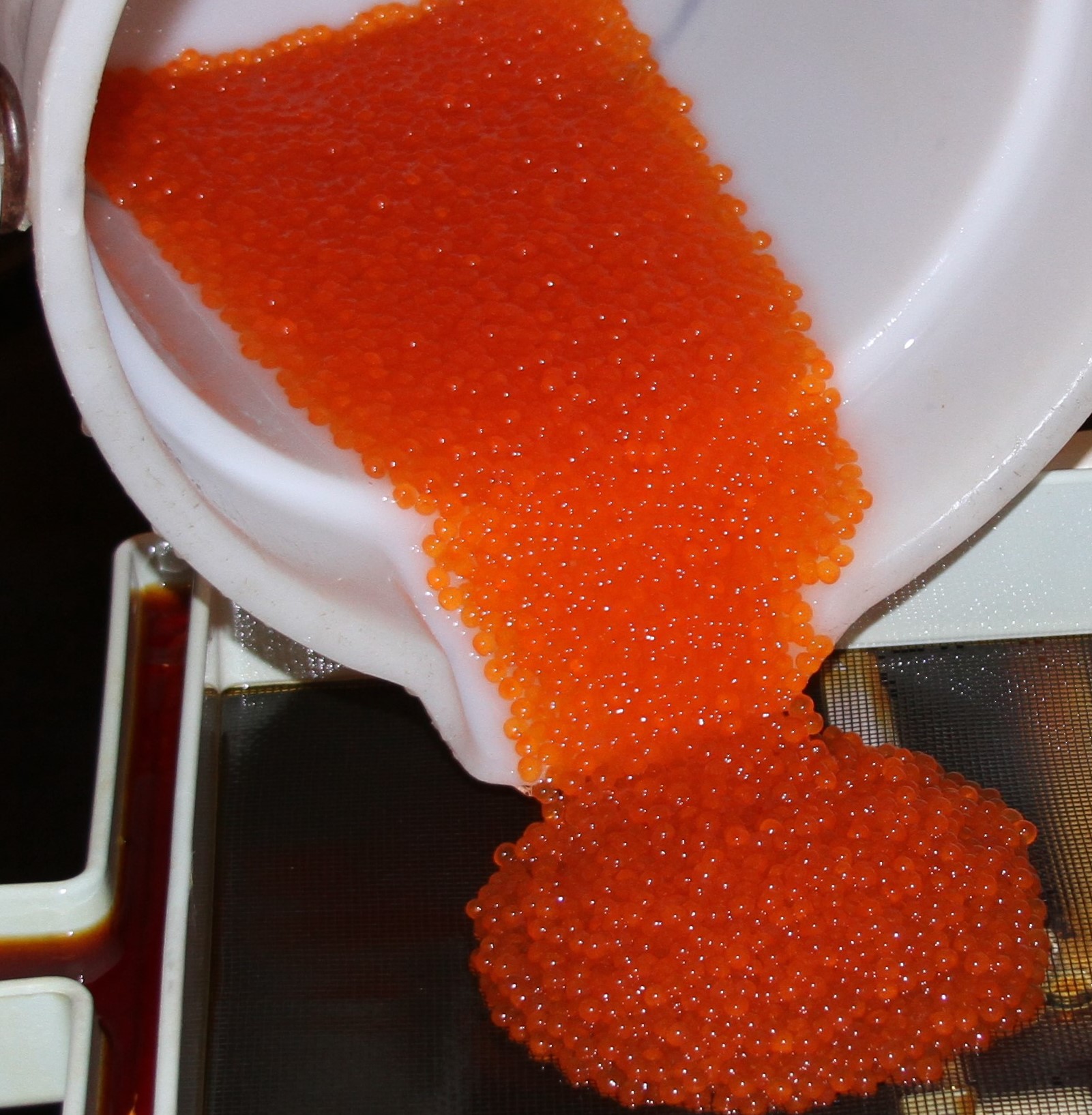
Chinook salmon eggs in a hatchery tray—an early stage in the life cycle where timing, handling, and care can make all the difference for survival. 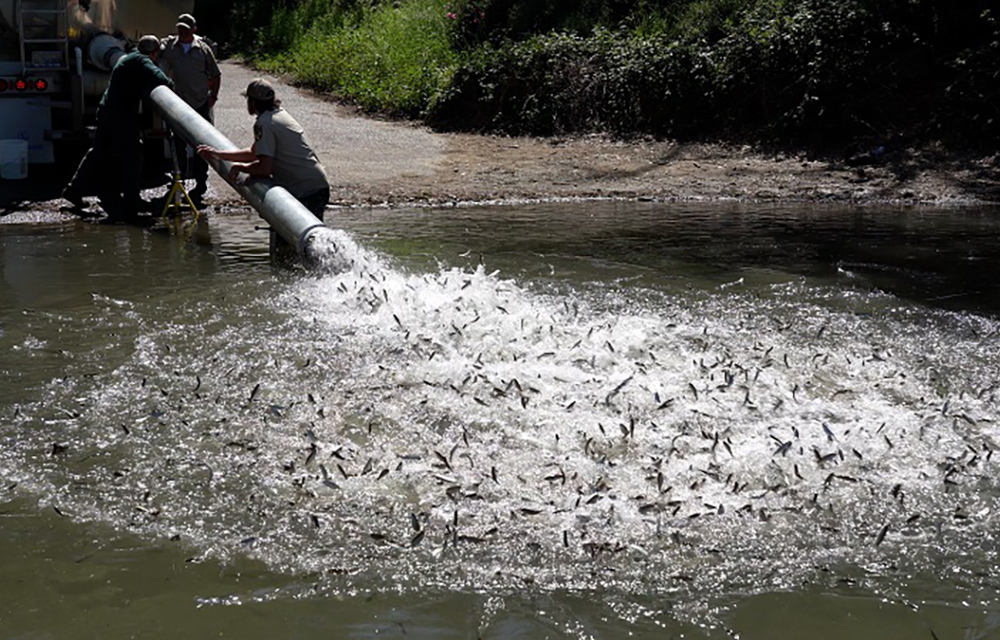
Juvenile salmon are released into the river—timing and location matter, as these early moments can shape their survival on the journey to the ocean. Major river systems have dams that cut off historical spawning habitat, so hatcheries play a critical role in sustaining California’s salmon runs today—but how they operate matters.
GSSA has been pushing for improvements that directly increase survival:
- Earlier releases of juvenile salmon to better match natural conditions
- Smarter strategies around trucking and volitional releases
- Expanded use of genetic tools like parentage-based tagging (PBT)
These changes don’t always make headlines—but they show up where it counts: more fish surviving in the ocean, being caught, and returning to our rivers.
This is the kind of behind-the-scenes work that directly impacts what anglers see on the water.
Fighting for Water That Salmon Actually Need
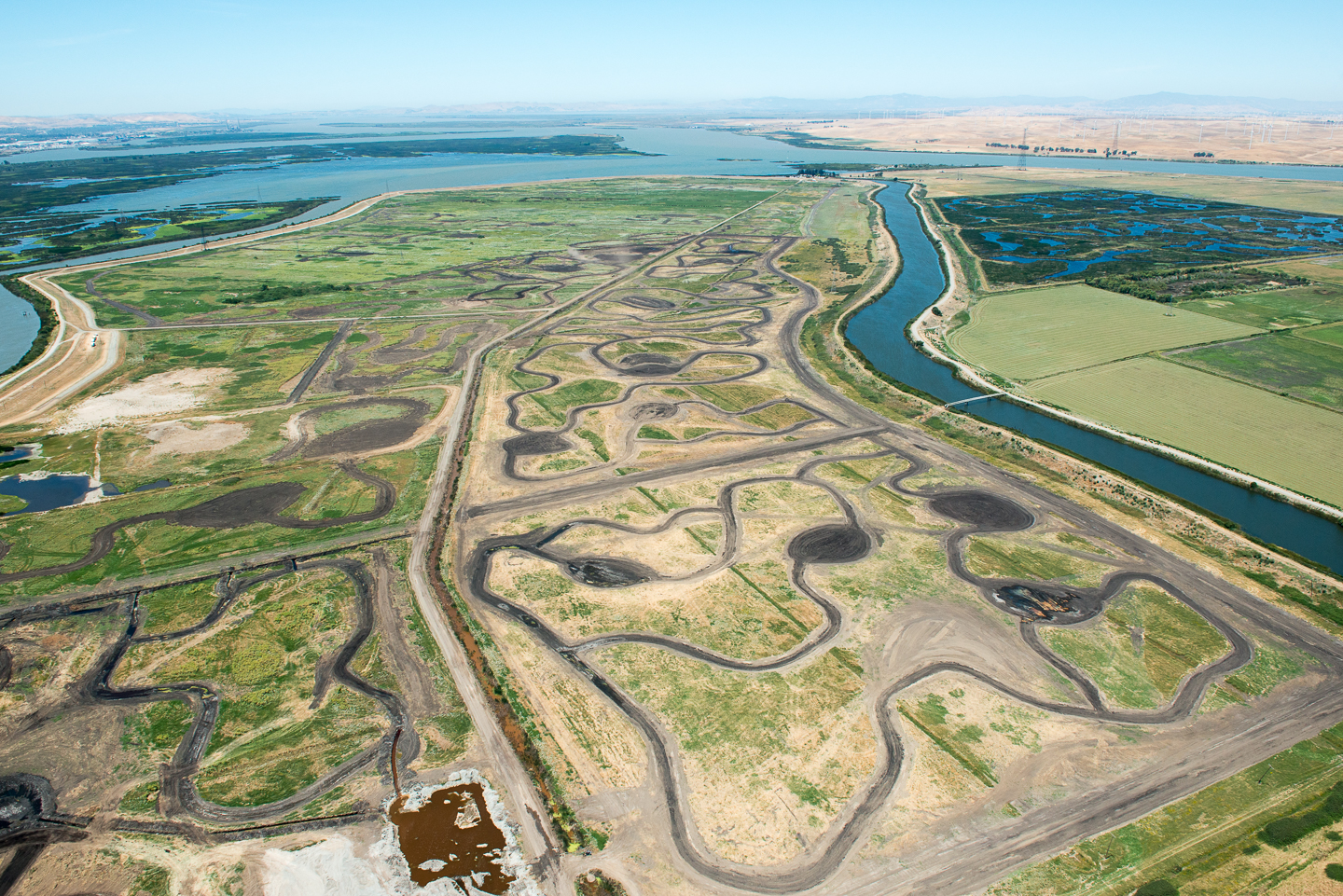
A restored floodplain designed to mimic natural river channels—projects like this reconnect habitat, slow water, and give juvenile salmon a better chance to grow and survive on their way to the ocean. For salmon, water isn’t just about quantity—it’s about timing, temperature, and flow.
When rivers run high, cold, and connected to floodplains, juvenile salmon move faster with less chance of predation, grow stronger, and survive at higher rates. We saw that clearly during the wet years of 2023 and 2024.
GSSA works to ensure those conditions aren’t the exception—they’re the standard.
That means:
- Advocating for better flow management
- Challenging excessive water diversions
- Pushing for policies that reflect what the science and the facts actually show
Because without the right water, sustaining salmon, even hatchery salmon, is a very steep uphill battle. Something should mention that cold, healthy flows are a habitat. Habitat without cold water is just dry gravel and logs on the bank
Holding Decision-Makers Accountable
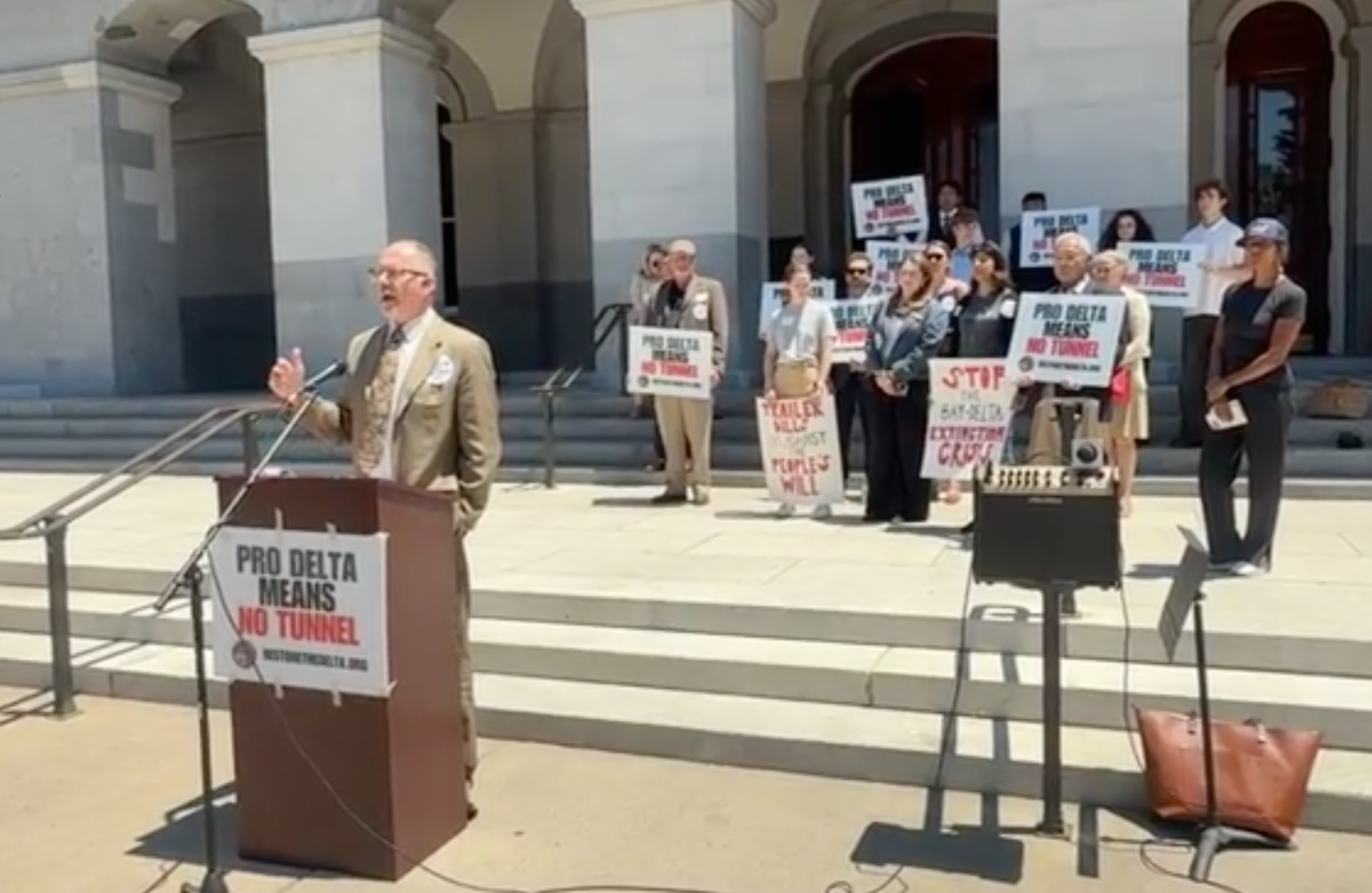
GSSA policy consultant Barry Nelson speaks in Sacramento, calling for science-based water management and stronger protections for California’s salmon and rivers. Many of the most important decisions affecting salmon are made out of public view.
GSSA is there—tracking proposals, analyzing impacts, speaking up, and making sure those decisions don’t go unchallenged.
That includes:
- Testifying at hearings
- Engaging directly with state and federal agency decision makers
- Raising public awareness when policies threaten salmon survival
Because salmon don’t have a voice in these processes, GSSA is there to make sure they’re heard.
Protecting Fishing Opportunities and Coastal Economies
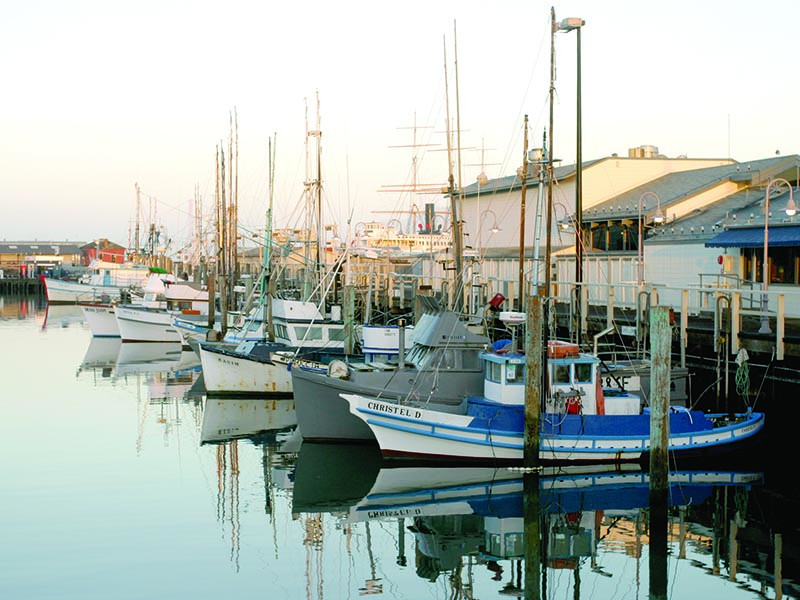
Commercial fishing boats sit idle at a California harbor—when salmon runs decline, coastal economies and fishing families feel the impact immediately. When salmon disappear, the impact goes far beyond the river.
California’s salmon fishery supports thousands of jobs and generates over a billion dollars in economic activity. When seasons close, that entire network—from commercial boats to local restaurants, hotels, shops, and more—takes a hit.
GSSA advocates for both the fish and the people who depend on them. Because a healthy fishery doesn’t just support ecosystems—it supports communities.
A Real-World Example: Why This Work Matters Right Now
Nick Chatelain of Reel Obsession Sonoma holds up a fresh salmon catch—exactly what GSSA is fighting for: healthy fisheries that keep charter captains on the water and families connected to the experience. There’s a reason people are feeling more hopeful heading into the 2026 season.
The improved ocean population numbers and strong jack returns are directly tied to better conditions in 2023 and 2024—years when Mother Nature stepped in, pushed runoff right through the dams, and rivers flowed higher, colder, and more naturally. Those fish didn’t show up by accident. Good water years created opportunity. But without continued advocacy, those gains can disappear just as quickly as they arrived.
“The improved outlook we’re seeing right now didn’t happen by accident. It’s the result of better conditions and years of people staying engaged and pushing for smarter decisions. That’s what your donation and membership make possible.” — Vance Staplin, Executive Director, Golden State Salmon Association
This Is What Collective Action Looks Like
Membership isn’t symbolic. It’s what makes this work possible.
It supports:
- Science and data analysis that inform better decisions
- Policy engagement at the state and federal levels
- Communications that keep the public informed and involved
- On-the-ground efforts that improve outcomes for fish
Every one of those pieces matters. And none of them happen without support.
What Happens Without It
We don’t have to guess what happens when no one is pushing for salmon. We’ve seen it. Water gets diverted at the wrong times. Rivers run too low and too warm, and fish die. Hatcheries fall behind and cannot reach their goals. Fish numbers drop. Seasons close.
It doesn’t happen all at once. It happens gradually—until suddenly it’s obvious.
The difference between decline and recovery often comes down to whether someone is paying attention—and willing to act.
Your Membership, Your Impact
When you become a member or donate to GSSA, you’re not just adding your name to a list.
You’re helping:
- Protect the rivers salmon depend on
- Support fishing families and coastal communities
- Ensure better decisions are made about California’s water
- Keep salmon on the landscape—and in our future
It’s a direct connection between support and outcome.
Join Us
If you care about salmon, this is the moment to step in.
There’s real momentum right now. Better conditions. Stronger returns. A chance to rebuild. But it won’t sustain itself.
Join the Golden State Salmon Association and be part of the reason salmon still have a future in California.👉 Become a member today
👉 Support the work that makes a difference - The Delta Tunnel: What’s at Stake for Salmon and California’s Rivers
California’s salmon are trying to tell us something. When we get the water right—as we did in 2023 and mostly in 2024—they respond. Rivers run higher and colder. Floodplains reconnect. Juvenile salmon move quickly to the ocean. Survival improves.
When we get it wrong, the opposite happens. Fish stall out. Water warms up. Predators concentrate. Survival drops.
It’s not complicated. And that’s exactly why the Delta Tunnel is such a problem.
Because at its core, this project doubles down on the same approach that pushed salmon to the brink in the first place: taking too much water out of the system and calling it “management.”
“You can’t restore salmon while simultaneously taking more water out of the rivers and delta that they depend on to survive. At some point, if we actually want salmon to survive, we have to curb the appetite of those that have proven they will drain the life out of our rivers.” — Vance Staplin, Executive Director, Golden State Salmon Association
The Pitch: Climate Resilience
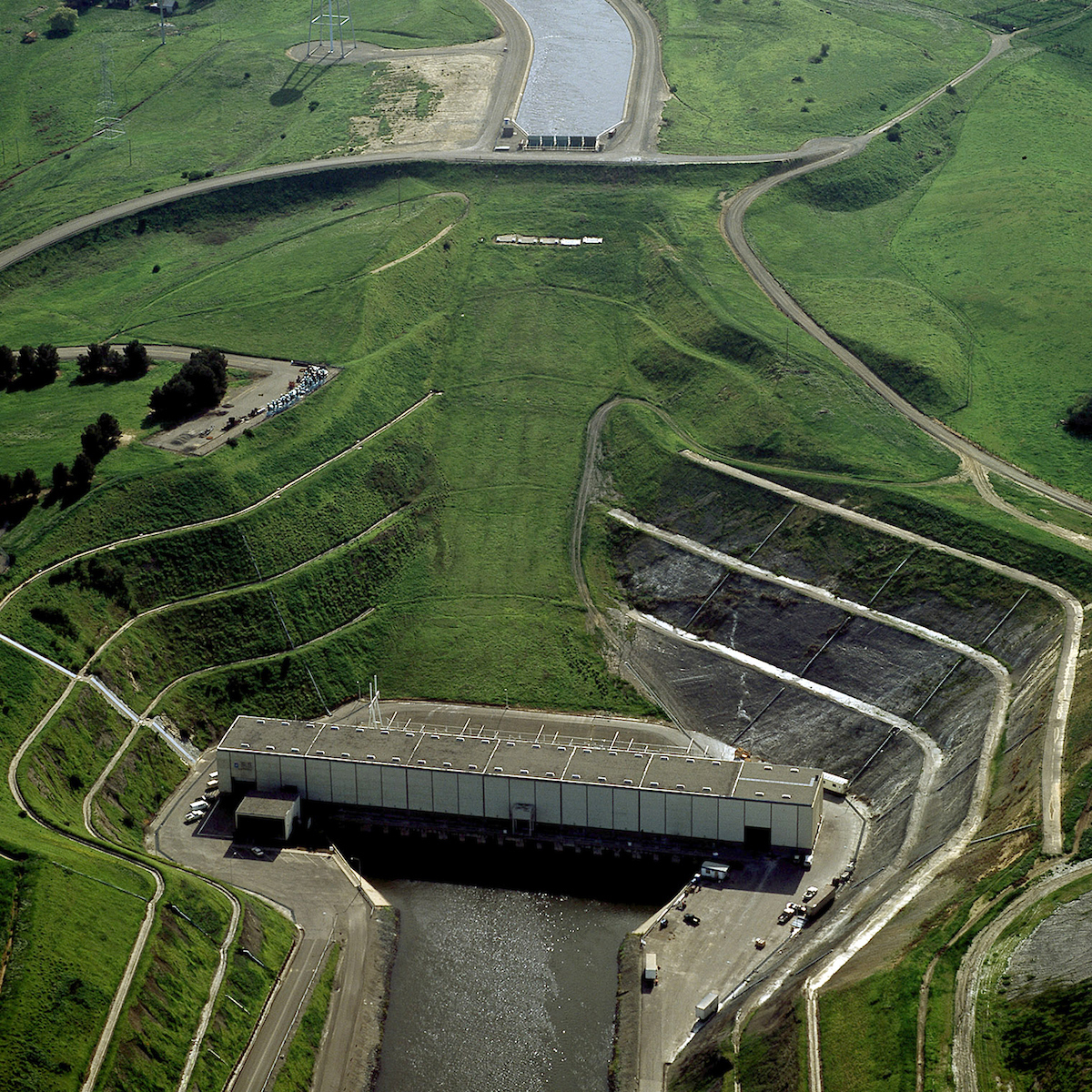
This is the scale of California’s water diversion system. The Delta Tunnel would expand our ability to move even more water—raising real questions about what’s left for salmon. The state’s Department of Water Resources says the Delta Tunnel is about climate adaptation.
With less snowpack, more extreme storms, longer droughts, sea-level rise, and earthquake risk, the state absolutely needs to think about resilience. All of these things are real. But here’s the question no one is answering honestly:
While building resilience is important, we need to think about whose resilience we are building, and at whose expense?
Because you don’t build climate resilience by draining the very rivers that make ecosystems—and economies—work.
Flow Is Not Optional
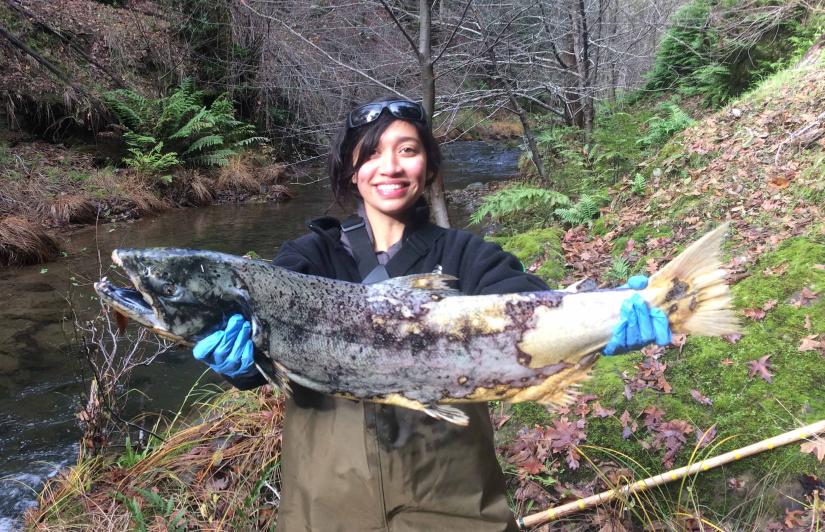
A wild Chinook salmon—one of California’s most iconic species. Their survival depends on cold, flowing rivers. When we get the water right, salmon have a chance. Salmon don’t need perfect conditions. But they do need water.
And cold, moving water does the basics:
- Moves juvenile fish downstream faster
- Dilutes pollutants
- Reduces predator pressure
- Speeds up juvenile migration
- Helps fish survive the gauntlet of the Delta
We’ve seen this play out in real time. The stronger returns we’re seeing now trace directly back to wet years and better flows. That’s not theory. That’s evidence.
So when a project is built to move more water out of the system, it’s fair to ask what happens to everything that depends on that water staying in the river.
This Isn’t Just About the Tunnel—It’s About What Comes With It
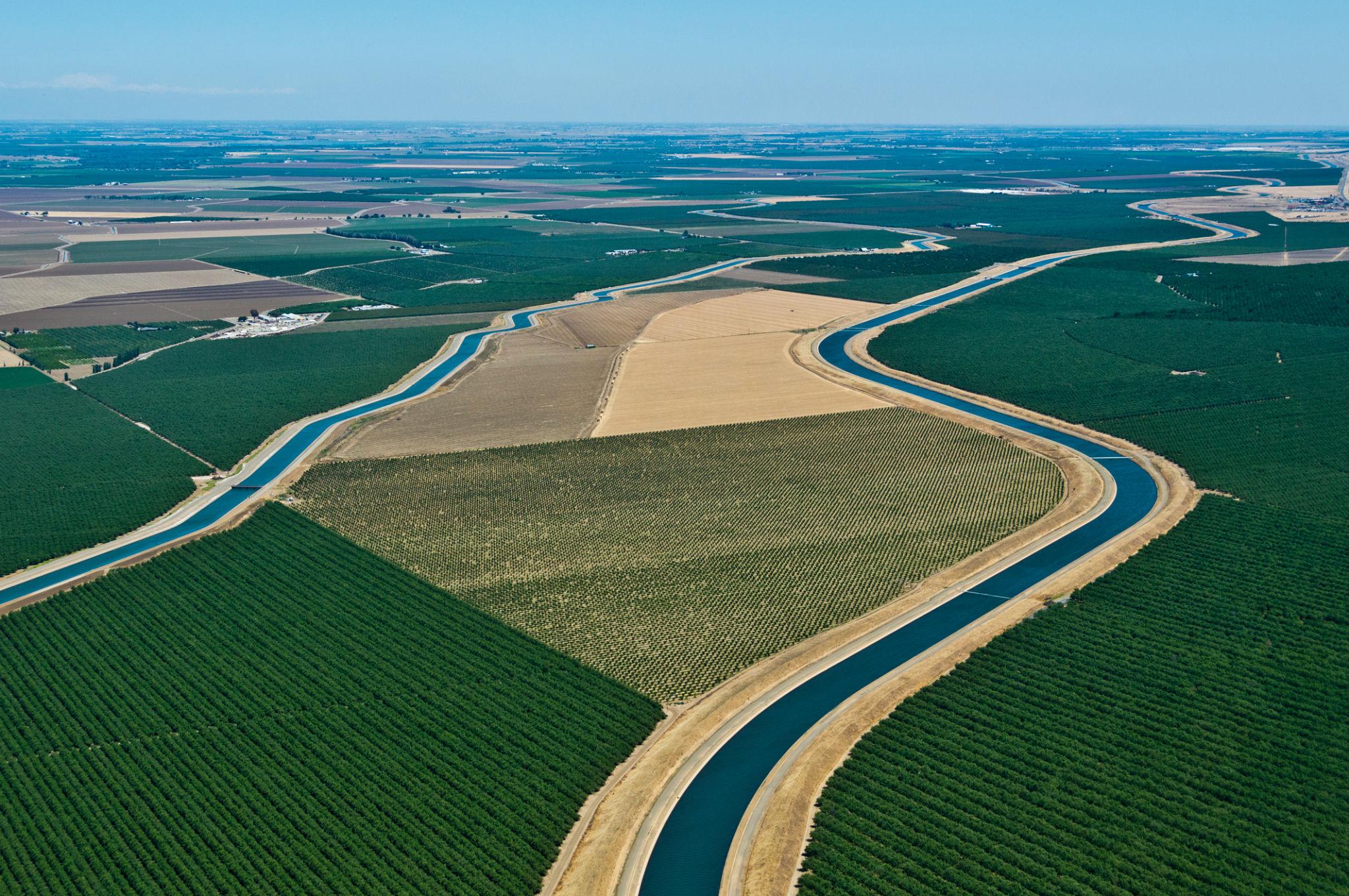
Miles of canals move water across California’s farmland. Every drop delivered here is water that didn’t stay in a river. At the same time, the project is designed to increase the system’s capacity to divert water—potentially by hundreds of thousands of acre-feet per year. That raises a fundamental question: in a system where salmon are already struggling, what happens when we build infrastructure that makes it easier to withdraw even more water?
That combination should raise alarms.
Because if you’re serious about recovering salmon, you don’t:
- Weaken flow standards
- Increase diversion capacity
- And call it environmental progress
We’re Already Seeing the Consequences of Over-Diversion
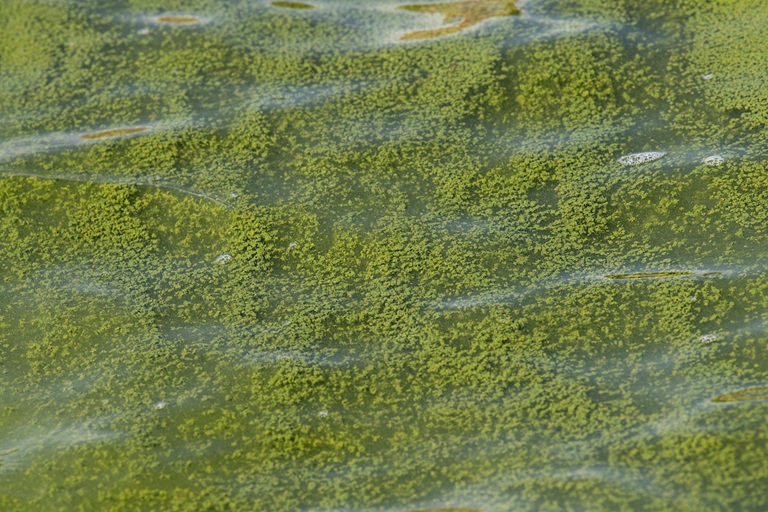
Algal blooms thrive in warm, slow-moving water—conditions that become more common when river flows are reduced. This isn’t theoretical. California’s salmon fishery was largely shut down over the past three years. Coastal communities have taken real economic hits. Fishing families have been pushed to the edge.
Those impacts weren’t caused by the Delta Tunnel. They’re the result of years of over-diverting water from the system, creating what many have called a “man-made drought” for salmon—even in years when water was available.
This is a $1.4 billion industry that supports thousands of jobs. And it’s already in trouble.
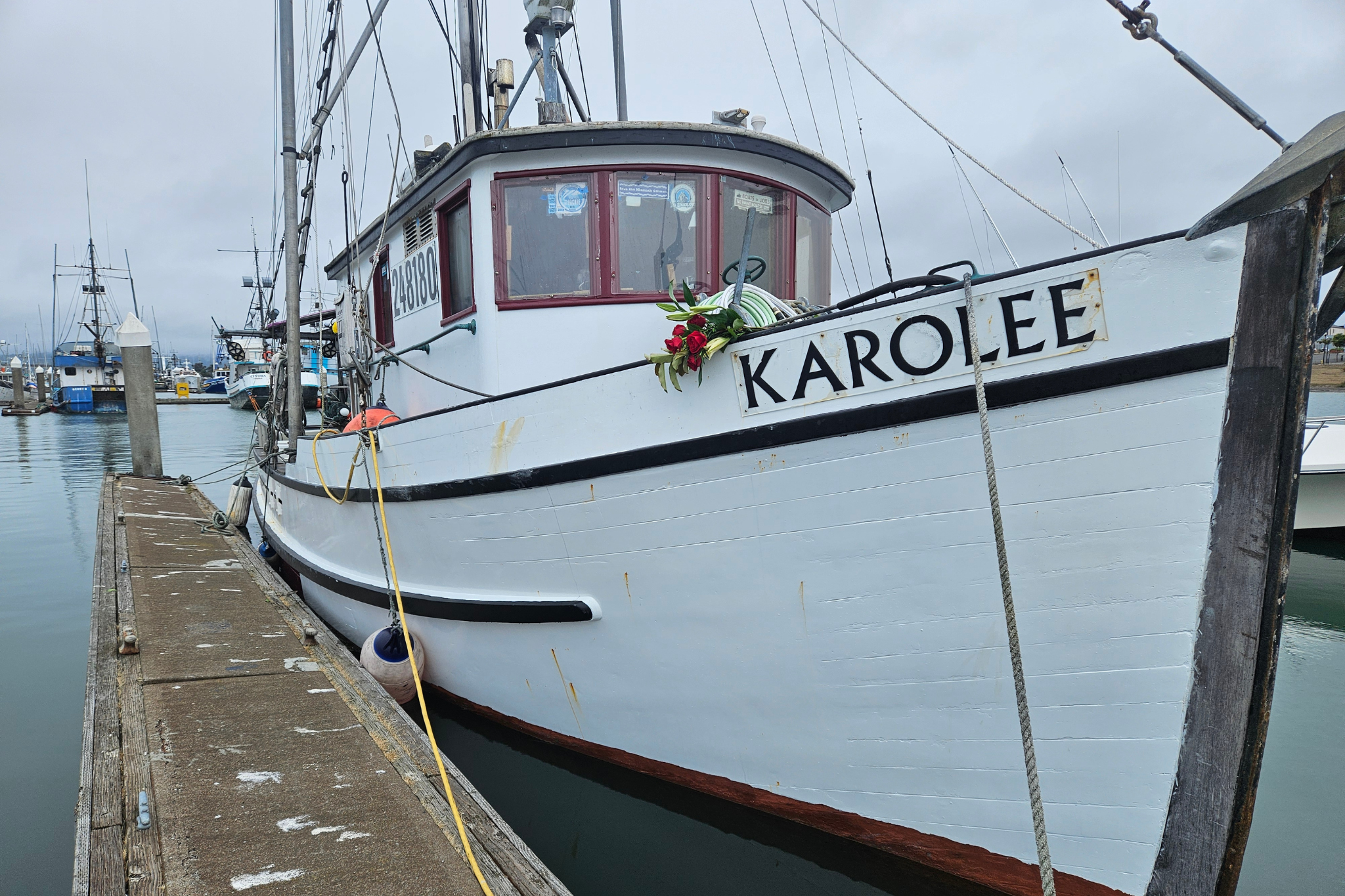
When salmon runs collapse, the impact doesn’t stay in the river. It shows up here—boats tied to the dock, seasons lost, and livelihoods on hold. The question now is what happens if we double down on that same approach—by building infrastructure that makes it easier to take even more water out of the rivers salmon depend on.
Who Pays the Price
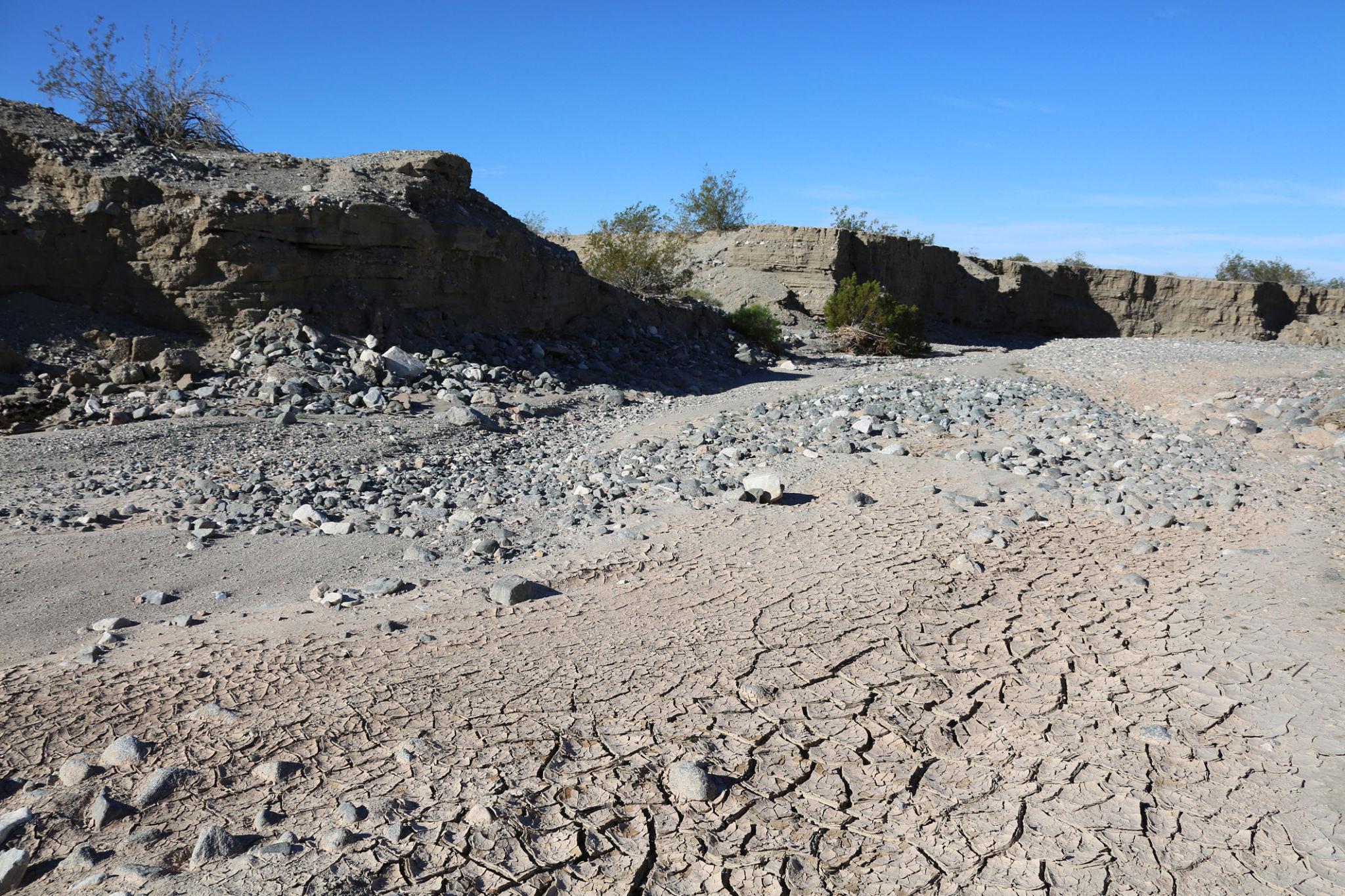
This isn’t a natural drought—it’s what happens when too much water is taken out of the system. When water policy goes wrong in California, the costs don’t fall evenly.
They show up in:
- Commercial and recreational fishing closures
- Lost income for coastal communities
- Impacts on Tribal cultural resources
- Degradation of the Bay-Delta ecosystem
Meanwhile, the benefits from increased water exports flow elsewhere. That imbalance is at the heart of this fight.
There Are Better Options
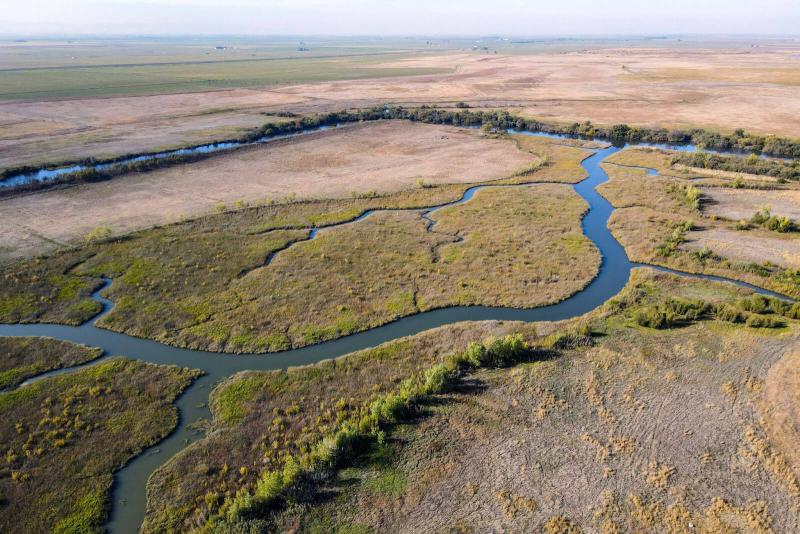
When rivers reconnect to their floodplains, salmon benefit. Slow, shallow habitat like this gives young fish a place to grow before heading to the ocean. This is the part that often gets lost. Opposing the Delta Tunnel is not the same as opposing water reliability.
California has real tools to build resilience:
- Groundwater recharge
- Stormwater capture
- Water recycling
- Conservation and efficiency
- Smarter regional supply strategies
None of those requires sacrificing California’s salmon runs or the estuary.
What Happens Next Matters
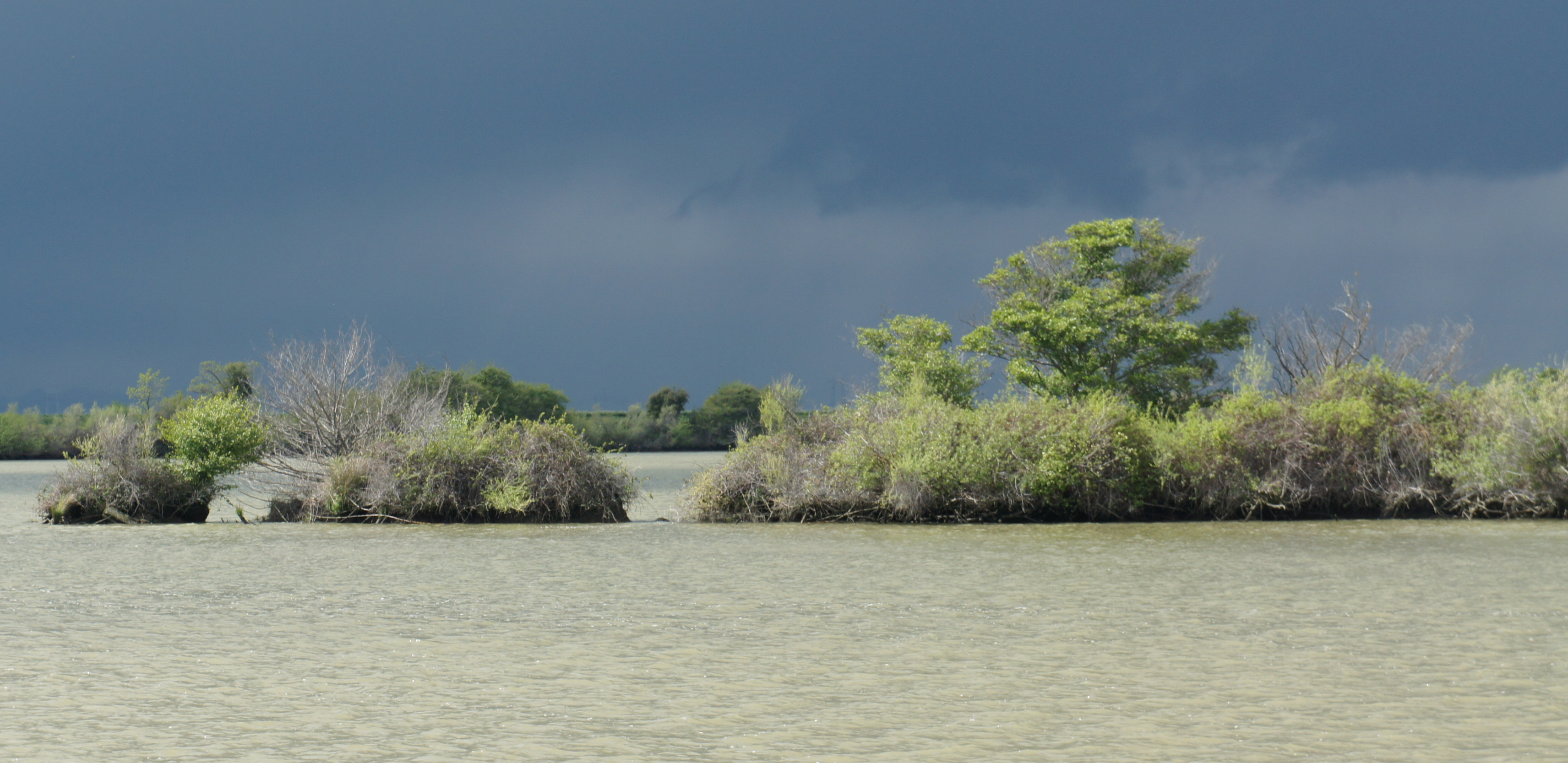
Healthy Delta habitat supports more than just water delivery—it sustains entire ecosystems, including the salmon that depend on it. This project is moving forward through regulatory processes, hearings, and political pressure.
That means public engagement still matters. If you care about salmon, rivers, and the communities that depend on them, now is the time to show up.
Call your legislators:
- Oppose the Delta Tunnel
- No shortcuts on environmental review
- Protect enforceable flow standards
Engage in the process:
- Submit comments
- Attend hearings
- Stay informed
Support the coalition:
- Tribes
- Delta communities
- Fishing organizations
- Conservation groups
This fight is far from over.
The Bottom Line
The Delta Tunnel is being sold as a solution to California’s water challenges.
But for salmon—and the rivers they depend on—it looks like something else:
It’s a long-term commitment to taking more water from a system that is already stretched beyond its limits.
If California wants salmon, it has to protect rivers as rivers—not treat them like plumbing.
And if we’re serious about fairness, we can’t keep asking fishing families, coastal communities, fishing businesses, Tribes, and Delta communities to absorb the cost of decisions they didn’t make.
Take Action
If you care about the future of California salmon, now is the time to act.
👉 Join the Golden State Salmon Association and help us fight for the rivers, fish, and communities that depend on them.
👉 Sign up for updates to stay informed on key decisions and opportunities to take action.
👉 Support the fight by donating to organizations working on the front lines of salmon conservation.Because once these decisions are made, they’re hard to undo.
And the future of salmon in California depends on what happens next.
GSSA In The News
Copyright © 2025 Golden State Salmon Association