For years, powerful water agencies have pushed hard for a massive new Delta water-diversion tunnel, arguing it is essential to secure water deliveries to farms and cities in Southern California. But a growing crisis much closer to home may be forcing a rethink.
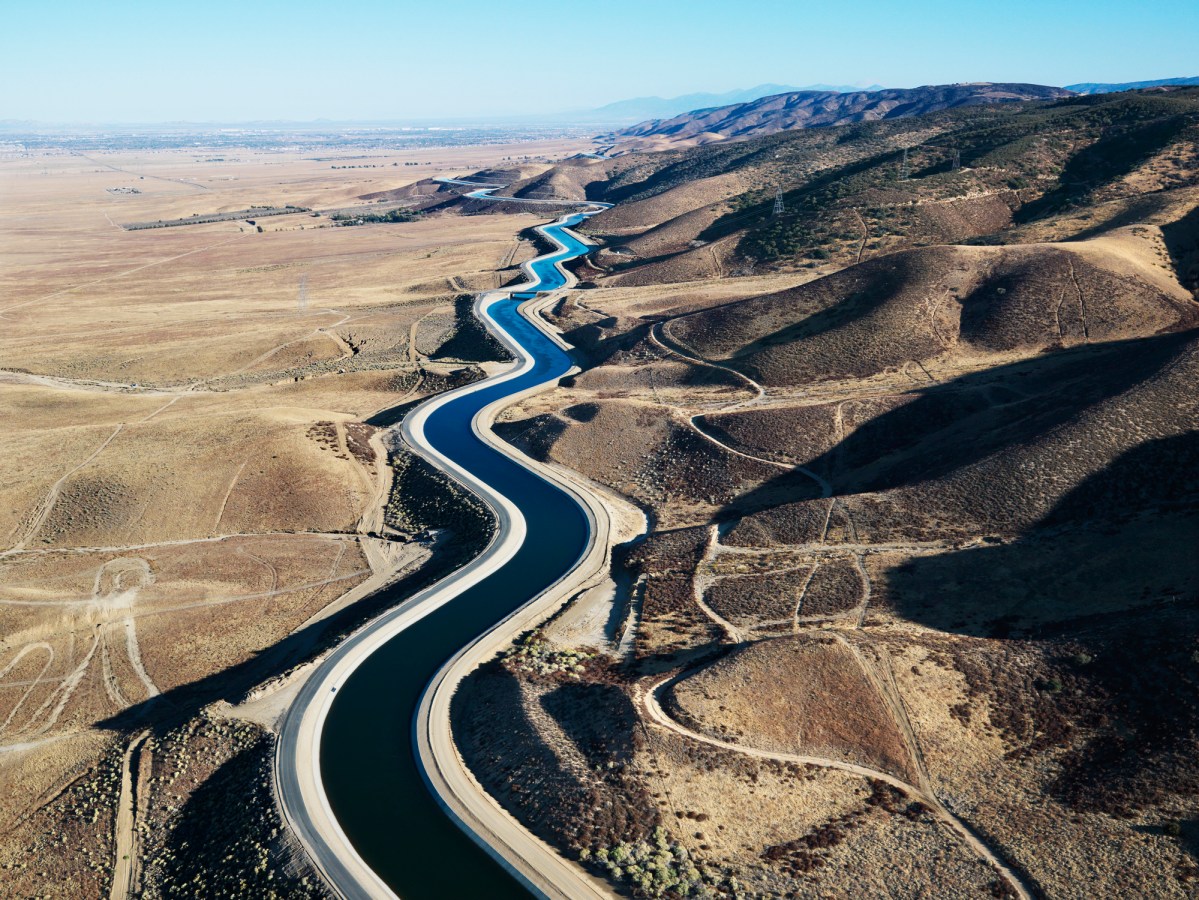
The California Aqueduct — the backbone of the State Water Project — is literally sinking in places. And the cause isn’t earthquakes or age. It’s groundwater over-pumping.
The Aqueduct Is Breaking From Below
Large stretches of the main canal that move water south from the Sacramento–San Joaquin Delta are being damaged as the land beneath them collapses. In heavily farmed regions of the San Joaquin Valley, decades of unsustainable groundwater pumping have drained aquifers and caused widespread land subsidence.
When the ground sinks, canals crack, buckle, and lose capacity. In some areas, repairs have already been needed just to keep water flowing. In other cases, the damage is accelerating faster than fixes can keep pace.
This is not a hypothetical future problem. It’s happening now.
An 87% Capacity Loss Warning
A 2025 study by the California Department of Water Resources put the stakes into stark terms. If groundwater over-pumping continues unchecked, subsidence could reduce the State Water Project’s water delivery capacity by as much as 87% by 2043.
Some sections of the system are already constrained. Without major intervention, water supplies for roughly 27 million Californians — and millions of acres of farmland — could be severely limited.
Fixing the problem won’t be cheap. Engineers estimate that billions of dollars will be required to stabilize canals, raise embankments, and undo damage caused by years of aquifer depletion.
A New, More Immediate Crisis
This looming infrastructure failure may be changing the political calculus around the Delta Tunnel.
For agencies and districts that rely on the State Water Project, a shiny new tunnel doesn’t solve the problem if the canals carrying that water south can’t physically move it. In fact, even if a tunnel were built, water would still have to travel through a subsiding aqueduct system to reach its final destinations.
That reality appears to be redirecting attention—and potentially funding—to the far more immediate threat: preventing the existing system from collapsing.
What This Means for California
The subsidence crisis exposes a fundamental contradiction in California water policy. For decades, groundwater was treated as an unlimited backup supply. Now that the bill is due, the damage is being paid for by everyone who depends on shared infrastructure.
As pressure mounts to spend billions repairing the aqueduct, enthusiasm for equally expensive new diversion projects may cool. At a minimum, it raises an uncomfortable question:
Why build new ways to move water if we can’t maintain the systems we already have?
For Californians concerned about rivers, fisheries, and long-term water security, this moment underscores a simple truth: sustainable water management starts with stopping the damage at its source — not doubling down on infrastructure that ignores it.
The consequences of groundwater over-pumping and failing infrastructure don’t stop at broken canals — they end up impacting our rivers, fisheries, and communities. Support the Golden State Salmon Association and help us fight for water policies that protect salmon, public resources, and California’s long-term water security.